
Miracle Fruit vs Vinca Plant Comparison
Compare these two plants side by side — care needs, key differences, and which is right for your home.
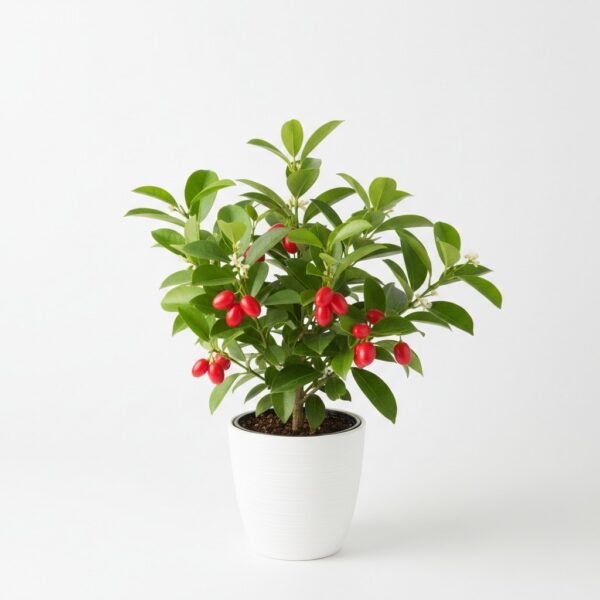
Miracle Fruit
Synsepalum dulcificum
Synsepalum dulcificum, commonly known as miracle fruit, is a small evergreen shrub that grows to about 1-2 meters in height. It is native to West Africa and is known for its berries that contain miraculin, a glycoprotein that alters taste perception. The fruit itself is not particularly sweet, but after consuming it, sour foods taste sweet. It is grown for its unique taste-modifying properties and is often used in culinary applications and research. It's primarily an outdoor plant, and maintaining it indoors can be challenging.

Vinca
Vinca minor
Vinca minor, commonly known as Common Periwinkle, is a trailing, evergreen perennial vine often used as a ground cover. It features glossy, dark green, ovate leaves and produces small, five-petaled, blue-violet flowers in spring and sporadically throughout the growing season. While it can be grown in containers, it is primarily an outdoor plant valued for its ability to quickly spread and suppress weeds. People grow it for erosion control, ground cover, and its attractive foliage and flowers. It is not naturally an indoor plant and presents challenges when grown indoors.
Quick Plant Comparison
| Feature | Miracle Fruit | Vinca |
|---|---|---|
| Light | Full sun to partial shade. Requires at least 6 hours of direct sunlight daily for optimal fruit production. | Partial shade to full shade outdoors. Bright indirect light indoors, but it will struggle to thrive. |
| Watering | Every 3-7 days, depending on environmental conditions and pot size. | Every 1-2 weeks indoors, depending on light and temperature. More frequently outdoors, especially during hot weather. |
| Humidity | 50-70% | 30-50% |
| Temperature | 20-27°C | 15-24°C |
| Care Level | Expert | Expert |
| Growth Rate | Slow | Fast, Aggressive Spreader Outdoors. Moderate Indoors. |
| Max Height | 1-2 meters (indoors, typically smaller, around 0.5-1 meter) | 10-15 cm indoors. Up to 15 cm outdoors. |
| Pet Safety | ✅ Safe | ❌ Toxic To Pets |
| Soil | Well-draining, acidic soil with a pH of 4.5-5.8. A mix of peat moss, perlite, and sand is suitable. | Well-draining potting mix. A mix of potting soil, perlite, and peat moss is suitable. |
| Beginner Friendly | ❌ No | ❌ No |
| Weekly Maintenance | 30 minutes weekly | 10 minutes weekly |
🔬 Botanical Information — Comparing These Plants
Miracle Fruit
| Scientific Name | Synsepalum dulcificum |
|---|---|
| Family | Sapotaceae |
| Native To | West Africa |
| Also Known As | Miracle berry, Miracle fruit, Sweet berry |
| Leaves | The leaves are elliptic to obovate, leathery, and dark green. They are typically 5-10 cm long and 2-4 cm wide, with a glossy surface. |
| Flowers | It can flower indoors under optimal conditions, producing small, white, inconspicuous flowers. However, fruiting indoors is challenging and requires hand-pollination. |
Vinca
| Scientific Name | Vinca minor |
|---|---|
| Family | Apocynaceae |
| Native To | Central and Southern Europe |
| Also Known As | Common Periwinkle, Lesser Periwinkle, Myrtle |
| Leaves | Glossy, dark green, ovate leaves. Typically 2-5 cm long and 1-3 cm wide. Evergreen. |
| Flowers | Rarely flowers indoors. Outdoors, it produces small, five-petaled, blue-violet flowers in spring and sporadically throughout the growing season. |
📏 Size & Growth — Plant Comparison
Miracle Fruit
Vinca
🌱 Propagation — Comparing Plant Growth
Miracle Fruit
Methods: Seed, Stem cuttings, Air layering
Difficulty: Moderate
Tips: For seeds, scarify and soak them before planting. Stem cuttings should be taken from semi-hardwood and rooted in a humid environment. Air layering can be done in spring.
Vinca
Methods: Stem cuttings, Division, Layering
Difficulty: Easy
Tips: Take stem cuttings in spring or summer. Root them in water or directly in moist soil. Division can be done in spring or fall. Layering involves burying a stem section until it roots.
✨ Benefits & Features — Comparing Plant Value
Miracle Fruit
The unique taste-modifying properties of the fruit are due to the glycoprotein miraculin. This protein binds to taste receptors on the tongue, causing sour foods to taste sweet for up to an hour.
- ✓ Unique taste-altering properties provide a novel culinary experience.
- ✓ Offers a conversation-starting plant for guests.
- ✓ May have potential health benefits for individuals with taste disorders.
- ✓ Provides a unique and interesting addition to a plant collection.
- ✓ Offers a challenging and rewarding gardening experience.
- 🐾 Pet Safe
Vinca
Vinca minor is known for its ability to spread quickly and form a dense ground cover. Its evergreen foliage provides year-round interest, and it produces small, attractive flowers in spring.
- ✓ Attractive ground cover (outdoors).
- ✓ Easy to propagate.
- ✓ Tolerates shade.
- ✓ Evergreen foliage.
- ✓ Can help with erosion control (outdoors).
- ⚠️ Toxic to pets
📅 Maintenance Schedule — Plant Care Comparison
Miracle Fruit
Vinca
🌞 Light Requirements
Miracle Fruit
Full sun to partial shade. Requires at least 6 hours of direct sunlight daily for optimal fruit production.
Low light tolerant: ❌ No
Vinca
Partial shade to full shade outdoors. Bright indirect light indoors, but it will struggle to thrive.
Low light tolerant: ❌ No
💧 Watering Needs
Miracle Fruit
Water thoroughly when the top inch of soil is dry. Avoid overwatering, which can lead to root rot. Signs of overwatering include yellowing leaves and a musty smell. Underwatering is indicated by wilting leaves and dry soil.
Vinca
Water thoroughly when the top inch of soil feels dry. Avoid overwatering, which can lead to root rot. Allow soil to dry slightly between waterings. Signs of overwatering include yellowing leaves and soggy soil. Underwatering results in wilting and dry, crispy leaves.
🌡️ Temperature & Humidity
Miracle Fruit
Temperature: 20-27°C
Humidity: 50-70%
Vinca
Temperature: 15-24°C
Humidity: 30-50%
🤔 Which Plant Is Right For You?
Miracle Fruit
Synsepalum dulcificumExperienced gardeners who enjoy a challenge and are interested in the unique taste-altering properties of the fruit.
✅ Choose This Plant If...
- You are an experienced gardener looking for a unique challenge.
- You want to experience the taste-altering effects of the fruit.
- You have a greenhouse or sunroom where you can provide the necessary conditions.
- You are interested in the plant's potential health benefits.
- You want a conversation-starting plant.
❌ Skip This Plant If...
- You are a beginner gardener.
- You cannot provide acidic soil and high humidity.
- You do not have a sunny location.
Vinca
Vinca minorExperienced gardeners looking for a challenging indoor plant or those wanting an effective outdoor ground cover (while being mindful of its toxicity to pets).
✅ Choose This Plant If...
- You want a trailing plant with attractive foliage.
- You are experienced with challenging indoor plants.
- You want a plant that can tolerate low light conditions (though it won't thrive).
- You want a plant that can be propagated easily.
- You appreciate the plant's historical use in traditional medicine.
❌ Skip This Plant If...
- You have pets that might ingest the plant.
- You are a beginner gardener.
- You want a plant that flowers reliably indoors.
🎯 Quick Verdict
⚡ Key Differences Between These Plants
Both plants have similar basic care requirements but differ in appearance and specific needs. Compare plants carefully to find the best fit for your space.
💡 Pro Tips For Comparing These Plants
Miracle Fruit Care Tips
Miracle fruit requires specific conditions to thrive indoors, including acidic soil, high humidity, and ample sunlight. It's challenging to fruit indoors and requires consistent care. Maintaining proper soil pH and humidity are crucial for its survival.
- Maintain acidic soil by using acid-loving plant fertilizer and testing the soil pH regularly.
- Provide high humidity by using a humidifier or placing the plant on a pebble tray.
- Ensure adequate sunlight by placing the plant in a south-facing window or using grow lights.
- Water with distilled or rainwater to avoid mineral buildup in the soil.
- Prune regularly to maintain shape and encourage bushier growth.
Vinca Care Tips
Vinca minor is primarily an outdoor ground cover and is challenging to grow indoors. It requires bright indirect light, well-draining soil, and careful watering to avoid root rot. Its aggressive spreading habit also needs to be managed, even in a container. It is also toxic to pets.
- Provide bright indirect light to encourage flowering.
- Allow the soil to dry slightly between waterings to prevent root rot.
- Fertilize regularly during the growing season.
- Prune regularly to control its spread.
- Monitor for pests and diseases.
⚠️ Common Problems & Solutions — Plant Care Comparison
Miracle Fruit
Vinca
❓ Frequently Asked Questions — Comparing These Plants
Miracle Fruit
What are the light requirements for Miracle Fruit?
Miracle Fruit thrives in bright, indirect light. Direct sunlight can scorch the leaves, so avoid placing it in a south-facing window without shading. An east- or west-facing window is ideal, providing ample light without the intensity of direct sun. If you notice the leaves becoming pale or yellowing, it may be receiving too much light. Conversely, if the plant is not producing fruit or the leaves are dark green and leggy, it may need more light. Rotate the plant regularly to ensure even light exposure on all sides. Consider using a sheer curtain to filter harsh sunlight.
How do I care for Miracle Fruit?
Miracle Fruit requires acidic soil (pH 4.5-5.8), bright indirect light, and high humidity. Water thoroughly when the top inch of soil is dry, using filtered or rainwater. Fertilize with an acid-loving plant fertilizer every 2-4 weeks during the growing season (spring and summer). Maintain a temperature between 65-80°F (18-27°C). Prune lightly to maintain shape and encourage branching. Protect from frost and direct sunlight. Repot every 1-2 years into a slightly larger pot with well-draining acidic potting mix. Ensure good air circulation to prevent fungal diseases. Monitor for pests like spider mites and scale. Mist regularly to increase humidity, or use a humidifier. Provide supplemental light during winter months if needed.
How do I propagate Miracle Fruit?
Miracle Fruit can be propagated by stem cuttings. Take 4-6 inch cuttings from healthy, non-flowering stems. Remove the lower leaves and dip the cut end in rooting hormone. Plant the cuttings in a well-draining acidic potting mix. Keep the cuttings in a warm, humid environment. Cover with a plastic bag or humidity dome to maintain moisture. Rooting typically takes several weeks. Once rooted, transplant the cuttings into individual pots. Propagation by seed is also possible, but seeds require scarification and a long germination period. Air layering is another viable method.
Vinca
What are the light requirements for Vinca?
Vinca thrives in full sun, requiring at least six hours of direct sunlight per day to produce abundant blooms. However, it can tolerate partial shade, especially in hotter climates, where afternoon shade can prevent scorching. When grown indoors, place Vinca near a sunny window, such as a south-facing window, to maximize light exposure. If natural light is insufficient, consider supplementing with grow lights to ensure adequate light levels. Insufficient light can lead to leggy growth and reduced flowering. Rotate the plant regularly to ensure even light exposure on all sides. Observe the plant’s growth and adjust its location as needed to optimize light conditions. Remember that too much direct sunlight can also be harmful, so monitor for signs of leaf burn.
How do I care for Vinca?
Vinca is a relatively low-maintenance plant, making it ideal for beginners. Plant in well-draining soil and provide full sun to partial shade. Water thoroughly when the top inch of soil feels dry, but avoid overwatering, which can lead to root rot. Fertilize monthly during the growing season (spring and summer) with a balanced fertilizer or a bloom-boosting formula to encourage abundant flowering. Deadhead spent blooms regularly to promote continuous blooming. In colder climates, Vinca is often grown as an annual. In warmer climates, it can be a perennial. Protect from frost in colder regions. Prune lightly in the early spring to maintain shape and remove any dead or damaged growth. Monitor for pests such as aphids and spider mites, and treat as needed. Provide good air circulation to prevent fungal diseases. Regular care will ensure healthy growth and vibrant blooms.
How do I propagate Vinca?
Vinca can be easily propagated through stem cuttings. Take 4-6 inch stem cuttings from healthy plants. Remove the lower leaves and dip the cut end in rooting hormone. Plant the cuttings in moist, well-draining potting mix. Cover with a plastic bag or humidity dome to maintain moisture. Keep in a warm, bright location, but avoid direct sunlight. Roots should develop in 2-4 weeks. Once rooted, transplant into individual pots. Vinca is not typically propagated by division or keiki. Stem cuttings are the most reliable method for home propagation. Regular watering and humidity are crucial for successful rooting.
Last updated: April 25, 2026 — Plant care data reviewed and verified by our editorial team.