
Birch Tree vs Rainbow Eucalyptus Plant Comparison
Compare these two plants side by side — care needs, key differences, and which is right for your home.
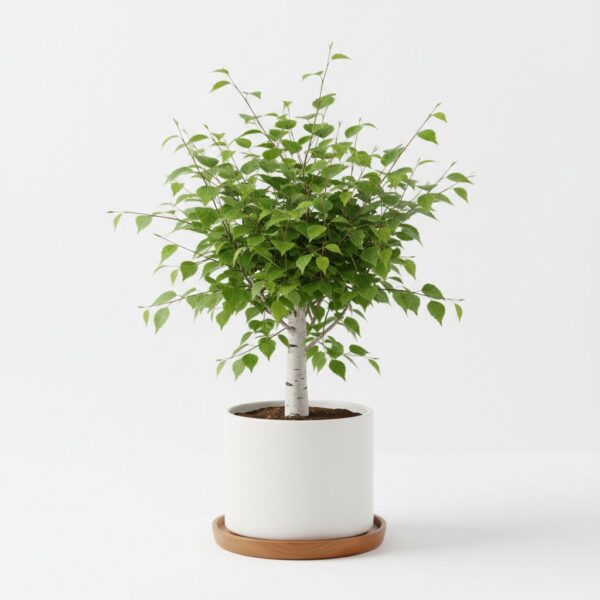
Birch Tree
Betula spp.
Birch trees are deciduous trees known for their distinctive bark, which is often white, silver, or copper-colored and peels in papery layers. They typically have slender, often weeping branches and triangular or ovate leaves that turn yellow in the fall. Birches are primarily outdoor trees, valued for their ornamental bark and graceful form in landscapes. They are not typically grown indoors due to their large size and high light requirements. Some dwarf varieties might be attempted indoors, but success is limited.

Rainbow Eucalyptus
Eucalyptus deglupta
Eucalyptus deglupta, commonly known as the Rainbow Eucalyptus, is a fast-growing tree celebrated for its strikingly colorful bark. The bark peels off in strips throughout the year, revealing vibrant green inner bark that matures to blue, purple, orange, and maroon tones. This creates a rainbow effect along the trunk. It is primarily an outdoor tree, reaching impressive heights in its natural habitat. People grow it for its ornamental value and unique aesthetic appeal, especially in tropical and subtropical regions. It is not naturally an indoor plant.
Quick Plant Comparison
| Feature | Birch Tree | Rainbow Eucalyptus |
|---|---|---|
| Light | Full sun to partial shade outdoors. Extremely high light is needed for any indoor attempt. | Full sun (at least 6-8 hours of direct sunlight daily) |
| Watering | Outdoors: Weekly or bi-weekly, depending on rainfall. Indoors (if attempted): Every 2-5 days, adjusting to soil dryness. | Every 1-2 weeks, depending on weather and soil drainage |
| Humidity | 30-50% | 50-70% |
| Temperature | 10-24°C | 18-30°C |
| Care Level | Expert | Expert |
| Growth Rate | Fast | Fast |
| Max Height | Indoors: Rarely exceeds 2-3 meters in a container (dwarf varieties only). Outdoors: 15-30 meters | Not suitable for indoor growing. Outdoors, it can reach 60-75 meters. |
| Pet Safety | ❌ Toxic To Pets | ❌ Toxic To Pets |
| Soil | Well-draining, slightly acidic soil. A mix of potting soil, peat moss, and perlite is suitable for container growing (if attempted indoors). | Well-draining, slightly acidic soil. A mix of sandy loam, peat moss, and perlite is suitable. |
| Beginner Friendly | ❌ No | ❌ No |
| Weekly Maintenance | 30 minutes weekly (outdoor care) | 2-3 hours monthly (for mature outdoor trees) |
🔬 Botanical Information — Comparing These Plants
Birch Tree
| Scientific Name | Betula spp. |
|---|---|
| Family | Betulaceae |
| Native To | Northern Hemisphere, including North America, Europe, and Asia |
| Also Known As | Birch, Paper Birch, White Birch, River Birch, Yellow Birch |
| Leaves | Birch leaves are typically triangular or ovate in shape, with serrated edges. They are usually 5-10 cm long and 3-7 cm wide. The leaves are typically green in the spring and summer, turning yellow in the fall before dropping. |
| Flowers | Birch trees produce catkins, which are cylindrical flower clusters. Male catkins are long and pendulous, while female catkins are shorter and more upright. Flowering typically occurs in the spring before the leaves emerge. They rarely flower indoors. |
Rainbow Eucalyptus
| Scientific Name | Eucalyptus deglupta |
|---|---|
| Family | Myrtaceae |
| Native To | Native to New Britain, New Guinea, Ceram, Sulawesi, and Mindanao |
| Also Known As | Rainbow Eucalyptus, Mindanao Gum, Rainbow Gum |
| Leaves | The leaves are lanceolate (long and narrow), glossy green, and have a leathery texture. They are typically 7-15 cm long and arranged alternately along the branches. When crushed, the leaves emit a characteristic eucalyptus scent. |
| Flowers | While it can flower outdoors, it rarely flowers when young. The flowers are small, white, and clustered in panicles. Flowering typically occurs in late summer to early autumn. |
📏 Size & Growth — Plant Comparison
Birch Tree
Rainbow Eucalyptus
🌱 Propagation — Comparing Plant Growth
Birch Tree
Methods: Seed, softwood cuttings, layering
Difficulty: Moderate
Tips: Collect seeds in the fall and stratify them before sowing. Take softwood cuttings in late spring or early summer. Layering can be done in the spring or fall.
Rainbow Eucalyptus
Methods: Seed, Cuttings
Difficulty: Moderate
Tips: Seeds require stratification. Cuttings should be taken from semi-hardwood in spring or summer and treated with rooting hormone.
✨ Benefits & Features — Comparing Plant Value
Birch Tree
Birch trees are known for their distinctive, peeling bark, which adds visual interest to the landscape year-round. The bark can range in color from white to silver to copper, depending on the species. Their graceful, often weeping branches and triangular leaves create a beautiful silhouette.
- ✓ Provides shade and shelter
- ✓ Enhances the aesthetic appeal of the landscape
- ✓ Supports local wildlife
- ✓ Offers seasonal interest with its changing foliage
- ✓ Can be a focal point in the garden
- ⚠️ Toxic to pets
Rainbow Eucalyptus
The Rainbow Eucalyptus is unique due to its multi-colored bark, which is created by the shedding of outer layers at different times, revealing the vibrant green inner bark that matures into various colors. This constant shedding and color transformation make it a visually dynamic and captivating tree.
- ✓ Provides shade in sunny climates.
- ✓ Offers a unique and visually striking aesthetic.
- ✓ Can increase property value.
- ✓ Supports local ecosystems by providing habitat for wildlife.
- ✓ Offers a sense of connection to nature.
- ⚠️ Toxic to pets
📅 Maintenance Schedule — Plant Care Comparison
Birch Tree
Rainbow Eucalyptus
🌞 Light Requirements
Birch Tree
Full sun to partial shade outdoors. Extremely high light is needed for any indoor attempt.
Low light tolerant: ❌ No
Rainbow Eucalyptus
Full sun (at least 6-8 hours of direct sunlight daily)
Low light tolerant: ❌ No
💧 Watering Needs
Birch Tree
Outdoors, water regularly, especially during dry periods, until established. Indoors (if attempted), keep soil consistently moist but not waterlogged. Check soil moisture regularly. Overwatering can lead to root rot, while underwatering can cause leaf drop and branch dieback.
Rainbow Eucalyptus
Water deeply when the top few inches of soil are dry. Ensure good drainage. Overwatering can lead to root rot, while underwatering can cause leaf drop and stunted growth. Check soil moisture regularly, especially during hot weather.
🌡️ Temperature & Humidity
Birch Tree
Temperature: 10-24°C
Humidity: 30-50%
Rainbow Eucalyptus
Temperature: 18-30°C
Humidity: 50-70%
🤔 Which Plant Is Right For You?
Birch Tree
Betula spp.Landscapers and gardeners with ample outdoor space and suitable climate conditions.
✅ Choose This Plant If...
- You have a large outdoor space and want a beautiful specimen tree with unique bark.
- You appreciate the graceful form and seasonal color of birch trees.
- You want to attract wildlife to your garden.
- You live in a climate with cool summers and cold winters.
- You are an experienced gardener looking for a rewarding challenge.
❌ Skip This Plant If...
- You have limited space, especially indoors.
- You are a beginner gardener.
- You have pets that might ingest the plant.
- You live in a hot, dry climate.
- You cannot provide the high light requirements.
Rainbow Eucalyptus
Eucalyptus degluptaThose living in tropical or subtropical climates with ample space and full sun exposure who want a visually stunning specimen tree.
✅ Choose This Plant If...
- You live in a tropical or subtropical climate with plenty of space.
- You want a fast-growing shade tree.
- You are looking for a visually stunning focal point for your landscape.
- You are experienced with tree care and can provide the necessary conditions.
- You appreciate unique and colorful bark textures.
❌ Skip This Plant If...
- You live in a cold climate with frequent frosts.
- You have limited space in your garden.
- You are looking for a low-maintenance plant.
- You have pets that might ingest the plant.
- You want an indoor plant.
🎯 Quick Verdict
⚡ Key Differences Between These Plants
Both plants have similar basic care requirements but differ in appearance and specific needs. Compare plants carefully to find the best fit for your space.
💡 Pro Tips For Comparing These Plants
Birch Tree Care Tips
Birch trees are best suited for outdoor environments. Indoor cultivation is extremely challenging due to high light, humidity, and space requirements. Dwarf varieties might be attempted, but success is not guaranteed. Consistent moisture and well-draining soil are crucial.
- Plant in well-draining soil to prevent root rot.
- Water deeply and regularly, especially during dry periods.
- Protect young trees from deer and other herbivores.
- Monitor for pests and diseases and treat promptly.
- Prune in late winter or early spring to maintain shape and remove dead or damaged branches.
Rainbow Eucalyptus Care Tips
Rainbow Eucalyptus is primarily an outdoor tree and is extremely challenging to grow indoors due to its high light requirements, rapid growth rate, and large size. It needs full sun, well-draining soil, and consistent moisture. Indoor cultivation is generally not recommended.
- Ensure excellent drainage to prevent root rot.
- Provide ample sunlight for optimal growth and bark coloration.
- Protect young trees from frost.
- Fertilize regularly during the growing season.
- Monitor for pests and diseases and treat promptly.
⚠️ Common Problems & Solutions — Plant Care Comparison
Birch Tree
Rainbow Eucalyptus
❓ Frequently Asked Questions — Comparing These Plants
Birch Tree
What are the light requirements for Birch Tree?
Birch trees thrive in bright, indirect light. Insufficient light can lead to leggy growth and yellowing leaves. Direct sunlight, especially during the hottest parts of the day, can scorch the delicate foliage.
How do I care for Birch Tree?
To successfully grow a birch tree indoors, it’s crucial to provide the right conditions.
How do I propagate Birch Tree?
Birch trees can be propagated through stem cuttings or air layering.
Rainbow Eucalyptus
What are the light requirements for Rainbow Eucalyptus?
Rainbow Eucalyptus demands very bright light to thrive indoors. It needs at least 6-8 hours of direct sunlight per day. A south-facing window is ideal, but if that’s not possible, supplement with grow lights. Insufficient light will result in leggy growth, faded colors, and overall poor health. Rotate the plant regularly to ensure even light exposure on all sides. If the leaves start to turn pale or yellow, it’s a sign that the plant is not getting enough light. Consider using a light meter to accurately measure the light intensity and adjust accordingly. Placing the plant outdoors during the summer months can be beneficial, but gradually acclimate it to the increased sunlight to prevent leaf burn.
How do I care for Rainbow Eucalyptus?
Caring for a Rainbow Eucalyptus indoors requires attention to detail and a commitment to providing the right environment. Provide very bright, direct light, ideally near a south-facing window. Water thoroughly when the top inch of soil feels dry, ensuring good drainage. Use a well-draining potting mix amended with perlite to prevent root rot. Maintain high humidity levels by misting regularly or using a humidifier. Fertilize monthly during the growing season (spring and summer) with a balanced liquid fertilizer diluted to half strength. Prune regularly to maintain shape and encourage branching. Repot annually in the spring, increasing the pot size gradually. Keep the plant away from drafts and sudden temperature changes. Stable conditions are key to success. Rainbow Eucalyptus prefers slightly acidic soil. Monitor for pests and address promptly.
How do I propagate Rainbow Eucalyptus?
Rainbow Eucalyptus can be propagated through stem cuttings or air layering, though success can vary. For stem cuttings, take a 4-6 inch cutting from new growth. Remove the lower leaves and dip the cut end in rooting hormone. Plant the cutting in a well-draining potting mix and keep it consistently moist. Cover with a plastic bag to maintain humidity. Roots should develop in 4-8 weeks. Air layering involves wounding a stem, applying rooting hormone, and wrapping it in moist sphagnum moss. Cover the moss with plastic wrap and secure it in place. Once roots have formed, cut the stem below the rooted section and pot it in a separate container. Maintain high humidity and bright, indirect light during the propagation process. Success rates are higher with air layering.
Last updated: April 24, 2026 — Plant care data reviewed and verified by our editorial team.