
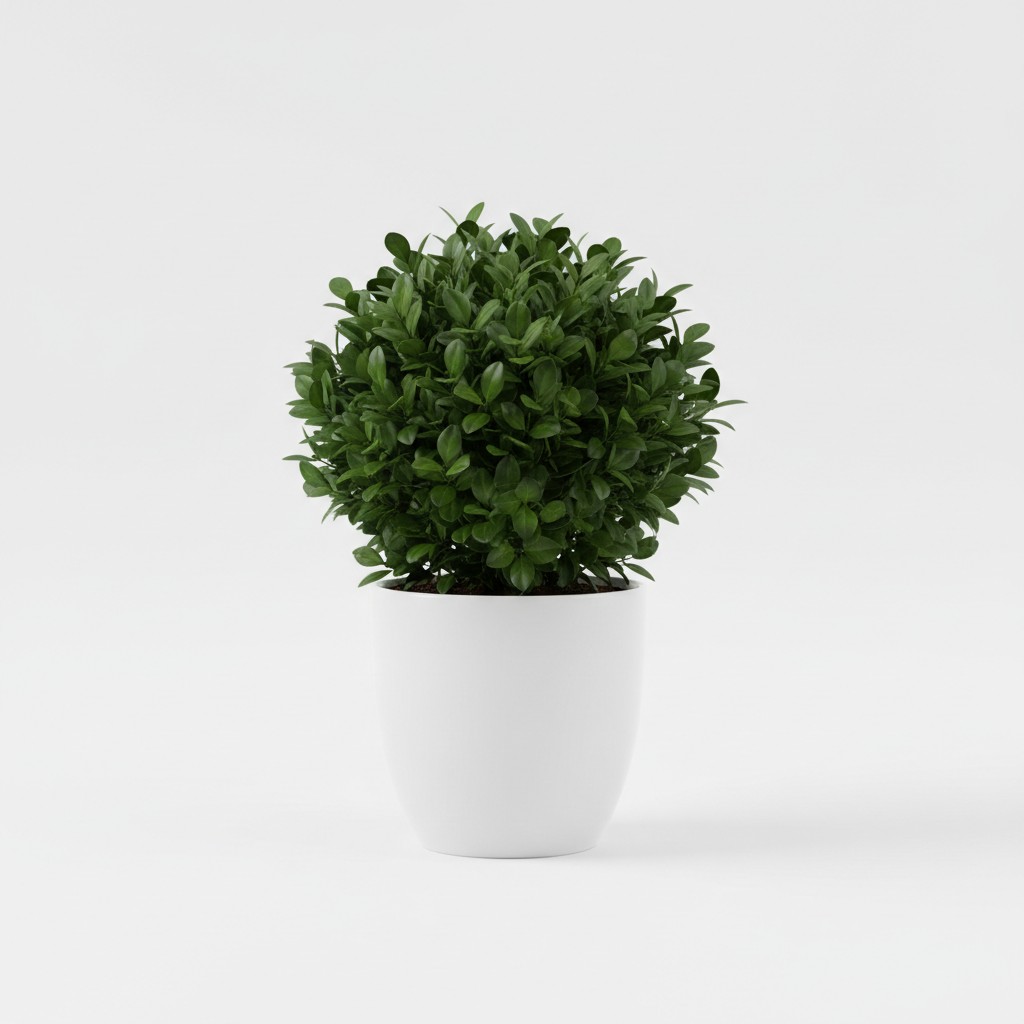
Why You'll Love It
Boxwood, with its dense, evergreen foliage, is a classic choice for adding a touch of elegance and formality to any indoor space. Its small, glossy leaves create a refined texture that's perfect for shaping into topiaries or simply enjoying as a neat, compact plant. Plant lovers adore Boxwood for its versatility – it can be pruned to maintain a specific shape or allowed to grow into its natural form. Its slow growth rate means less frequent pruning and maintenance, making it a relatively low-maintenance option for those seeking a sophisticated, evergreen indoor plant. Furthermore, Boxwood's resilience and longevity make it a cherished addition to any plant collection, offering enduring beauty and a sense of timeless appeal. The rich green color adds a calming and refreshing presence to any room.
The Story
Boxwood, scientifically known as Buxus, boasts a rich history that spans millennia. Originating in Europe, Asia, and Africa, this evergreen shrub has been cultivated for centuries. Ancient Romans prized Boxwood for its ornamental value, using it extensively in formal gardens and topiaries. Its dense, fine-grained wood was also highly valued for carving and crafting. In various cultures, Boxwood symbolizes steadfastness, resilience, and immortality. It has been used in religious ceremonies, as well as in traditional medicine. During the Victorian era, Boxwood became a staple in English gardens, further solidifying its reputation as a symbol of elegance and refinement. Today, Boxwood continues to be a popular choice for landscaping and indoor decoration, prized for its timeless beauty and versatility.
Complete Care Guide
Boxwood thrives indoors with proper care. Provide bright, indirect light; avoid direct sunlight which can scorch the leaves. Water thoroughly when the top inch of soil is dry, ensuring good drainage to prevent root rot. Maintain moderate humidity, ideally between 40-60%. Fertilize sparingly with a balanced, slow-release fertilizer during the growing season (spring and summer). Prune regularly to maintain the desired shape and remove any dead or yellowing foliage. Repot every 2-3 years into a slightly larger pot with well-draining potting mix. Maintain stable temperatures between 60-75°F (15-24°C). Rotate the plant regularly to ensure even growth on all sides. Monitor for pests such as spider mites and treat promptly if detected. Avoid drafts and sudden temperature changes. Use a pot with drainage holes.
Light Requirements
Boxwood prefers bright, indirect light when grown indoors. Direct sunlight can scorch the leaves, causing them to turn brown. An east-facing window is often ideal, providing gentle morning light. A north-facing window may also work, but the plant might need supplemental light, especially during winter. If using a south- or west-facing window, place the plant several feet away from the window or use sheer curtains to filter the light. Signs of insufficient light include leggy growth and pale leaves. Rotate the plant regularly to ensure all sides receive adequate light. Consider using a grow light if natural light is limited.
Seasonal Care
Spring
In spring, fertilize Boxwood with a balanced, slow-release fertilizer. Prune to shape and remove any winter damage. Repot if needed. Monitor for pests as they become more active. Increase watering as temperatures rise.
Summer
During summer, ensure Boxwood receives adequate water, especially during hot, dry spells. Provide shade during the hottest part of the day to prevent leaf scorch. Monitor for pests and diseases. Prune lightly to maintain shape.
Fall
In fall, reduce watering as temperatures cool. Avoid fertilizing in late fall. Inspect for pests and diseases before bringing the plant indoors for the winter. Prune lightly to remove any dead or damaged growth.
Winter
During winter, reduce watering significantly. Provide bright, indirect light. Maintain moderate humidity. Avoid placing the plant near heat sources or drafts. Monitor for pests and diseases.
The Life of Your Boxwood
Seedling / Juvenile
Young Boxwood seedlings require consistent moisture and protection from harsh sunlight. Keep the soil consistently moist but not waterlogged. Provide bright, indirect light. Use a small pot with excellent drainage. Monitor regularly for pests.
Adolescent
During adolescence, Boxwood plants benefit from regular light fertilizing during the growing season. Increase pot size as needed. Continue to prune lightly to encourage bushier growth. Maintain consistent watering and humidity levels.
Mature
Mature Boxwood plants are more tolerant of slight neglect. Prune as needed to maintain shape and size. Repot every 2-3 years. Monitor for pests and diseases. Continue to provide adequate light, water, and humidity.
Established
Established Boxwood plants require minimal intervention. Focus on maintaining stable conditions and preventing problems. Prune to maintain shape and remove deadwood. Repot only when necessary. Monitor regularly for pests and diseases.
Propagation Guide
Boxwood can be propagated through stem cuttings or air layering. For stem cuttings, take 4-6 inch cuttings from new growth in late spring or early summer. Remove the lower leaves and dip the cut end in rooting hormone. Plant the cutting in a pot filled with well-draining potting mix. Keep the soil moist and cover the pot with a plastic bag to maintain humidity. Roots should develop in 6-8 weeks. For air layering, make a shallow cut on a stem and wrap it with moist sphagnum moss. Cover the moss with plastic wrap and secure it with tape. Once roots have formed, cut the stem below the roots and plant it in a pot.
Expert Knowledge
Boxwood thrives with consistent care and stable conditions. Avoid sudden changes in temperature, light, or humidity. Regular pruning is essential for maintaining shape and encouraging dense growth. Choose a pot that is appropriately sized for the plant and provides good drainage. Use a well-draining potting mix to prevent root rot. Monitor regularly for pests and diseases and treat promptly if detected. Boxwood is susceptible to boxwood blight, a fungal disease that can cause significant damage. Choose disease-resistant varieties if available.
Troubleshooting
Yellow leaves
Yellow leaves on Boxwood can indicate overwatering, underwatering, or nutrient deficiency. Check soil moisture and adjust watering accordingly. Fertilize with a balanced fertilizer. Ensure good drainage to prevent root rot.
Brown leaf edges
Brown edges on Boxwood leaves often indicate dry air or inconsistent watering. Increase humidity by misting the plant or using a humidifier. Ensure consistent watering and avoid letting the soil dry out completely.
Drooping leaves
Drooping in Boxwood can be caused by underwatering or root rot. Check soil moisture and water if dry. If the soil is waterlogged, repot into fresh, well-draining soil and trim any affected roots. Improve drainage.
Root rot
Root rot in Boxwood is caused by overwatering and poor drainage. Repot into fresh, well-draining soil, removing any affected roots. Ensure the pot has drainage holes and avoid overwatering in the future.
Pests
Common pests affecting Boxwood include spider mites, scale, and aphids. Treat infestations with insecticidal soap or neem oil. Ensure good air circulation to prevent future infestations. Isolate affected plants to prevent spread.
Frequently Asked Questions
What are the ideal light conditions?
Boxwood prefers bright, indirect light. Avoid direct sunlight, which can scorch the leaves.
How often should I water?
Water thoroughly when the top inch of soil is dry. Avoid overwatering, which can lead to root rot.
When should I repot?
Repot Boxwood every 2-3 years in spring, using a slightly larger pot and fresh potting mix.
Is it toxic to pets?
Boxwood is toxic to pets and children if ingested. Keep it out of reach.
How big will it grow?
Indoors, Boxwood typically grows slowly, reaching a mature size of 2-4 feet in height and width.
Can I propagate at home?
Yes, Boxwood can be propagated at home through stem cuttings or air layering.


