Why You'll Love It
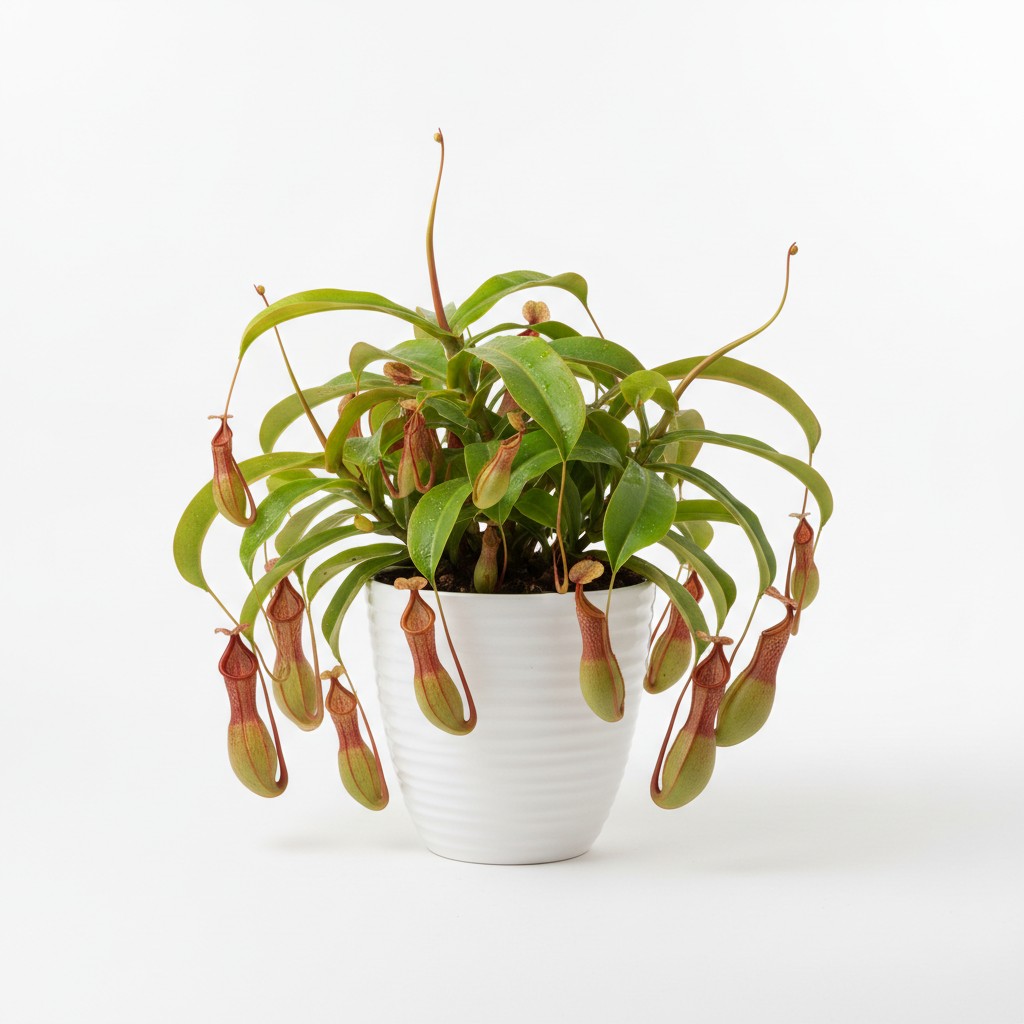
Nepenthes, also known as tropical pitcher plants, are captivating plants that bring a touch of the exotic into any home. Their unique carnivorous nature, with modified leaves forming alluring pitchers, is a constant source of fascination. The pitchers, often adorned with vibrant colors and intricate patterns, are not only visually stunning but also serve a fascinating biological purpose, attracting and trapping insects. Plant lovers are drawn to Nepenthes for their unusual beauty, their intriguing feeding habits, and the challenge of providing the specific conditions they require. Successfully cultivating a Nepenthes is a rewarding experience, offering a glimpse into the wonders of the natural world and showcasing the diversity of plant life. They are conversation starters and living art pieces, adding a unique dimension to any plant collection.
The Story
Nepenthes originate primarily from Southeast Asia, with a concentration of species found in Borneo, Sumatra, and the Philippines. Their natural habitats range from humid lowland rainforests to cooler, cloud-covered mountains. These plants have evolved to thrive in nutrient-poor soils, supplementing their diet by trapping insects in their specialized pitchers. Historically, Nepenthes have been known to local populations for their medicinal properties and use in traditional crafts. They gained wider recognition among botanists and plant enthusiasts in the 18th and 19th centuries, leading to extensive exploration and collection of new species. Today, Nepenthes are popular among carnivorous plant enthusiasts and are cultivated in collections worldwide. Their unique adaptations and evolutionary history continue to fascinate scientists and nature lovers alike.
Complete Care Guide
Nepenthes require specific conditions to thrive. Provide bright, indirect light; direct sunlight can scorch the leaves. Maintain high humidity levels, ideally between 60-80%. Water with distilled water, rainwater, or reverse osmosis water to avoid mineral buildup. Keep the growing medium consistently moist but not waterlogged. A well-draining mix of sphagnum moss, perlite, and orchid bark is ideal. Fertilize sparingly, using a diluted orchid fertilizer or foliar feed once a month during the growing season. Avoid fertilizing the pitchers directly. Provide adequate air circulation to prevent fungal diseases. Repot every 1-2 years as needed. Watch for pests such as mealybugs and scale, and treat promptly.
Light Requirements
Nepenthes thrive in bright, indirect light. They need sufficient light to produce vibrant pitchers, but direct sunlight can scorch their leaves. An east-facing window is often ideal, providing morning sun and filtered light throughout the day. A south-facing window can work if the plant is shielded by a sheer curtain. Insufficient light will result in reduced pitcher production and leggy growth. Artificial lighting, such as fluorescent or LED grow lights, can supplement natural light, especially during winter months or in areas with limited sunlight. Monitor the plant's color and growth to adjust lighting as needed.
Seasonal Care
Spring
Increase watering and fertilization as the plant enters its active growing season. Provide ample light to encourage pitcher production. Repot if needed.
Summer
Maintain high humidity and consistent moisture. Protect the plant from direct sunlight during the hottest part of the day. Increase ventilation to prevent fungal diseases.
Fall
Reduce watering and fertilization as growth slows. Monitor for pests and diseases. Provide supplemental lighting if needed.
Winter
Keep the plant in a bright, cool location. Reduce watering significantly. Maintain humidity levels. Avoid drastic temperature fluctuations.
The Life of Your Nepenthes
Seedling / Juvenile
Seedlings are very delicate. Maintain high humidity by enclosing them in a terrarium or humidity dome. Provide gentle, indirect light. Use a very fine mist to water, keeping the growing medium consistently moist.
Adolescent
As the plant grows, gradually acclimate it to less humid conditions. Increase light intensity as tolerated, but avoid direct sunlight. Begin light fertilization with a diluted orchid fertilizer.
Mature
Mature plants require consistent care, including bright, indirect light, high humidity, and regular watering. Monitor for pests and diseases. Provide support for vining species.
Established
Established plants can tolerate slight variations in care. Continue to provide optimal conditions to encourage vigorous growth and abundant pitcher production. Repot as needed.
Propagation Guide
Nepenthes can be propagated through stem cuttings, air layering, or division (for basal shoots). For stem cuttings, take a cutting with at least three nodes. Remove the lower leaves, dip the cut end in rooting hormone, and plant in moist sphagnum moss. Maintain high humidity and indirect light. Air layering involves wounding a stem, wrapping it in moist sphagnum moss, and covering it with plastic wrap until roots form. Division is possible if the plant has multiple basal shoots; carefully separate them and pot them individually. Rooting can take several weeks or months.
Expert Knowledge
Nepenthes require very pure water. Tap water contains minerals that can be harmful to the plant. Avoid using tap water for watering or misting. Instead, use distilled water, rainwater, or reverse osmosis water. Additionally, while it is tempting to feed your Nepenthes insects, avoid overfeeding. Too many insects can cause the pitchers to rot. It is also beneficial to provide support for vining species as they grow. Trellises or hanging baskets are excellent options.
Troubleshooting
Yellow leaves
Yellow leaves can indicate overwatering, underwatering, or nutrient deficiencies. Check the moisture level of the growing medium and adjust watering accordingly. Fertilize lightly.
Brown leaf edges
Brown edges are often caused by low humidity or mineral buildup from tap water. Increase humidity and use distilled water, rainwater, or reverse osmosis water.
Drooping leaves
Drooping can be a sign of underwatering or root rot. Check the moisture level and the condition of the roots. Ensure proper drainage.
Root rot
Root rot is caused by overwatering and poor drainage. Repot the plant in fresh growing medium, removing any affected roots. Improve drainage and reduce watering frequency.
Pests
Leggy growth is typically caused by insufficient light. Move the plant to a brighter location or supplement with artificial lighting. Prune back leggy stems to encourage bushier growth.
Frequently Asked Questions
What are the ideal light conditions?
Nepenthes prefer bright, indirect light. Avoid direct sunlight to prevent leaf scorch.
How often should I water?
Water Nepenthes when the top inch of the growing medium feels slightly dry. Use distilled water, rainwater, or reverse osmosis water.
When should I repot?
Repot Nepenthes every 1-2 years as needed, using a well-draining mix of sphagnum moss, perlite, and orchid bark.
Is it toxic to pets?
Nepenthes are generally considered non-toxic to pets and children.
How big will it grow?
The size of a Nepenthes varies depending on the species. Some species can grow several feet long indoors.
Can I propagate at home?
Yes, Nepenthes can be propagated at home using stem cuttings, air layering, or division.