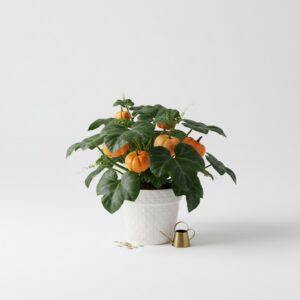
Why You'll Love It
Mango trees bring a touch of the tropics indoors, captivating plant lovers with their lush foliage and the promise of delicious fruit. The glossy, elongated leaves create a vibrant green canopy, adding a refreshing and exotic aesthetic to any living space. While indoor fruiting may require patience and specific conditions, the sheer beauty of the tree is rewarding enough. Watching it grow and mature, carefully tending to its needs, offers a unique and fulfilling connection to nature. The Mango tree becomes a living sculpture, a testament to the beauty and resilience of the plant kingdom. Its presence elevates the ambiance, creating a calming and inviting atmosphere that plant enthusiasts cherish. The potential for homegrown fruit is an added bonus, a delightful reward for dedicated care.
The Story
The Mango (Mangifera indica) originates from South Asia, specifically the region encompassing India, Bangladesh, and Myanmar. Its history dates back thousands of years, with evidence of cultivation as early as 2000 BC. In its natural habitat, the Mango thrives in tropical and subtropical climates, requiring warm temperatures and abundant sunlight. The tree has deep roots in cultural traditions, particularly in India, where it is considered a sacred fruit and a symbol of love, prosperity, and fertility. Mangoes have been revered in religious ceremonies, literature, and art for centuries. Their cultivation spread throughout the world via trade routes, eventually reaching the Americas, Africa, and Australia. Today, the Mango is cultivated extensively in tropical regions globally, prized for its delicious fruit and ornamental value.
Complete Care Guide
To successfully grow a Mango tree indoors, provide it with bright, direct sunlight for at least 6-8 hours daily. Use a well-draining potting mix formulated for tropical plants, and water thoroughly when the top inch of soil feels dry. Ensure the pot has drainage holes to prevent root rot. Maintain a consistent temperature between 70-85°F (21-29°C) and a humidity level of 50-60%. Fertilize monthly during the growing season (spring and summer) with a balanced liquid fertilizer diluted to half strength. Prune regularly to maintain shape and encourage branching. Repot every 2-3 years as needed, increasing the pot size gradually. Protect from drafts and sudden temperature changes. Monitor for pests and diseases, and address promptly. Stable conditions are critical for success.
Light Requirements
Mango trees are sun-loving plants and require ample light to thrive indoors. Aim for at least 6-8 hours of direct sunlight per day. A south-facing window is ideal, but an east- or west-facing window can also work if supplemented with artificial light. If natural light is insufficient, use a grow light to provide the necessary intensity. Rotate the plant regularly to ensure even light exposure on all sides. Insufficient light can lead to leggy growth and reduced fruit production. Signs of inadequate light include pale leaves, slow growth, and failure to flower or fruit. Proper lighting is essential for the overall health and vitality of your indoor Mango tree.
Seasonal Care
Spring
In spring, increase watering and fertilization as the plant enters its active growing season. Prune to remove any dead or damaged branches. Repot if necessary. Provide plenty of sunlight.
Summer
During summer, maintain consistent watering and fertilization. Protect the plant from intense heat and direct sunlight during the hottest part of the day. Monitor for pests and diseases.
Fall
Reduce watering and fertilization as the plant's growth slows down. Prune to maintain shape and remove any dead or diseased branches. Prepare the plant for winter by providing adequate light and warmth.
Winter
In winter, reduce watering significantly. Provide adequate light and warmth. Avoid fertilizing. Protect the plant from drafts and cold temperatures. Maintain humidity levels.
The Life of Your Mango
Seedling / Juvenile
Seedlings require consistently moist soil, high humidity, and bright, indirect light. Avoid direct sunlight, which can scorch the delicate leaves. Maintain a warm environment and protect from drafts. Use a small pot with excellent drainage.
Adolescent
Adolescent plants need more direct sunlight and less frequent watering than seedlings. Begin fertilizing monthly during the growing season. Repot into a slightly larger container as needed to accommodate root growth.
Mature
Mature Mango trees require bright, direct sunlight, regular fertilization, and careful pruning to maintain shape and encourage fruit production. Monitor for pests and diseases, and address promptly. Repot every 2-3 years.
Established
Established Mango trees benefit from consistent care and stable conditions. Continue to provide adequate light, water, and fertilization. Prune regularly to maintain shape and remove any dead or diseased branches.
Propagation Guide
Mango trees can be propagated through stem cuttings or air layering. For stem cuttings, take a 4-6 inch cutting from a healthy branch. Remove the lower leaves and dip the cut end in rooting hormone. Plant the cutting in a well-draining potting mix and keep it moist and humid. For air layering, make a small incision on a branch, apply rooting hormone, and wrap it with moist sphagnum moss and plastic wrap. After roots develop, cut the branch below the wrapped area and plant it in a pot. Both methods require patience and consistent moisture to be successful. Provide warmth and humidity for optimal rooting. Mist regularly to maintain humidity.
Expert Knowledge
Indoor Mango trees rarely produce fruit without specific conditions and techniques. Grafting a fruiting variety onto a seedling rootstock increases the chances of fruiting. Hand-pollinating the flowers can also improve fruit set. Consistent temperature, humidity, and light are crucial for success. Consider using a larger pot to accommodate root growth and provide stability. Regular pruning is essential to maintain shape and encourage branching. Monitor soil pH and adjust as needed to ensure optimal nutrient uptake.
Troubleshooting
Yellow leaves
Yellow leaves can indicate overwatering, underwatering, nutrient deficiencies, or pest infestations. Check soil moisture and adjust watering accordingly. Fertilize with a balanced fertilizer and inspect for pests.
Brown leaf edges
Brown edges on leaves often indicate low humidity, inconsistent watering, or fertilizer burn. Increase humidity, ensure consistent watering, and dilute fertilizer to half strength.
Drooping leaves
Drooping leaves can be caused by underwatering, overwatering, or root rot. Check soil moisture and drainage. Adjust watering accordingly and consider repotting if root rot is suspected.
Root rot
Root rot is caused by overwatering and poor drainage. Repot the plant in fresh, well-draining soil. Remove any affected roots and treat with a fungicide. Reduce watering frequency.
Pests
Common pests include spider mites, aphids, and mealybugs. Treat infestations with insecticidal soap or neem oil. Isolate the affected plant to prevent the spread of pests.
Frequently Asked Questions
What are the ideal light conditions?
Mango trees need at least 6-8 hours of direct sunlight daily.
How often should I water?
Water thoroughly when the top inch of soil feels dry.
When should I repot?
Repot every 2-3 years, increasing pot size gradually.
Is it toxic to pets?
Mango trees are generally non-toxic to pets and children.
How big will it grow?
Indoors, Mango trees can grow to 6-8 feet tall.
Can I propagate at home?
Yes, Mango can be propagated at home via cuttings or air layering.