
Nasturtium Tropaeolum vs Quamash Plant Comparison
Compare these two plants side by side — care needs, key differences, and which is right for your home.
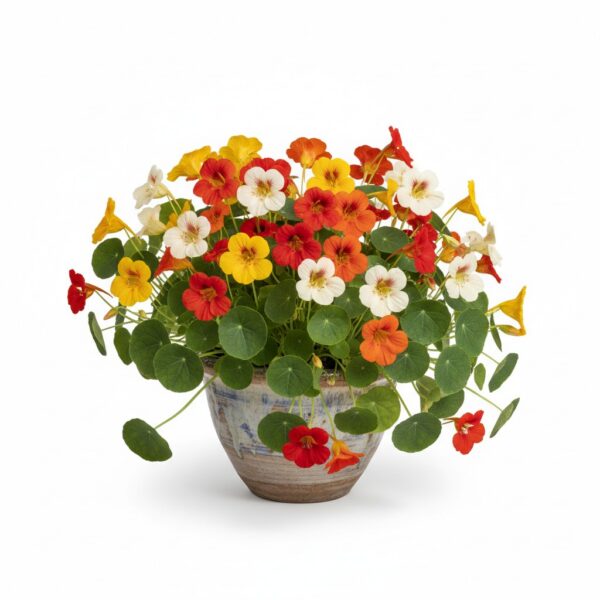
Nasturtium Tropaeolum
Tropaeolum majus
Tropaeolum majus, commonly known as nasturtium, is an annual flowering plant known for its vibrant, edible flowers and peppery-flavored leaves. It is a sprawling plant that can grow as a ground cover or climb with support. The plant features round, shield-shaped leaves and spurred flowers in shades of orange, yellow, and red. While primarily grown outdoors in gardens and containers for its ornamental value and culinary uses, it can be challenging to maintain indoors due to its high light requirements and sprawling growth habit. People grow it for its bright colors, edible parts, and ability to attract pollinators.

Quamash
Camassia quamash
Camassia quamash is a perennial herb with a bulbous base. It is primarily an outdoor plant, known for its striking blue to violet star-shaped flowers that bloom in spring. The plant grows from a bulb and features long, linear leaves. It is traditionally grown for its edible bulbs, which were a staple food for many Indigenous peoples of North America. While beautiful, it's challenging to replicate its natural growing conditions indoors, making it unsuitable as a houseplant.
Quick Plant Comparison
| Feature | Nasturtium Tropaeolum | Quamash |
|---|---|---|
| Light | Full sun to partial shade. Requires at least 6 hours of direct sunlight daily for optimal flowering. | Full sun to partial shade |
| Watering | Every 2-3 days outdoors in warm weather, less frequently in cooler conditions. Indoor watering is difficult to predict, but likely every 5-7 days if attempted. | Once a week during the growing season, less frequently during dormancy |
| Humidity | 40-60% | 30-50% |
| Temperature | 15-24°C | 10-24°C |
| Care Level | Expert | Expert |
| Growth Rate | Fast | Moderate |
| Max Height | 0.3-1 meter (indoors, likely smaller and less vigorous) | 30-80 cm (outdoor) |
| Pet Safety | ❌ Toxic To Pets | ❌ Toxic To Pets |
| Soil | Well-draining soil; a mix of potting soil, perlite, and compost is suitable. Avoid overly rich soil, as it can promote foliage growth at the expense of flowers. | Well-draining soil, such as a sandy loam |
| Beginner Friendly | ❌ No | ❌ No |
| Weekly Maintenance | 10 minutes weekly outdoors, more if attempting indoor growth. | 15 minutes weekly during growing season |
🔬 Botanical Information — Comparing These Plants
Nasturtium Tropaeolum
| Scientific Name | Tropaeolum majus |
|---|---|
| Family | Tropaeolaceae |
| Native To | Andes Mountains of South America (Peru, Bolivia) |
| Also Known As | Nasturtium, Garden Nasturtium, Indian Cress, Monk's Cress |
| Leaves | The leaves of nasturtiums are round and shield-shaped, with a diameter of 5-10 cm. They are typically a vibrant green color and have a slightly waxy texture. The leaves are attached to the stem in the center, giving them a unique and distinctive appearance. |
| Flowers | Nasturtiums readily flower outdoors in the right conditions. The flowers are spurred and come in shades of orange, yellow, and red. They have a delicate, peppery fragrance and are often used in salads and as garnishes. Flowering indoors is rare and requires intense supplemental lighting. |
Quamash
| Scientific Name | Camassia quamash |
|---|---|
| Family | Asparagaceae |
| Native To | Western North America, from British Columbia to California and east to Montana and Utah |
| Also Known As | Quamash, Small Camas, Common Camas, Camass |
| Leaves | Long, linear, grass-like leaves that emerge from the base of the plant. They are typically green and can grow up to 60 cm long. |
| Flowers | Rarely flowers indoors. Outdoors, it produces racemes of star-shaped flowers in shades of blue to violet, with six tepals (petal-like segments). |
📏 Size & Growth — Plant Comparison
Nasturtium Tropaeolum
Quamash
🌱 Propagation — Comparing Plant Growth
Nasturtium Tropaeolum
Methods: Seed
Difficulty: Easy
Tips: Soak seeds in water for a few hours before planting. Sow directly into the soil or start indoors 4-6 weeks before the last frost. Keep soil moist until germination.
Quamash
Methods: Seed, Bulb offsets
Difficulty: Moderate
Tips: Sow seeds in fall or early spring. Bulb offsets can be separated from the main bulb and replanted in the fall. Ensure good drainage to prevent rot.
✨ Benefits & Features — Comparing Plant Value
Nasturtium Tropaeolum
Nasturtiums are unique for their edible flowers and leaves, which have a distinctive peppery flavor. They also act as a natural pest repellent, making them a valuable addition to vegetable gardens. Their vibrant colors and ease of growth make them a popular choice for gardeners.
- ✓ Edible flowers and leaves provide a peppery flavor to dishes
- ✓ Attracts pollinators to the garden, supporting local ecosystems
- ✓ Acts as a natural pest repellent, reducing the need for chemical pesticides
- ✓ Adds vibrant color and visual interest to outdoor spaces
- ✓ Provides a fun and engaging gardening experience.
- ⚠️ Toxic to pets
Quamash
Camassia quamash is unique for its striking blue flowers, its historical importance as a food source for Indigenous peoples, and its potential for confusion with toxic look-alikes. The bulbs contain inulin, a complex carbohydrate that requires specific cooking methods to be digestible.
- ✓ Attracts pollinators
- ✓ Provides a beautiful display of spring flowers
- ✓ Supports native ecosystems
- ✓ Offers a connection to Indigenous cultures and traditions
- ✓ Can be a source of edible bulbs (with proper knowledge and preparation)
- ⚠️ Toxic to pets
📅 Maintenance Schedule — Plant Care Comparison
Nasturtium Tropaeolum
Quamash
🌞 Light Requirements
Nasturtium Tropaeolum
Full sun to partial shade. Requires at least 6 hours of direct sunlight daily for optimal flowering.
Low light tolerant: ❌ No
Quamash
Full sun to partial shade
Low light tolerant: ❌ No
💧 Watering Needs
Nasturtium Tropaeolum
Water thoroughly when the top inch of soil feels dry. Avoid overwatering, which can lead to root rot. Yellowing leaves indicate overwatering; wilting leaves indicate underwatering.
Quamash
Water deeply when the top inch of soil is dry during the growing season. Reduce watering after flowering as the plant enters dormancy. Overwatering can lead to bulb rot, especially in poorly draining soil. Underwatering will cause the foliage to wilt and the plant to struggle.
🌡️ Temperature & Humidity
Nasturtium Tropaeolum
Temperature: 15-24°C
Humidity: 40-60%
Quamash
Temperature: 10-24°C
Humidity: 30-50%
🤔 Which Plant Is Right For You?
Nasturtium Tropaeolum
Tropaeolum majusGardeners looking for an edible and ornamental plant to add color and interest to their outdoor spaces.
✅ Choose This Plant If...
- You want edible flowers and leaves for salads and garnishes
- You need a plant to attract pollinators to your garden
- You want a natural pest repellent for your vegetable garden
- You enjoy vibrant colors in your outdoor space
- You are an experienced gardener willing to experiment with growing a sun-loving plant indoors.
❌ Skip This Plant If...
- You have pets that might ingest the plant
- You lack a sunny location to provide adequate light
- You prefer low-maintenance indoor plants.
Quamash
Camassia quamashGardeners in temperate climates looking for a beautiful spring-blooming perennial.
✅ Choose This Plant If...
- You want a beautiful spring-blooming native plant for your garden.
- You are interested in ethnobotanical uses of plants.
- You want to attract pollinators to your garden.
- You have a sunny garden with well-draining soil.
- You are experienced with growing bulbs and managing dormancy periods.
❌ Skip This Plant If...
- You are looking for an easy-to-grow indoor plant.
- You have pets that might ingest the bulbs.
- You live in a climate that is not suitable for temperate perennials.
🎯 Quick Verdict
⚡ Key Differences Between These Plants
Nasturtium Tropaeolum has fast growth, while Quamash grows moderate.
💡 Pro Tips For Comparing These Plants
Nasturtium Tropaeolum Care Tips
Nasturtiums are easy to grow outdoors in sunny locations with well-draining soil. Indoor cultivation is challenging due to high light requirements and the plant's sprawling growth habit. Providing adequate light and avoiding overwatering are crucial for indoor success, which is rarely achieved.
- Provide at least 6 hours of direct sunlight daily for optimal flowering
- Avoid overwatering to prevent root rot
- Use a low-nitrogen fertilizer to encourage flower production
- Pinch back stems to promote bushier growth
- Collect seeds at the end of the season to replant next year.
Quamash Care Tips
Camassia quamash is best suited for outdoor gardens. It requires full sun, well-draining soil, and a period of dormancy. Indoor cultivation is extremely challenging due to the plant's specific light and temperature needs, making it unsuitable as a houseplant.
- Ensure excellent drainage to prevent bulb rot.
- Provide full sun for optimal flowering.
- Allow the plant to dry out after flowering to encourage dormancy.
- Protect from slugs and snails, especially when new growth emerges.
- Be certain of correct identification to avoid confusing it with toxic look-alikes.
⚠️ Common Problems & Solutions — Plant Care Comparison
Nasturtium Tropaeolum
Quamash
❓ Frequently Asked Questions — Comparing These Plants
Nasturtium Tropaeolum
What are the light requirements for Nasturtium Tropaeolum?
Nasturtium Tropaeolum thrives in full sun, which translates to at least 6 hours of direct sunlight per day. In hotter climates, provide some afternoon shade to prevent scorching of the leaves and flowers. Insufficient light can lead to leggy growth and reduced blooming.
How do I care for Nasturtium Tropaeolum?
Nasturtium Tropaeolum thrives in well-draining soil and prefers full sun to partial shade. Water regularly, allowing the soil to dry slightly between waterings. Avoid overwatering, which can lead to root rot. Fertilize sparingly, as excessive fertilization can promote leaf growth at the expense of flowers.
How do I propagate Nasturtium Tropaeolum?
Nasturtium Tropaeolum is most commonly propagated by seed. Sow seeds directly into the garden in spring after the last frost or start them indoors 4-6 weeks prior. Soak the seeds in water overnight before planting to improve germination.
Quamash
What are the light requirements for Quamash?
Quamash thrives in full sun to partial shade. Ideally, it should receive at least six hours of direct sunlight each day for optimal flower production. In hotter climates, some afternoon shade can prevent scorching of the foliage. When grown in partial shade, the plant may produce fewer flowers and the stems may be slightly weaker. Ensure that the planting location provides adequate sunlight during the spring growing season when the plant is actively developing. Insufficient sunlight can result in leggy growth and reduced flowering. The orientation of the planting site can also influence light exposure. South-facing locations typically receive the most sunlight, while north-facing locations receive the least. Adjust the planting location accordingly to provide the optimal light conditions for Quamash.
How do I care for Quamash?
Quamash thrives in full sun to partial shade, requiring at least 6 hours of sunlight daily for optimal blooming. Plant bulbs in well-drained soil that retains moisture. Water deeply and regularly during the growing season, especially during dry spells. Reduce watering after flowering as the plant enters dormancy. Fertilize in early spring with a balanced fertilizer to promote healthy growth and abundant blooms. Avoid over-fertilizing, which can lead to excessive foliage growth at the expense of flowers. Deadhead spent flowers to encourage bulb development. Provide adequate air circulation to prevent fungal diseases. Protect from excessive winter moisture in poorly draining soils to prevent bulb rot. Mulch around the plants to conserve moisture and suppress weeds. Divide clumps every few years to prevent overcrowding and maintain vigor. Monitor for pests and diseases, and treat promptly if necessary.
How do I propagate Quamash?
Quamash can be propagated by bulb division or seed. Division is the most common and easiest method. In late summer or early fall, after the foliage has died back, carefully dig up the clump of bulbs. Gently separate the individual bulbs, ensuring each has healthy roots attached. Replant the bulbs immediately in a well-prepared bed with well-draining soil. Space the bulbs approximately 6-8 inches apart. Water thoroughly after planting. To propagate by seed, collect seeds from dried flower heads in late summer or early fall. Sow the seeds in a cold frame or greenhouse in the fall. Germination can be slow and may take several months. Seedlings can be transplanted to the garden in the spring after they have developed several leaves.
Last updated: April 29, 2026 — Plant care data reviewed and verified by our editorial team.