
Nasturtium Tropaeolum vs Nigella Plant Comparison
Compare these two plants side by side — care needs, key differences, and which is right for your home.
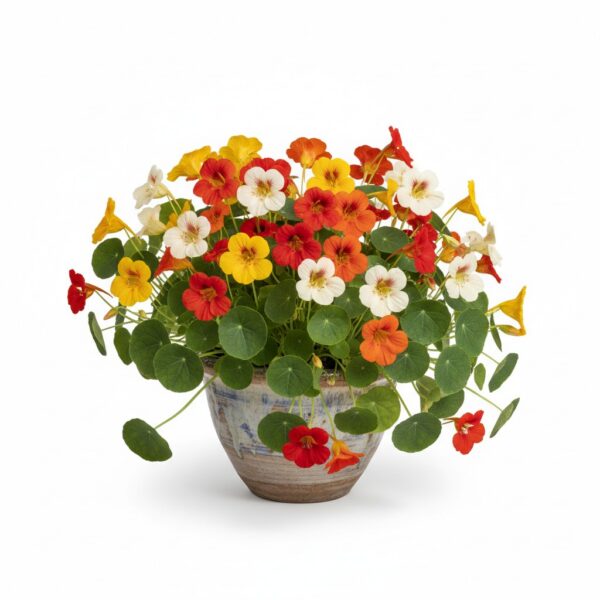
Nasturtium Tropaeolum
Tropaeolum majus
Tropaeolum majus, commonly known as nasturtium, is an annual flowering plant known for its vibrant, edible flowers and peppery-flavored leaves. It is a sprawling plant that can grow as a ground cover or climb with support. The plant features round, shield-shaped leaves and spurred flowers in shades of orange, yellow, and red. While primarily grown outdoors in gardens and containers for its ornamental value and culinary uses, it can be challenging to maintain indoors due to its high light requirements and sprawling growth habit. People grow it for its bright colors, edible parts, and ability to attract pollinators.

Nigella
Nigella damascena
Nigella damascena, commonly known as Love-in-a-mist, is an annual flowering plant typically grown outdoors in gardens. It features finely divided, feathery foliage and distinctive flowers surrounded by a lacy ruff of bracts. The flowers are usually blue, but can also be white, pink, or purple. After flowering, it produces attractive seed pods. It's primarily grown for its ornamental value in cottage gardens and wildflower meadows, and the dried seed pods are used in floral arrangements. It is not naturally an indoor plant and will struggle to thrive indoors.
Quick Plant Comparison
| Feature | Nasturtium Tropaeolum | Nigella |
|---|---|---|
| Light | Full sun to partial shade. Requires at least 6 hours of direct sunlight daily for optimal flowering. | Full sun (at least 6 hours of direct sunlight per day) |
| Watering | Every 2-3 days outdoors in warm weather, less frequently in cooler conditions. Indoor watering is difficult to predict, but likely every 5-7 days if attempted. | 2-3 times per week, depending on weather and soil drainage |
| Humidity | 40-60% | 30-50% |
| Temperature | 15-24°C | 15-24°C |
| Care Level | Expert | Expert |
| Growth Rate | Fast | Fast |
| Max Height | 0.3-1 meter (indoors, likely smaller and less vigorous) | N/A (Outdoor plant, typically 30-60 cm) |
| Pet Safety | ❌ Toxic To Pets | ❌ Toxic To Pets |
| Soil | Well-draining soil; a mix of potting soil, perlite, and compost is suitable. Avoid overly rich soil, as it can promote foliage growth at the expense of flowers. | Well-draining soil, such as a sandy loam |
| Beginner Friendly | ❌ No | ❌ No |
| Weekly Maintenance | 10 minutes weekly outdoors, more if attempting indoor growth. | 5 minutes weekly (deadheading, watering) |
🔬 Botanical Information — Comparing These Plants
Nasturtium Tropaeolum
| Scientific Name | Tropaeolum majus |
|---|---|
| Family | Tropaeolaceae |
| Native To | Andes Mountains of South America (Peru, Bolivia) |
| Also Known As | Nasturtium, Garden Nasturtium, Indian Cress, Monk's Cress |
| Leaves | The leaves of nasturtiums are round and shield-shaped, with a diameter of 5-10 cm. They are typically a vibrant green color and have a slightly waxy texture. The leaves are attached to the stem in the center, giving them a unique and distinctive appearance. |
| Flowers | Nasturtiums readily flower outdoors in the right conditions. The flowers are spurred and come in shades of orange, yellow, and red. They have a delicate, peppery fragrance and are often used in salads and as garnishes. Flowering indoors is rare and requires intense supplemental lighting. |
Nigella
| Scientific Name | Nigella damascena |
|---|---|
| Family | Ranunculaceae |
| Native To | Southern Europe, North Africa, Southwest Asia |
| Also Known As | Love-in-a-mist, Devil in the bush, Ragged lady |
| Leaves | The leaves of Nigella damascena are finely divided and feathery, giving the plant a delicate and airy appearance. They are typically light green in color and are arranged alternately along the stems. The foliage provides a beautiful backdrop for the flowers. |
| Flowers | Nigella damascena rarely flowers indoors. Outdoors, it produces beautiful, delicate flowers in shades of blue, white, pink, or purple. The flowers are surrounded by a lacy ruff of bracts, which adds to their unique appearance. Flowering typically occurs in summer. |
📏 Size & Growth — Plant Comparison
Nasturtium Tropaeolum
Nigella
🌱 Propagation — Comparing Plant Growth
Nasturtium Tropaeolum
Methods: Seed
Difficulty: Easy
Tips: Soak seeds in water for a few hours before planting. Sow directly into the soil or start indoors 4-6 weeks before the last frost. Keep soil moist until germination.
Nigella
Methods: Seed
Difficulty: Easy
Tips: Sow seeds directly into the garden in early spring or fall. Seeds need light to germinate, so do not cover them too deeply.
✨ Benefits & Features — Comparing Plant Value
Nasturtium Tropaeolum
Nasturtiums are unique for their edible flowers and leaves, which have a distinctive peppery flavor. They also act as a natural pest repellent, making them a valuable addition to vegetable gardens. Their vibrant colors and ease of growth make them a popular choice for gardeners.
- ✓ Edible flowers and leaves provide a peppery flavor to dishes
- ✓ Attracts pollinators to the garden, supporting local ecosystems
- ✓ Acts as a natural pest repellent, reducing the need for chemical pesticides
- ✓ Adds vibrant color and visual interest to outdoor spaces
- ✓ Provides a fun and engaging gardening experience.
- ⚠️ Toxic to pets
Nigella
Nigella damascena is known for its distinctive flowers surrounded by a lacy ruff of bracts. The seed pods are also very attractive and can be used in dried flower arrangements. It readily self-seeds, making it a reliable addition to the garden year after year.
- ✓ Attracts pollinators to the garden
- ✓ Adds beauty and color to outdoor spaces
- ✓ Provides seeds for future planting
- ✓ Dried seed pods can be used in floral arrangements
- ✓ Relatively easy to grow outdoors
- ⚠️ Toxic to pets
📅 Maintenance Schedule — Plant Care Comparison
Nasturtium Tropaeolum
Nigella
🌞 Light Requirements
Nasturtium Tropaeolum
Full sun to partial shade. Requires at least 6 hours of direct sunlight daily for optimal flowering.
Low light tolerant: ❌ No
Nigella
Full sun (at least 6 hours of direct sunlight per day)
Low light tolerant: ❌ No
💧 Watering Needs
Nasturtium Tropaeolum
Water thoroughly when the top inch of soil feels dry. Avoid overwatering, which can lead to root rot. Yellowing leaves indicate overwatering; wilting leaves indicate underwatering.
Nigella
Water regularly, especially during dry periods. Keep soil consistently moist but not waterlogged. Overwatering can lead to root rot. Allow the top inch of soil to dry out slightly between waterings.
🌡️ Temperature & Humidity
Nasturtium Tropaeolum
Temperature: 15-24°C
Humidity: 40-60%
Nigella
Temperature: 15-24°C
Humidity: 30-50%
🤔 Which Plant Is Right For You?
Nasturtium Tropaeolum
Tropaeolum majusGardeners looking for an edible and ornamental plant to add color and interest to their outdoor spaces.
✅ Choose This Plant If...
- You want edible flowers and leaves for salads and garnishes
- You need a plant to attract pollinators to your garden
- You want a natural pest repellent for your vegetable garden
- You enjoy vibrant colors in your outdoor space
- You are an experienced gardener willing to experiment with growing a sun-loving plant indoors.
❌ Skip This Plant If...
- You have pets that might ingest the plant
- You lack a sunny location to provide adequate light
- You prefer low-maintenance indoor plants.
Nigella
Nigella damascenaGardeners looking for a beautiful and easy-to-grow annual flower for their outdoor garden.
✅ Choose This Plant If...
- You want a low-maintenance annual flower for your garden.
- You enjoy cottage garden aesthetics.
- You want to attract pollinators to your garden.
- You want to harvest seeds for future planting.
- You want to use the dried seed pods in floral arrangements.
❌ Skip This Plant If...
- You are looking for an indoor plant.
- You have pets that might ingest the plant.
- You live in a very shady area.
🎯 Quick Verdict
⚡ Key Differences Between These Plants
Both plants have similar basic care requirements but differ in appearance and specific needs. Compare plants carefully to find the best fit for your space.
💡 Pro Tips For Comparing These Plants
Nasturtium Tropaeolum Care Tips
Nasturtiums are easy to grow outdoors in sunny locations with well-draining soil. Indoor cultivation is challenging due to high light requirements and the plant's sprawling growth habit. Providing adequate light and avoiding overwatering are crucial for indoor success, which is rarely achieved.
- Provide at least 6 hours of direct sunlight daily for optimal flowering
- Avoid overwatering to prevent root rot
- Use a low-nitrogen fertilizer to encourage flower production
- Pinch back stems to promote bushier growth
- Collect seeds at the end of the season to replant next year.
Nigella Care Tips
Nigella damascena is primarily an outdoor plant and is difficult to grow indoors due to its high light requirements. It needs full sun and well-draining soil. Indoor attempts will likely result in leggy growth and poor flowering. It is also toxic to pets.
- Sow seeds directly into the garden in early spring or fall for best results.
- Ensure well-draining soil to prevent root rot.
- Provide full sun for optimal flowering.
- Deadhead spent flowers to encourage further blooming.
- Allow some seed pods to dry on the plant for self-seeding.
⚠️ Common Problems & Solutions — Plant Care Comparison
Nasturtium Tropaeolum
Nigella
❓ Frequently Asked Questions — Comparing These Plants
Nasturtium Tropaeolum
What are the light requirements for Nasturtium Tropaeolum?
Nasturtium Tropaeolum thrives in full sun, which translates to at least 6 hours of direct sunlight per day. In hotter climates, provide some afternoon shade to prevent scorching of the leaves and flowers. Insufficient light can lead to leggy growth and reduced blooming.
How do I care for Nasturtium Tropaeolum?
Nasturtium Tropaeolum thrives in well-draining soil and prefers full sun to partial shade. Water regularly, allowing the soil to dry slightly between waterings. Avoid overwatering, which can lead to root rot. Fertilize sparingly, as excessive fertilization can promote leaf growth at the expense of flowers.
How do I propagate Nasturtium Tropaeolum?
Nasturtium Tropaeolum is most commonly propagated by seed. Sow seeds directly into the garden in spring after the last frost or start them indoors 4-6 weeks prior. Soak the seeds in water overnight before planting to improve germination.
Nigella
What are the light requirements for Nigella?
Nigella thrives in full sun, requiring at least 6-8 hours of direct sunlight per day to produce abundant blooms. Insufficient light can result in leggy growth and reduced flowering. When planting Nigella indoors, choose a location that receives plenty of sunlight, such as a south-facing window. If natural light is limited, supplement with artificial grow lights to ensure adequate light exposure. Rotate plants regularly to ensure even light distribution and prevent them from leaning towards the light source.
How do I care for Nigella?
Nigella prefers full sun and well-drained soil. Sow seeds directly into the garden in early spring or fall. Thin seedlings to 6-12 inches apart. Water regularly, especially during dry periods, but avoid overwatering. Fertilize lightly with a balanced fertilizer during the growing season to encourage blooming. Deadhead spent flowers to prolong the blooming period. Allow some flowers to set seed if you want the plant to self-seed.
How do I propagate Nigella?
Nigella is most commonly propagated by seed.
Last updated: April 22, 2026 — Plant care data reviewed and verified by our editorial team.