
Mickey Mouse Plant vs Onion Plant Comparison
Compare these two plants side by side — care needs, key differences, and which is right for your home.
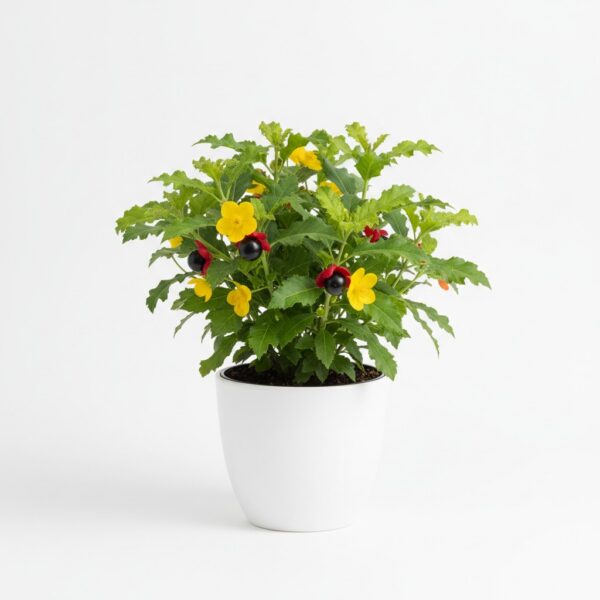
Mickey Mouse Plant
Ochna serrulata
Ochna serrulata, commonly known as the Mickey Mouse Plant, is a shrub or small tree typically grown outdoors in warmer climates. It's named for its distinctive seed pods, which resemble Mickey Mouse's face: black seeds (the 'ears') sit atop a bright red receptacle (the 'face'). The plant features glossy, serrated leaves and produces small, yellow, fragrant flowers in spring. While sometimes grown as a novelty plant indoors, it generally thrives best outdoors where it can receive ample sunlight and space to grow. People grow it for its unique seed pods and attractive foliage.

Onion
Allium cepa
The onion (Allium cepa) is a biennial plant, typically grown as an annual, cultivated for its edible bulb. It features hollow, bluish-green leaves and a bulb that develops at the base of the plant. Onions are primarily grown outdoors in gardens or fields. While it's possible to sprout an onion indoors, it's not typically grown to full maturity as a houseplant due to its strong odor and specific environmental needs. People grow onions for culinary purposes, adding flavor to a wide variety of dishes.
Quick Plant Comparison
| Feature | Mickey Mouse Plant | Onion |
|---|---|---|
| Light | Full sun to partial shade | Full sun (6-8 hours of direct sunlight daily) |
| Watering | Every 7-10 days outdoors, less frequently indoors (every 10-14 days) | Every 5-7 days, depending on weather and soil drainage |
| Humidity | 40-60% | 40-60% |
| Temperature | 18-27°C | 13-24°C |
| Care Level | Expert | Expert |
| Growth Rate | Moderate | Moderate |
| Max Height | 1-2 meters indoors (much larger outdoors, up to 6 meters) | Outdoors: 30-60 cm. Indoors (sprouted): Up to 30cm |
| Pet Safety | ❌ Toxic To Pets | ❌ Toxic To Pets |
| Soil | Well-draining potting mix or garden soil | Well-draining, fertile soil rich in organic matter |
| Beginner Friendly | ❌ No | With Caution |
| Weekly Maintenance | 30 minutes weekly (including watering, fertilizing, and pruning) | 30 minutes weekly (weeding, watering, pest control) |
🔬 Botanical Information — Comparing These Plants
Mickey Mouse Plant
| Scientific Name | Ochna serrulata |
|---|---|
| Family | Ochnaceae |
| Native To | South Africa |
| Also Known As | Mickey Mouse Plant, Bird's Eye Bush, Carnival Bush |
| Leaves | The leaves are glossy, dark green, and serrated along the edges. They are typically oval or lance-shaped and measure about 5-10 cm in length. |
| Flowers | It produces small, yellow, fragrant flowers in spring. Flowering indoors is possible but less frequent and abundant than outdoors. The flowers are followed by the distinctive seed pods. |
Onion
| Scientific Name | Allium cepa |
|---|---|
| Family | Amaryllidaceae |
| Native To | Central Asia |
| Also Known As | Onion, Bulb Onion, Common Onion |
| Leaves | The leaves are hollow, cylindrical, and bluish-green, growing directly from the bulb. They are typically 30-50 cm long and taper to a point. |
| Flowers | Onions produce a spherical umbel of small, white or purple flowers on a tall stalk. Flowering is more common in the second year of growth. Flowering rarely occurs indoors. |
📏 Size & Growth — Plant Comparison
Mickey Mouse Plant
Onion
🌱 Propagation — Comparing Plant Growth
Mickey Mouse Plant
Methods: Seed, Stem cuttings
Difficulty: Moderate
Tips: For stem cuttings, take semi-hardwood cuttings in late spring or early summer. Dip the cut end in rooting hormone and plant in well-draining soil. Keep the soil moist and provide indirect light. Seeds can be sown in spring after soaking them in water for 24 hours.
Onion
Methods: Seed, Bulb division
Difficulty: Easy
Tips: Start seeds indoors 8-10 weeks before the last frost or plant sets (small bulbs) directly in the garden after the last frost. For bulb division, separate small bulbs from a larger cluster and plant them individually.
✨ Benefits & Features — Comparing Plant Value
Mickey Mouse Plant
The most unique characteristic is the Mickey Mouse-shaped seed pods, which are formed by black seeds sitting atop a bright red receptacle. This unusual appearance makes it a popular ornamental plant. The fragrant yellow flowers are also a notable feature.
- ✓ Unique and eye-catching appearance.
- ✓ Provides visual interest in the garden.
- ✓ Attracts birds to the garden.
- ✓ Can be used as a specimen plant.
- ✓ Offers fragrant flowers during the blooming season.
- ⚠️ Toxic to pets
Onion
The onion is a bulbous plant with a distinctive pungent odor and flavor. Its layers of fleshy scales form the edible bulb, which is used in a wide variety of culinary applications.
- ✓ Provides fresh, flavorful onions for cooking.
- ✓ Rich in vitamins and minerals.
- ✓ Can deter pests in the garden.
- ✓ Offers a rewarding gardening experience.
- ✓ Supports sustainable food practices.
- ⚠️ Toxic to pets
📅 Maintenance Schedule — Plant Care Comparison
Mickey Mouse Plant
Onion
🌞 Light Requirements
Mickey Mouse Plant
Full sun to partial shade
Low light tolerant: ❌ No
Onion
Full sun (6-8 hours of direct sunlight daily)
Low light tolerant: ❌ No
💧 Watering Needs
Mickey Mouse Plant
Water thoroughly when the top inch of soil is dry. Avoid overwatering, which can lead to root rot. Allow the soil to dry slightly between waterings. Signs of overwatering include yellowing leaves and soggy soil. Underwatering is indicated by wilting leaves and dry, cracked soil.
Onion
Water deeply when the top inch of soil is dry. Avoid overwatering, which can lead to bulb rot. Signs of overwatering include yellowing leaves and a soft, mushy bulb. Underwatering is indicated by wilting leaves and stunted growth.
🌡️ Temperature & Humidity
Mickey Mouse Plant
Temperature: 18-27°C
Humidity: 40-60%
Onion
Temperature: 13-24°C
Humidity: 40-60%
🤔 Which Plant Is Right For You?
Mickey Mouse Plant
Ochna serrulataExperienced gardeners in warm climates who want a unique ornamental shrub for their garden.
✅ Choose This Plant If...
- You live in a warm climate where it can thrive outdoors.
- You are an experienced gardener looking for a unique ornamental plant.
- You are fascinated by unusual seed pod shapes.
- You have a sunny garden space.
- You are prepared to provide the specific care this plant needs.
❌ Skip This Plant If...
- You have pets that might ingest the plant.
- You live in a cold climate with harsh winters.
- You are a beginner gardener.
- You don't have a sunny location.
- You want a low-maintenance indoor plant.
Onion
Allium cepaGardeners looking to grow their own culinary onions.
✅ Choose This Plant If...
- You want to grow your own fresh onions for cooking.
- You have a sunny outdoor garden space.
- You enjoy the process of nurturing plants from seed to harvest.
- You want to control the quality and source of your food.
- You are looking for a companion plant to deter pests in your vegetable garden.
❌ Skip This Plant If...
- You have pets that might ingest the plant.
- You lack a sunny outdoor space.
- You are sensitive to strong odors.
🎯 Quick Verdict
⚡ Key Differences Between These Plants
Mickey Mouse Plant needs full sun to partial shade, while Onion prefers full sun (6-8 hours of direct sunlight daily).
💡 Pro Tips For Comparing These Plants
Mickey Mouse Plant Care Tips
Ochna serrulata is primarily an outdoor plant and requires specific conditions to thrive indoors. It needs very bright light, well-draining soil, and careful watering. Maintaining adequate humidity can also be challenging indoors. It is toxic to pets, so caution is needed.
- Provide ample sunlight for optimal growth and flowering.
- Water deeply but infrequently, allowing the soil to dry slightly between waterings.
- Fertilize regularly during the growing season with a balanced fertilizer.
- Prune after flowering to maintain shape and encourage bushier growth.
- Protect from frost in colder climates.
Onion Care Tips
Onions are primarily outdoor plants requiring full sun and well-drained soil. Growing them indoors is challenging due to their need for intense sunlight and the potential for strong odors. While sprouting an onion indoors is possible, achieving a mature bulb is difficult.
- Plant in well-drained soil amended with compost.
- Water deeply but infrequently, allowing the soil to dry slightly between waterings.
- Fertilize regularly during the growing season with a balanced fertilizer.
- Protect from pests and diseases with appropriate measures.
- Harvest when the tops begin to fall over and the bulbs are mature.
⚠️ Common Problems & Solutions — Plant Care Comparison
Mickey Mouse Plant
Onion
❓ Frequently Asked Questions — Comparing These Plants
Mickey Mouse Plant
What are the light requirements for Mickey Mouse Plant?
Mickey Mouse Plants thrive in bright, indirect light. An east-facing window is ideal, providing gentle morning sun. A west-facing window can also work, but be sure to shield the plant from harsh afternoon sun. Insufficient light can lead to leggy growth and reduced flowering. If natural light is limited, supplement with a grow light, positioning it 12-18 inches above the plant. Rotate the plant regularly to ensure even light exposure on all sides. Avoid placing the plant in direct sunlight, as this can scorch the leaves. Look for signs of stress, such as pale or yellowing leaves, which may indicate too much or too little light.
How do I care for Mickey Mouse Plant?
To keep your Mickey Mouse Plant thriving, provide it with bright, indirect light. Direct sunlight can scorch its leaves. Water thoroughly when the top inch of soil feels dry to the touch, but avoid overwatering, which can lead to root rot. Maintain a humidity level of 50-60%. Fertilize monthly during the growing season (spring and summer) with a balanced liquid fertilizer diluted to half strength. Repot every 1-2 years in spring using a well-draining potting mix. Prune lightly after flowering to maintain its shape and encourage new growth. Protect from temperatures below 50°F (10°C). Ensure good air circulation. Regularly inspect for pests and diseases.
How do I propagate Mickey Mouse Plant?
Mickey Mouse Plants can be propagated through stem cuttings. Take a 4-6 inch cutting from a healthy stem. Remove the lower leaves and dip the cut end in rooting hormone. Plant the cutting in a well-draining potting mix. Keep the soil moist and provide bright, indirect light. Roots should develop in 4-6 weeks. Division can be done during repotting, carefully separating the root ball. Keiki propagation is not typical for this plant. Maintain high humidity during the rooting process. Avoid direct sunlight until established.
Onion
What are the light requirements for Onion?
Flowering onions require ample sunlight to thrive and produce abundant blooms. Aim for at least 6-8 hours of direct sunlight per day. Inadequate light can lead to leggy growth, weak stems, and reduced flowering. If growing indoors, place your onion plant near a south-facing window where it can receive maximum sunlight exposure. If natural light is insufficient, supplement with grow lights. Rotate the plant regularly to ensure even light distribution and prevent it from leaning towards the light source. Monitor the foliage for signs of sunburn, which can occur if the plant is exposed to intense afternoon sun. Adjust the placement or provide shade if necessary.
How do I care for Onion?
Flowering onions thrive with proper care. Plant bulbs in well-draining soil in a sunny location. Water thoroughly after planting and then moderately, allowing the soil to dry slightly between waterings. Fertilize sparingly with a balanced fertilizer during the growing season, and increase phosphorus before blooming. Deadhead spent flowers to encourage continued blooming. Provide support for taller varieties to prevent drooping. In colder climates, protect bulbs with a layer of mulch during winter. Monitor for pests and diseases, and address promptly. Ensure good air circulation to prevent fungal issues. Repot container-grown onions every few years to refresh the soil. Regular check-ups will keep your onion plant healthy and flourishing.
How do I propagate Onion?
Flowering onions can be propagated through several methods. Division is the most common and easiest. When the plant is dormant, carefully dig up the clump and separate the bulbs. Replant the individual bulbs in well-draining soil. Stem cuttings are not typically used for onion propagation. Keiki (small plantlets that form on the flower stalk) are rare in onions. For bulb offsets, detach them carefully from the mother bulb and plant them separately. Water regularly and provide adequate sunlight. Propagation is best done in the fall or early spring. Ensure the new plants have adequate space to develop their root systems. With proper care, the propagated onions will develop into mature, flowering plants within a year or two.
Last updated: May 16, 2026 — Plant care data reviewed and verified by our editorial team.