
Ligustrum vs Sago Palm Plant Comparison
Compare these two plants side by side — care needs, key differences, and which is right for your home.
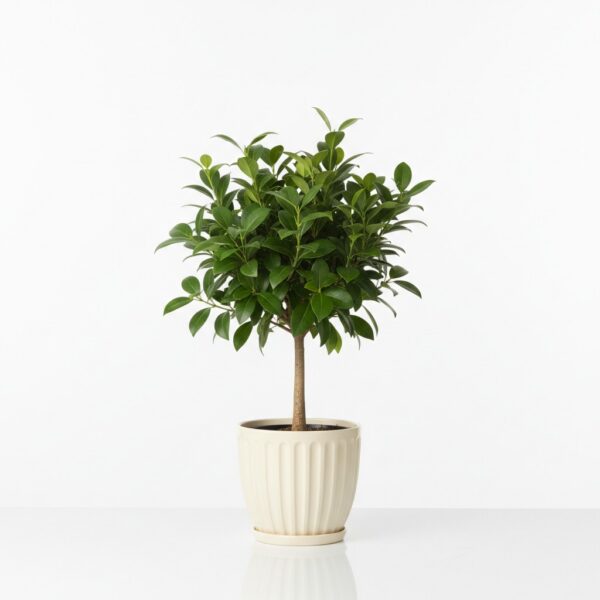
Ligustrum
Ligustrum spp.
Ligustrum, commonly known as privet, is a genus of shrubs and small trees often used for hedging and topiary. They are characterized by their dense foliage, opposite leaves, and clusters of small, white, fragrant flowers, followed by dark berries. While primarily outdoor plants valued for their adaptability and ease of shaping, some species are occasionally brought indoors, though they rarely thrive due to insufficient light and humidity. They are grown for their formal appearance and ability to create privacy screens.

Sago Palm
Cycas revoluta
Despite its common name, the Sago Palm is not a true palm but a cycad, an ancient group of plants that predate flowering plants. It features a stout, palm-like trunk and a crown of stiff, feathery, dark green leaves. It is a slow-growing plant, typically grown as an ornamental plant in gardens and containers. While it can be grown indoors, it requires very bright light and is more commonly found outdoors in warmer climates. People grow it for its tropical appearance and architectural form.
Quick Plant Comparison
| Feature | Ligustrum | Sago Palm |
|---|---|---|
| Light | Full sun to partial shade. Requires at least 6 hours of direct sunlight daily for optimal growth and flowering. | Full sun to partial shade. Requires at least 6 hours of direct sunlight daily for optimal growth. |
| Watering | Every 7-10 days outdoors, less frequently indoors (every 2-3 weeks, depending on conditions). | Every 2-4 weeks, depending on environmental conditions and pot size. |
| Humidity | 30-50% | 40-60% |
| Temperature | 15-27°C | 18-27°C |
| Care Level | Expert | Expert |
| Growth Rate | Moderate To Fast | Slow |
| Max Height | Rarely exceeds 1-2 meters indoors. Outdoors, can reach up to 5 meters or more. | Indoors: 0.6-1.2 meters. Outdoors: Up to 6-7 meters. |
| Pet Safety | ❌ Toxic To Pets | ❌ Toxic To Pets |
| Soil | Well-draining soil, such as a mix of potting soil, perlite, and sand. | Well-draining potting mix, such as a cactus or succulent mix amended with perlite or sand. |
| Beginner Friendly | ❌ No | ❌ No |
| Weekly Maintenance | 30 minutes weekly (including watering, pruning, and pest checks). | 15 minutes weekly |
🔬 Botanical Information — Comparing These Plants
Ligustrum
| Scientific Name | Ligustrum spp. |
|---|---|
| Family | Oleaceae |
| Native To | Native to Europe, North Africa, and Asia, with various species originating from different regions within these continents. |
| Also Known As | Privet, Common Privet, Japanese Privet, Chinese Privet, Wax-leaf Privet |
| Leaves | Opposite, simple, lanceolate to ovate leaves, typically 5-10 cm long. The color varies depending on the species, ranging from dark green to variegated forms with yellow or white margins. Leaves have a smooth texture. |
| Flowers | Rarely flowers indoors. Outdoors, it produces clusters of small, white, fragrant flowers in late spring or early summer. |
Sago Palm
| Scientific Name | Cycas revoluta |
|---|---|
| Family | Cycadaceae |
| Native To | Southern Japan and the Ryukyu Islands |
| Also Known As | Sago Palm, King Sago Palm, Sago Cycad, Japanese Sago Palm |
| Leaves | The leaves are pinnately compound, meaning they are composed of many leaflets arranged along a central stem. The leaflets are stiff, linear, and dark green, with a pointed tip. They are arranged in a symmetrical pattern around the trunk. |
| Flowers | Sago Palms rarely flower indoors. Outdoors, mature plants produce cones (male) or seed structures (female). |
📏 Size & Growth — Plant Comparison
Ligustrum
Sago Palm
🌱 Propagation — Comparing Plant Growth
Ligustrum
Methods: Stem cuttings, Seed
Difficulty: Moderate
Tips: Take semi-hardwood cuttings in late summer. Dip the cut end in rooting hormone and plant in a well-draining potting mix. Keep the soil moist and provide indirect light until roots develop.
Sago Palm
Methods: Seeds, offsets (pups)
Difficulty: Difficult
Tips: Propagating from seeds is a slow process. Offsets can be carefully removed from the base of the plant and planted in well-draining soil. Allow the cut surface to callous over for a few days before planting.
✨ Benefits & Features — Comparing Plant Value
Ligustrum
Its dense foliage and ability to be shaped into hedges or topiary make it a unique choice for formal gardens. The fragrant flowers are also a notable characteristic.
- ✓ Provides a formal aesthetic.
- ✓ Can be shaped into various forms.
- ✓ Offers a sense of structure and order.
- ✓ May improve indoor air quality slightly.
- ✓ Can be a rewarding challenge for experienced gardeners.
- ⚠️ Toxic to pets
Sago Palm
Sago Palms are not true palms but cycads, an ancient group of plants. They are dioecious, meaning they have separate male and female plants, and they are extremely slow-growing, adding to their unique appeal.
- ✓ Adds a unique, prehistoric aesthetic to the landscape.
- ✓ Drought-tolerant and low-maintenance once established.
- ✓ Provides architectural interest with its symmetrical form.
- ✓ Can be grown in containers.
- ✓ Relatively pest-resistant.
- ⚠️ Toxic to pets
📅 Maintenance Schedule — Plant Care Comparison
Ligustrum
Sago Palm
🌞 Light Requirements
Ligustrum
Full sun to partial shade. Requires at least 6 hours of direct sunlight daily for optimal growth and flowering.
Low light tolerant: ❌ No
Sago Palm
Full sun to partial shade. Requires at least 6 hours of direct sunlight daily for optimal growth.
Low light tolerant: ❌ No
💧 Watering Needs
Ligustrum
Water thoroughly when the top inch of soil is dry. Avoid overwatering, which can lead to root rot. Signs of underwatering include wilting leaves, while overwatering can cause yellowing leaves and leaf drop.
Sago Palm
Water thoroughly when the soil is dry to the touch. Allow the top inch or two of soil to dry out between waterings. Overwatering can lead to root rot. Signs of underwatering include drooping or yellowing leaves. Signs of overwatering include yellowing leaves, soft trunk, and a foul smell from the soil.
🌡️ Temperature & Humidity
Ligustrum
Temperature: 15-27°C
Humidity: 30-50%
Sago Palm
Temperature: 18-27°C
Humidity: 40-60%
🤔 Which Plant Is Right For You?
Ligustrum
Ligustrum spp.Experienced gardeners who want to attempt growing a hedging plant indoors, understanding the challenges.
✅ Choose This Plant If...
- You enjoy the challenge of growing outdoor plants indoors.
- You have a very bright, sunny location.
- You are experienced with pruning and shaping plants.
- You want a formal, structured plant.
- You are willing to provide extra care to meet its needs.
❌ Skip This Plant If...
- You have pets that might ingest the plant.
- You lack a bright, sunny location.
- You are a beginner gardener.
- You prefer low-maintenance plants.
Sago Palm
Cycas revolutaExperienced gardeners in warm climates who want a striking, architectural plant.
✅ Choose This Plant If...
- You live in a warm climate with plenty of sunshine.
- You want a low-maintenance, drought-tolerant plant for your garden.
- You appreciate the unique, prehistoric appearance of cycads.
- You have a large, sunny space to accommodate its mature size.
- You are an experienced gardener looking for a challenging plant to grow.
❌ Skip This Plant If...
- You have pets or small children due to its high toxicity.
- You live in a cold climate with limited sunlight.
- You are a beginner gardener.
- You don't have a sunny location.
- You prefer fast-growing plants.
🎯 Quick Verdict
⚡ Key Differences Between These Plants
Ligustrum has moderate to fast growth, while Sago Palm grows slow.
💡 Pro Tips For Comparing These Plants
Ligustrum Care Tips
Privet is primarily an outdoor plant and challenging to maintain indoors due to its high light requirements and need for well-draining soil. It requires regular pruning to maintain its shape and can be susceptible to pests and diseases. Indoor cultivation is generally not recommended.
- Provide at least 6 hours of direct sunlight daily.
- Use well-draining soil to prevent root rot.
- Prune regularly to maintain shape and size.
- Monitor for pests and diseases.
- Fertilize regularly during the growing season.
Sago Palm Care Tips
Sago Palms are relatively low-maintenance outdoors in warm climates. Indoors, they require very bright light and careful watering to avoid root rot. They are slow-growing and highly toxic to pets, making them a challenging choice for indoor environments.
- Provide well-draining soil to prevent root rot.
- Water deeply but infrequently, allowing the soil to dry out between waterings.
- Fertilize regularly during the growing season with a palm fertilizer.
- Protect from frost in colder climates.
- Wear gloves when handling to avoid skin irritation.
⚠️ Common Problems & Solutions — Plant Care Comparison
Ligustrum
Sago Palm
❓ Frequently Asked Questions — Comparing These Plants
Ligustrum
What are the light requirements for Ligustrum?
Ligustrum requires bright, indirect light to thrive indoors. Insufficient light can lead to leggy growth and pale leaves. A location near an east-facing or west-facing window is ideal, providing ample light without direct sun exposure. If placing near a south-facing window, use a sheer curtain to filter the light.
How do I care for Ligustrum?
Ligustrum thrives indoors with bright, indirect light. Direct sunlight can scorch its leaves. Water thoroughly when the top inch of soil feels dry, ensuring good drainage to prevent root rot. Maintain moderate humidity levels, especially during dry months, by misting regularly or using a humidifier.
How do I propagate Ligustrum?
Ligustrum can be propagated easily through stem cuttings or air layering.
Sago Palm
What are the light requirements for Sago Palm?
Sago Palms require bright, indirect light to thrive. They can tolerate some direct sunlight, especially in the morning or late afternoon, but prolonged exposure to intense midday sun can scorch their fronds. An east- or west-facing window is ideal, providing ample light without the harshness of direct sun. If growing indoors, rotate the plant regularly to ensure even growth. If the leaves start to yellow or become pale, it may indicate insufficient light. Conversely, brown, crispy tips suggest too much direct sun. Supplement with a grow light if natural light is limited, especially during winter months.
How do I care for Sago Palm?
Sago Palms thrive in bright, indirect light and well-draining soil. Water thoroughly when the top inch of soil is dry, allowing excess water to drain away. Avoid overwatering, as this can lead to root rot. Fertilize sparingly during the growing season (spring and summer) with a balanced liquid fertilizer diluted to half strength. Maintain moderate humidity levels. Repot only when the plant becomes root-bound, typically every few years. Prune dead or yellowing fronds at the base. Protect from frost and extreme cold. Ensure good air circulation to prevent fungal diseases. Wipe leaves occasionally to remove dust and improve light absorption. Sago Palms are slow-growing and require minimal maintenance once established. Always handle with care, as the leaves have sharp points.
How do I propagate Sago Palm?
Sago Palms can be propagated from seeds or by removing offsets (pups) that grow at the base of the plant. Seed propagation is slow and can take several months to years for germination. To propagate from offsets, carefully detach the pup from the main trunk, ensuring it has some roots. Allow the cut end to callous over for a few days before planting in well-draining soil. Keep the soil consistently moist but not waterlogged. Place the pup in a warm, bright location with indirect light. Rooting can take several weeks to months. Be patient and avoid disturbing the pup during this time. Division is best done in spring or early summer.
Last updated: May 5, 2026 — Plant care data reviewed and verified by our editorial team.