
Leucadendron vs Mountain Avens Plant Comparison
Compare these two plants side by side — care needs, key differences, and which is right for your home.
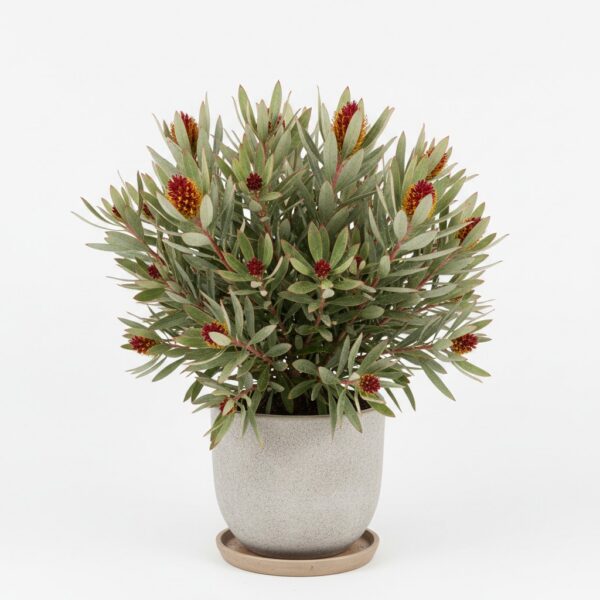
Leucadendron
Leucadendron spp.
Leucadendron is a genus of about 80 species of flowering plants in the family Proteaceae, native to South Africa. They are evergreen shrubs or small trees, typically ranging from 0.5 to several meters in height. Known for their striking foliage and prominent cone-like structures (actually modified leaves called bracts surrounding the flowers), they are popular ornamentals. The bracts often change color dramatically, providing long-lasting visual interest. Leucadendrons are primarily grown outdoors for their unique appearance and drought tolerance. Indoor cultivation is challenging due to their high light requirements and specific environmental needs.

Mountain Avens
Dryas octopetala
Dryas octopetala, commonly known as Mountain Avens, is a low-growing, mat-forming evergreen subshrub. It is characterized by its woody stems and creeping rhizomes. The plant features dark green, leathery, oval-shaped leaves with crenate margins. It produces solitary, showy white flowers with eight petals (hence the name 'octopetala') in late spring to summer. Mountain Avens is primarily an outdoor plant, thriving in rocky, well-drained alpine habitats. It is grown for its attractive foliage and flowers, as well as its ability to stabilize soil in harsh environments. Attempting to grow it indoors is challenging due to its specific environmental needs.
Quick Plant Comparison
| Feature | Leucadendron | Mountain Avens |
|---|---|---|
| Light | Full sun (at least 6-8 hours of direct sunlight daily) | Full sun to partial shade. Requires at least 6 hours of direct sunlight daily for optimal growth and flowering. |
| Watering | Every 1-2 weeks, depending on weather and soil drainage | Every 7-10 days, depending on weather and soil drainage. |
| Humidity | 40-60% | 30-50% |
| Temperature | 15-25°C | 10-20°C |
| Care Level | Expert | Expert |
| Growth Rate | Moderate | Slow |
| Max Height | Outdoor: 1-5 meters; Indoor (unlikely to thrive): Less than 1 meter | 5-15 cm (indoors unlikely to thrive) |
| Pet Safety | ❌ Toxic To Pets | ✅ Safe |
| Soil | Well-draining, slightly acidic soil. A mix of sand, perlite, and peat moss is suitable. | Well-drained, rocky or sandy soil with a slightly alkaline pH (7.0-7.5). |
| Beginner Friendly | ❌ No | ❌ No |
| Weekly Maintenance | 30 minutes weekly (mostly watering and occasional pruning) | 15 minutes weekly (primarily weeding and watering). |
🔬 Botanical Information — Comparing These Plants
Leucadendron
| Scientific Name | Leucadendron spp. |
|---|---|
| Family | Proteaceae |
| Native To | South Africa |
| Also Known As | Conebush, Leucadendron |
| Leaves | The leaves of Leucadendron are typically linear or lance-shaped, ranging in color from green to silvery-grey. Some species have colorful bracts that resemble leaves, adding to the plant's ornamental value. The leaves are often covered in fine hairs. |
| Flowers | Leucadendrons produce cone-like structures that are actually modified leaves (bracts) surrounding the flowers. The flowers themselves are small and inconspicuous. The bracts can be various colors, including yellow, orange, red, and pink. Flowering typically occurs in winter or spring. |
Mountain Avens
| Scientific Name | Dryas octopetala |
|---|---|
| Family | Rosaceae |
| Native To | Arctic and alpine regions of Europe, Asia, and North America |
| Also Known As | Mountain Avens, White Dryad, Eightpetal Mountain-avens |
| Leaves | Dark green, leathery, oval-shaped leaves with crenate (scalloped) margins. Typically 1-4 cm long. |
| Flowers | Rarely flowers indoors. Outdoors, it produces solitary, showy white flowers with eight petals in late spring to summer. |
📏 Size & Growth — Plant Comparison
Leucadendron
Mountain Avens
🌱 Propagation — Comparing Plant Growth
Leucadendron
Methods: Seed, Stem cuttings
Difficulty: Moderate
Tips: Take semi-hardwood cuttings in late summer or autumn. Use rooting hormone and provide bottom heat. Seeds require pre-treatment (soaking or scarification) for successful germination.
Mountain Avens
Methods: Seed, Division, Stem Cuttings
Difficulty: Moderate
Tips: For seeds, cold stratification is required for several weeks before sowing. Division is best done in early spring or fall. Stem cuttings should be taken in late spring and rooted in well-draining soil.
✨ Benefits & Features — Comparing Plant Value
Leucadendron
Leucadendrons are known for their striking bracts that surround the flowers, often changing color dramatically. They are also highly adapted to drought conditions and fire-prone environments.
- ✓ Drought tolerance reduces water consumption.
- ✓ Unique foliage adds visual interest to the garden.
- ✓ Attracts pollinators, supporting local ecosystems.
- ✓ Provides a natural screen or hedge.
- ✓ Relatively low maintenance once established.
- ⚠️ Toxic to pets
Mountain Avens
Its eight-petaled flowers are distinctive. It's also an extremely hardy plant adapted to harsh alpine and arctic environments.
- ✓ Attracts pollinators
- ✓ Provides ground cover
- ✓ Drought tolerant
- ✓ Stabilizes soil
- ✓ Aesthetically pleasing in rock gardens
- 🐾 Pet Safe
📅 Maintenance Schedule — Plant Care Comparison
Leucadendron
Mountain Avens
🌞 Light Requirements
Leucadendron
Full sun (at least 6-8 hours of direct sunlight daily)
Low light tolerant: ❌ No
Mountain Avens
Full sun to partial shade. Requires at least 6 hours of direct sunlight daily for optimal growth and flowering.
Low light tolerant: ❌ No
💧 Watering Needs
Leucadendron
Water deeply when the top inch of soil is dry. Leucadendrons are drought-tolerant once established. Overwatering can lead to root rot. Signs of underwatering include drooping or wilting leaves. Signs of overwatering include yellowing leaves and soggy soil.
Mountain Avens
Water thoroughly when the top inch of soil feels dry. Avoid overwatering, as it can lead to root rot. Ensure excellent drainage.
🌡️ Temperature & Humidity
Leucadendron
Temperature: 15-25°C
Humidity: 40-60%
Mountain Avens
Temperature: 10-20°C
Humidity: 30-50%
🤔 Which Plant Is Right For You?
Leucadendron
Leucadendron spp.Experienced gardeners in Mediterranean climates who want a unique and drought-tolerant ornamental shrub.
✅ Choose This Plant If...
- You live in a Mediterranean climate with full sun exposure.
- You are looking for a drought-tolerant plant.
- You want a unique and visually striking shrub.
- You are an experienced gardener willing to provide specific care.
- You want to attract pollinators to your garden.
❌ Skip This Plant If...
- You live in a cold climate with frequent frosts.
- You have limited sunlight in your garden.
- You are a beginner gardener.
- You have pets that might ingest the plant.
- You are looking for an easy-to-grow indoor plant.
Mountain Avens
Dryas octopetalaExperienced gardeners who want to create an alpine garden outdoors.
✅ Choose This Plant If...
- You have an outdoor rock garden or alpine garden
- You live in a cool climate with full sun
- You want a drought-tolerant ground cover
- You want to attract pollinators to your garden
- You appreciate unique and hardy plants
❌ Skip This Plant If...
- You live in a hot, humid climate
- You want an easy-to-grow indoor plant
- You don't have a sunny outdoor location
🎯 Quick Verdict
⚡ Key Differences Between These Plants
Leucadendron has moderate growth, while Mountain Avens grows slow.
💡 Pro Tips For Comparing These Plants
Leucadendron Care Tips
Leucadendrons are best suited for outdoor cultivation in Mediterranean climates. Indoor growing is extremely challenging due to high light requirements, specific soil needs, and sensitivity to overwatering. They require excellent drainage and careful attention to fertilization.
- Ensure excellent drainage to prevent root rot.
- Use a low-phosphorus fertilizer to avoid nutrient imbalances.
- Provide full sun for optimal growth and bract color.
- Prune lightly after flowering to maintain shape.
- Protect from frost in colder climates.
Mountain Avens Care Tips
Mountain Avens is primarily an outdoor alpine plant and is extremely challenging to grow indoors. It requires full sun, well-drained alkaline soil, and cool temperatures. Maintaining these conditions indoors is difficult, making it unsuitable for most indoor environments. Expect limited success indoors.
- Ensure excellent drainage to prevent root rot.
- Provide full sun for optimal flowering.
- Avoid overwatering, especially in winter.
- Mulch with gravel or small stones to maintain soil temperature and moisture.
- Prune lightly after flowering to maintain shape.
⚠️ Common Problems & Solutions — Plant Care Comparison
Leucadendron
Mountain Avens
❓ Frequently Asked Questions — Comparing These Plants
Leucadendron
What are the light requirements for Leucadendron?
Leucadendrons thrive in bright, direct sunlight. Indoors, a south-facing window is ideal. If natural light is insufficient, supplement with grow lights for at least 6 hours daily. Insufficient light can lead to leggy growth and reduced flowering. Rotate the plant regularly to ensure even light exposure on all sides. Observe the plant’s growth; if leaves are pale or stems are weak, increase light levels. Consider using a light meter to measure light intensity and adjust placement accordingly. Leucadendrons need high light to maintain their vibrant colors and compact growth habit.
How do I care for Leucadendron?
Leucadendrons as indoor trees require bright, direct sunlight, ideally at least 6 hours per day. Use a well-draining, acidic potting mix formulated for proteas or similar plants. Water thoroughly when the top inch of soil is dry, allowing excess water to drain away completely. Avoid overwatering, which can lead to root rot. Maintain moderate humidity levels. Fertilize sparingly during the growing season (spring and summer) with a low-phosphorus fertilizer. Prune lightly after flowering to maintain shape and encourage bushier growth. Repot every 2-3 years, increasing pot size gradually. Protect from frost and extreme temperature fluctuations. Ensure good air circulation around the plant.
How do I propagate Leucadendron?
Leucadendrons can be propagated through stem cuttings or air layering. For stem cuttings, take 4-6 inch cuttings from new growth in spring or summer. Remove the lower leaves and dip the cut end in rooting hormone. Plant the cutting in a well-draining propagation mix. Keep the soil moist and provide high humidity. Rooting can take several weeks. Air layering involves wounding a stem, applying rooting hormone, and wrapping the wound with moist sphagnum moss and plastic wrap. After roots develop, cut the stem below the wrapping and plant it in a pot. Both methods require patience and careful monitoring.
Mountain Avens
What are the light requirements for Mountain Avens?
Mountain Avens need plenty of sunlight to thrive and bloom profusely. Ideally, they should receive at least six hours of direct sunlight each day. In hotter climates, some afternoon shade can be beneficial to prevent scorching. If growing in a container, place the plant in a sunny location, such as a south-facing patio or balcony. If growing indoors, supplement natural light with grow lights, especially during the winter months. Insufficient light can result in leggy growth, reduced flowering, and pale foliage. Rotate the plant regularly to ensure even light exposure on all sides. Monitor the plant’s growth and adjust its light exposure as needed to maintain healthy, compact growth and abundant blooms.
How do I care for Mountain Avens?
Mountain Avens thrive in cool, well-drained conditions. Plant them in a location that receives full sun to partial shade, ideally with at least six hours of sunlight daily. The soil should be gritty and well-draining, mimicking their native alpine habitat. Water regularly during the growing season, allowing the soil to dry slightly between waterings. Avoid overwatering, as this can lead to root rot. Fertilize sparingly, using a balanced, slow-release fertilizer in the spring. Prune lightly after flowering to remove spent blooms and maintain a compact shape. Provide good air circulation to prevent fungal diseases. In colder climates, provide winter protection by mulching around the base of the plant. Monitor for pests such as aphids and spider mites, and treat as needed. Regularly check for and remove any dead or decaying foliage.
How do I propagate Mountain Avens?
Mountain Avens can be propagated by division, stem cuttings, or seed. For division, carefully separate the plant into smaller clumps, ensuring each clump has healthy roots and foliage. Replant the divisions in well-draining soil. For stem cuttings, take 4-6 inch cuttings from new growth. Remove the lower leaves and dip the cut end in rooting hormone. Plant the cuttings in a well-draining rooting medium and keep moist until rooted. For seed propagation, sow seeds in the fall or early spring. Cold stratification may improve germination rates. Keep the soil moist and provide bright, indirect light. ‘Keiki’ method is not applicable to Mountain Avens.
Last updated: May 14, 2026 — Plant care data reviewed and verified by our editorial team.