
Golden Marguerite vs Poplar Plant Comparison
Compare these two plants side by side — care needs, key differences, and which is right for your home.
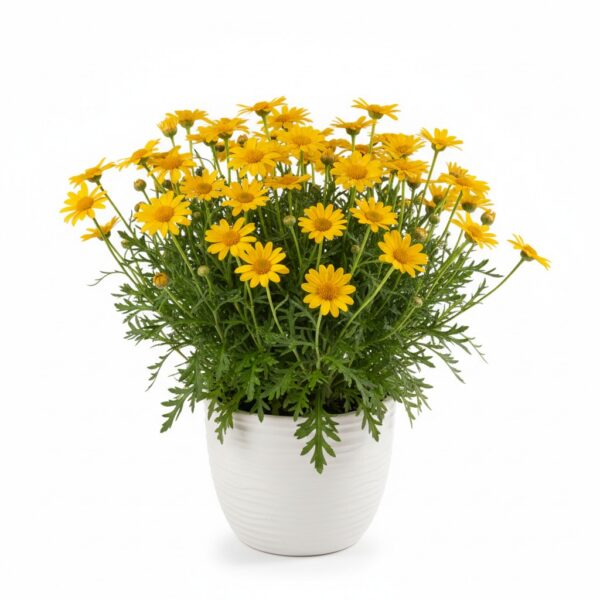
Golden Marguerite
Anthemis tinctoria
Anthemis tinctoria, commonly known as Golden Marguerite, is a perennial herbaceous plant prized for its vibrant, daisy-like yellow flowers. It typically grows to a height of 60-90 cm (2-3 feet) with finely divided, aromatic foliage. This plant is primarily grown outdoors in gardens and meadows for its cheerful blooms, which attract pollinators like bees and butterflies. While it can be attempted indoors, it requires very bright light and may not thrive as well as it does outdoors. People grow it for its ornamental value, use in natural dyeing (yielding yellow dyes), and its relatively low maintenance.

Poplar
Populus spp.
Poplars are fast-growing deciduous trees, typically found in moist environments. They are characterized by their tall, straight trunks and relatively short lifespans. Poplar leaves are simple, alternate, and often have a distinctive triangular or ovate shape. Many species have leaves that tremble in the slightest breeze. Poplars are primarily outdoor trees, valued for their rapid growth and use in windbreaks, erosion control, and pulpwood production. They are not typically grown indoors due to their large size and demanding environmental needs.
Quick Plant Comparison
| Feature | Golden Marguerite | Poplar |
|---|---|---|
| Light | Full sun (at least 6-8 hours of direct sunlight daily) | Full sun (at least 6-8 hours of direct sunlight daily) |
| Watering | Every 7-10 days, depending on weather and soil drainage | Dependent on rainfall and soil drainage; typically 1-2 times per week for young trees, less frequently for established trees. |
| Humidity | 30-50% | 30-60% |
| Temperature | 15-24°C | 10-25°C |
| Care Level | Expert | Expert |
| Growth Rate | Moderate | Fast |
| Max Height | 30-60 cm (indoors, likely smaller) | 15-30 meters (outdoor) |
| Pet Safety | ❌ Toxic To Pets | ❌ Toxic To Pets |
| Soil | Well-draining soil, such as a sandy loam | Well-drained soil, adaptable to various soil types including sandy, loamy, and clay soils. |
| Beginner Friendly | ❌ No | ❌ No |
| Weekly Maintenance | 10 minutes weekly (deadheading, watering) | 30 minutes monthly (pruning, watering, pest control) |
🔬 Botanical Information — Comparing These Plants
Golden Marguerite
| Scientific Name | Anthemis tinctoria |
|---|---|
| Family | Asteraceae |
| Native To | Europe, Western Asia |
| Also Known As | Golden Marguerite, Dyer's Chamomile, Yellow Chamomile, Oxeye Chamomile |
| Leaves | Finely divided, fern-like leaves that are aromatic when crushed. The leaves are typically green to grayish-green in color and are arranged alternately along the stems. They are usually 5-10 cm long. |
| Flowers | Rarely flowers indoors due to insufficient light. Outdoors, it produces abundant daisy-like flowers with bright yellow petals and a yellow central disc. The flowers are typically 2-5 cm in diameter and bloom from late spring to late summer. |
Poplar
| Scientific Name | Populus spp. |
|---|---|
| Family | Salicaceae |
| Native To | Native to North America, Europe, and Asia |
| Also Known As | Poplar, Aspen, Cottonwood |
| Leaves | Simple, alternate leaves that vary in shape depending on the species. Often triangular, ovate, or rounded with serrated edges. Leaf color is typically green, turning yellow in the fall. Some species have petioles that are flattened, causing the leaves to tremble in the wind. |
| Flowers | Poplars are dioecious, meaning male and female flowers are borne on separate trees. Flowers are catkins that appear in early spring before the leaves. They are not showy and are primarily wind-pollinated. Flowering does not occur indoors. |
📏 Size & Growth — Plant Comparison
Golden Marguerite
Poplar
🌱 Propagation — Comparing Plant Growth
Golden Marguerite
Methods: Seed, Division, Stem cuttings
Difficulty: Easy
Tips: For seeds, sow indoors 6-8 weeks before the last frost or directly outdoors in spring. Division is best done in spring or fall. Stem cuttings can be taken in late spring or early summer.
Poplar
Methods: Stem cuttings, Root suckers, Seed (though less common)
Difficulty: Easy
Tips: Take hardwood cuttings in late winter or early spring. Root suckers can be dug up and transplanted. Ensure cuttings are kept moist until roots develop.
✨ Benefits & Features — Comparing Plant Value
Golden Marguerite
Golden Marguerite is known for its bright yellow, daisy-like flowers and its use as a natural dye. It is a relatively low-maintenance perennial that attracts pollinators to the garden. Its aromatic foliage is also a distinguishing feature.
- ✓ Attracts pollinators to the garden
- ✓ Provides a natural dye source
- ✓ Adds vibrant color to outdoor spaces
- ✓ Relatively low maintenance once established
- ✓ Can be used in cut flower arrangements
- ⚠️ Toxic to pets
Poplar
Poplars are known for their rapid growth and ability to colonize disturbed areas. Some species, like aspens, have leaves that tremble in the wind due to their flattened petioles, creating a distinctive rustling sound. Their extensive root systems can help stabilize soil and prevent erosion.
- ✓ Provides shade and shelter for wildlife.
- ✓ Helps prevent soil erosion.
- ✓ Can be used for windbreaks and privacy screens.
- ✓ Rapid growth provides quick results.
- ✓ Contributes to carbon sequestration.
- ⚠️ Toxic to pets
📅 Maintenance Schedule — Plant Care Comparison
Golden Marguerite
Poplar
🌞 Light Requirements
Golden Marguerite
Full sun (at least 6-8 hours of direct sunlight daily)
Low light tolerant: ❌ No
Poplar
Full sun (at least 6-8 hours of direct sunlight daily)
Low light tolerant: ❌ No
💧 Watering Needs
Golden Marguerite
Water thoroughly when the top inch of soil feels dry to the touch. Avoid overwatering, as this can lead to root rot. Signs of overwatering include yellowing leaves and a soggy soil. Underwatering is indicated by wilting and dry, crispy leaves.
Poplar
Poplars require consistent moisture, especially when young. Water deeply when the topsoil feels dry to the touch. Overwatering can lead to root rot, indicated by yellowing leaves and a musty smell in the soil. Underwatering results in wilting and leaf drop.
🌡️ Temperature & Humidity
Golden Marguerite
Temperature: 15-24°C
Humidity: 30-50%
Poplar
Temperature: 10-25°C
Humidity: 30-60%
🤔 Which Plant Is Right For You?
Golden Marguerite
Anthemis tinctoriaExperienced gardeners who want a vibrant, low-maintenance perennial for their outdoor garden.
✅ Choose This Plant If...
- You want a plant that attracts pollinators to your garden.
- You need a natural dye source.
- You have a sunny garden spot.
- You enjoy daisy-like flowers.
- You want a relatively low-maintenance perennial.
❌ Skip This Plant If...
- You have pets that might ingest the plant.
- You don't have a location with full sun.
- You are looking for an easy indoor plant.
Poplar
Populus spp.Landowners seeking fast-growing trees for windbreaks, erosion control, or pulpwood production.
✅ Choose This Plant If...
- You need a fast-growing tree for a large property.
- You want to create a windbreak or privacy screen quickly.
- You need a tree for erosion control on a slope.
- You are interested in biomass production for energy.
- You appreciate the sound of rustling leaves in the wind.
❌ Skip This Plant If...
- You have a small yard or limited space.
- You are looking for a low-maintenance tree.
- You have pets that may ingest the leaves or bark.
- You are sensitive to pollen allergies.
- You dislike the cotton-like seeds dispersed by female trees.
🎯 Quick Verdict
⚡ Key Differences Between These Plants
Golden Marguerite has moderate growth, while Poplar grows fast.
💡 Pro Tips For Comparing These Plants
Golden Marguerite Care Tips
Golden Marguerite is primarily an outdoor plant that requires full sun and well-draining soil. Indoor cultivation is challenging due to its high light requirements. Regular watering and occasional fertilization are needed. Toxicity to pets is a significant concern for indoor growers.
- Provide well-draining soil to prevent root rot.
- Deadhead spent flowers regularly to encourage more blooms.
- Divide plants every 2-3 years to prevent overcrowding.
- Fertilize sparingly to avoid excessive foliage growth at the expense of flowers.
- Monitor for pests and diseases and treat promptly.
Poplar Care Tips
Poplars are not suitable for indoor cultivation due to their need for full sun, large size, and extensive root systems. Attempting to grow them indoors will likely result in a stressed and unhealthy plant. They are best suited for outdoor landscapes with ample space.
- Water deeply and regularly, especially during the first few years after planting.
- Mulch around the base of the tree to retain moisture and suppress weeds.
- Protect young trees from deer and other animals.
- Prune regularly to maintain shape and remove dead or damaged branches.
- Monitor for pests and diseases and treat promptly.
⚠️ Common Problems & Solutions — Plant Care Comparison
Golden Marguerite
Poplar
❓ Frequently Asked Questions — Comparing These Plants
Golden Marguerite
What are the light requirements for Golden Marguerite?
Golden Marguerite requires at least six hours of direct sunlight daily to thrive and produce abundant blooms. Insufficient light can lead to leggy growth, fewer flowers, and paler foliage. In hotter climates, some afternoon shade can be beneficial to prevent scorching of the leaves. When grown indoors, place Golden Marguerite near a south-facing window or supplement with grow lights to ensure adequate light exposure. Rotate the plant regularly to ensure even light distribution. Consider the intensity of the sunlight and adjust placement accordingly, especially during peak summer months.
How do I care for Golden Marguerite?
Golden Marguerite thrives in full sun and well-drained soil. Water regularly, especially during dry periods, but avoid overwatering. Fertilize lightly in spring with a balanced fertilizer to encourage blooming. Deadhead spent flowers to promote continuous flowering throughout the summer. Prune back the plant in late fall or early spring to maintain its shape and encourage bushier growth. Golden Marguerite is relatively drought-tolerant once established. Protect from frost in colder climates by mulching around the base of the plant. Regular monitoring for pests and diseases is essential to maintain plant health. Proper air circulation helps prevent fungal issues.
How do I propagate Golden Marguerite?
Golden Marguerite can be propagated by division, stem cuttings, or seeds.
Poplar
What are the light requirements for Poplar?
Poplar trees need bright, indirect light to thrive indoors. Insufficient light can lead to leggy growth and reduced leaf production. Place your poplar near a south- or east-facing window where it can receive ample light without being exposed to harsh direct sunlight. If you notice the leaves are becoming pale or the plant is stretching towards the light, it indicates that it needs more light. Rotate the plant regularly to ensure even growth on all sides. Supplement natural light with grow lights if necessary, especially during winter months when natural light is limited. Avoid placing the plant in dark corners or areas with little to no natural light.
How do I care for Poplar?
Poplar trees grown indoors require bright, indirect light; avoid direct sunlight to prevent leaf scorch. Water thoroughly when the top inch of soil feels dry, ensuring good drainage to prevent root rot. Maintain moderate humidity levels, especially during dry winter months, by using a humidifier or placing the plant on a pebble tray. Fertilize monthly during the growing season (spring and summer) with a balanced liquid fertilizer diluted to half strength. Repot every 1-2 years in the spring, using a well-draining potting mix. Prune regularly to maintain shape and size, removing any dead or damaged branches. Provide stable temperatures between 60-75°F (15-24°C). Monitor for pests like spider mites and aphids, and treat promptly with insecticidal soap or neem oil. Ensure adequate air circulation to prevent fungal diseases.
How do I propagate Poplar?
Poplar trees can be propagated through stem cuttings and air layering. For stem cuttings, take a 4-6 inch cutting from a healthy stem in spring or summer. Remove the lower leaves and dip the cut end in rooting hormone. Plant the cutting in a well-draining potting mix and keep it consistently moist. Cover with a plastic bag to increase humidity. Roots should develop in a few weeks. For air layering, select a healthy stem and make a small incision. Apply rooting hormone to the incision and wrap it with moist sphagnum moss. Cover the moss with plastic wrap and secure it tightly. Keep the moss moist. Roots should develop within a few months. Once roots are visible, cut the stem below the rooted area and pot it in a well-draining potting mix.
Last updated: May 2, 2026 — Plant care data reviewed and verified by our editorial team.