
Golden Marguerite vs Lisianthus Plant Comparison
Compare these two plants side by side — care needs, key differences, and which is right for your home.
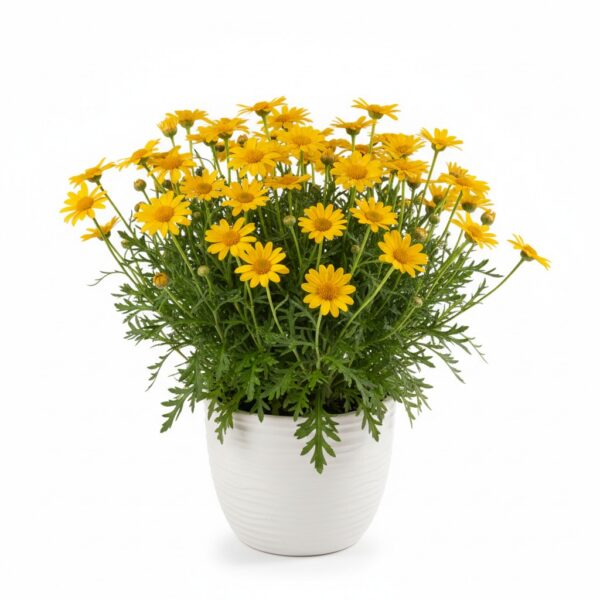
Golden Marguerite
Anthemis tinctoria
Anthemis tinctoria, commonly known as Golden Marguerite, is a perennial herbaceous plant prized for its vibrant, daisy-like yellow flowers. It typically grows to a height of 60-90 cm (2-3 feet) with finely divided, aromatic foliage. This plant is primarily grown outdoors in gardens and meadows for its cheerful blooms, which attract pollinators like bees and butterflies. While it can be attempted indoors, it requires very bright light and may not thrive as well as it does outdoors. People grow it for its ornamental value, use in natural dyeing (yielding yellow dyes), and its relatively low maintenance.

Lisianthus
Eustoma grandiflorum
Lisianthus is an herbaceous annual or short-lived perennial plant typically grown for its exquisite, rose-like flowers. It features smooth, gray-green leaves and upright stems that can reach varying heights depending on the cultivar. The flowers come in a wide array of colors, including white, pink, purple, blue, yellow, and bi-colors. Lisianthus is primarily an outdoor plant, often cultivated in gardens and used as cut flowers due to their long vase life. While it can be grown indoors, it requires very specific conditions to thrive and flower successfully.
Quick Plant Comparison
| Feature | Golden Marguerite | Lisianthus |
|---|---|---|
| Light | Full sun (at least 6-8 hours of direct sunlight daily) | Full sun to partial shade outdoors. Indoors, requires very bright, direct light, ideally from a south-facing window. |
| Watering | Every 7-10 days, depending on weather and soil drainage | Every 3-7 days, depending on environmental conditions and pot size. |
| Humidity | 30-50% | 40-60% |
| Temperature | 15-24°C | 18-24°C |
| Care Level | Expert | Expert |
| Growth Rate | Moderate | Moderate |
| Max Height | 30-60 cm (indoors, likely smaller) | 30-90 cm (indoors, typically smaller) |
| Pet Safety | ❌ Toxic To Pets | ❌ Toxic To Pets |
| Soil | Well-draining soil, such as a sandy loam | Well-draining potting mix, such as a mix of peat moss, perlite, and vermiculite. |
| Beginner Friendly | ❌ No | ❌ No |
| Weekly Maintenance | 10 minutes weekly (deadheading, watering) | 15-30 minutes weekly |
🔬 Botanical Information — Comparing These Plants
Golden Marguerite
| Scientific Name | Anthemis tinctoria |
|---|---|
| Family | Asteraceae |
| Native To | Europe, Western Asia |
| Also Known As | Golden Marguerite, Dyer's Chamomile, Yellow Chamomile, Oxeye Chamomile |
| Leaves | Finely divided, fern-like leaves that are aromatic when crushed. The leaves are typically green to grayish-green in color and are arranged alternately along the stems. They are usually 5-10 cm long. |
| Flowers | Rarely flowers indoors due to insufficient light. Outdoors, it produces abundant daisy-like flowers with bright yellow petals and a yellow central disc. The flowers are typically 2-5 cm in diameter and bloom from late spring to late summer. |
Lisianthus
| Scientific Name | Eustoma grandiflorum |
|---|---|
| Family | Gentianaceae |
| Native To | Southern United States, Mexico, and the Caribbean |
| Also Known As | Lisianthus, Texas Bluebell, Prairie Gentian, Tulip Gentian |
| Leaves | The leaves of Lisianthus are smooth, oval to lance-shaped, and have a slightly waxy texture. They are typically gray-green in color and arranged oppositely along the stems. The leaves are relatively small, usually measuring 2-5 cm in length. |
| Flowers | Lisianthus can flower indoors if provided with sufficient light and proper care. The flowers are bell-shaped and come in a wide range of colors, including white, pink, purple, blue, yellow, and bi-colors. They are typically 5-7 cm in diameter and have a delicate, ruffled appearance. |
📏 Size & Growth — Plant Comparison
Golden Marguerite
Lisianthus
🌱 Propagation — Comparing Plant Growth
Golden Marguerite
Methods: Seed, Division, Stem cuttings
Difficulty: Easy
Tips: For seeds, sow indoors 6-8 weeks before the last frost or directly outdoors in spring. Division is best done in spring or fall. Stem cuttings can be taken in late spring or early summer.
Lisianthus
Methods: Seed
Difficulty: Difficult
Tips: Lisianthus seeds are very small and require light to germinate. Sow seeds on the surface of a moist, well-draining seed-starting mix and keep them under grow lights. Germination can be slow and uneven.
✨ Benefits & Features — Comparing Plant Value
Golden Marguerite
Golden Marguerite is known for its bright yellow, daisy-like flowers and its use as a natural dye. It is a relatively low-maintenance perennial that attracts pollinators to the garden. Its aromatic foliage is also a distinguishing feature.
- ✓ Attracts pollinators to the garden
- ✓ Provides a natural dye source
- ✓ Adds vibrant color to outdoor spaces
- ✓ Relatively low maintenance once established
- ✓ Can be used in cut flower arrangements
- ⚠️ Toxic to pets
Lisianthus
Lisianthus flowers are known for their delicate, rose-like appearance and long vase life. They come in a wide range of colors and are often used in floral arrangements for weddings and other special occasions. Unlike roses, they have a more delicate and ruffled petal structure.
- ✓ Beautiful and elegant flowers for decoration.
- ✓ Long-lasting blooms for cut flower arrangements.
- ✓ Wide variety of colors to match any decor.
- ✓ Can be a rewarding challenge for experienced gardeners.
- ✓ Provides a sense of accomplishment when successfully grown.
- ⚠️ Toxic to pets
📅 Maintenance Schedule — Plant Care Comparison
Golden Marguerite
Lisianthus
🌞 Light Requirements
Golden Marguerite
Full sun (at least 6-8 hours of direct sunlight daily)
Low light tolerant: ❌ No
Lisianthus
Full sun to partial shade outdoors. Indoors, requires very bright, direct light, ideally from a south-facing window.
Low light tolerant: ❌ No
💧 Watering Needs
Golden Marguerite
Water thoroughly when the top inch of soil feels dry to the touch. Avoid overwatering, as this can lead to root rot. Signs of overwatering include yellowing leaves and a soggy soil. Underwatering is indicated by wilting and dry, crispy leaves.
Lisianthus
Water thoroughly when the top inch of soil feels dry. Avoid overwatering, as this can lead to root rot. Allow excess water to drain away. Signs of overwatering include yellowing leaves and a mushy stem. Underwatering results in wilting and dry, crispy leaves.
🌡️ Temperature & Humidity
Golden Marguerite
Temperature: 15-24°C
Humidity: 30-50%
Lisianthus
Temperature: 18-24°C
Humidity: 40-60%
🤔 Which Plant Is Right For You?
Golden Marguerite
Anthemis tinctoriaExperienced gardeners who want a vibrant, low-maintenance perennial for their outdoor garden.
✅ Choose This Plant If...
- You want a plant that attracts pollinators to your garden.
- You need a natural dye source.
- You have a sunny garden spot.
- You enjoy daisy-like flowers.
- You want a relatively low-maintenance perennial.
❌ Skip This Plant If...
- You have pets that might ingest the plant.
- You don't have a location with full sun.
- You are looking for an easy indoor plant.
Lisianthus
Eustoma grandiflorumExperienced gardeners who want to grow cut flowers or those willing to provide the specific conditions needed for indoor flowering.
✅ Choose This Plant If...
- You want beautiful, rose-like flowers in a variety of colors.
- You are an experienced gardener looking for a rewarding challenge.
- You need long-lasting cut flowers for arrangements.
- You have a very sunny location indoors or outdoors.
- You enjoy the process of providing specific care for demanding plants.
❌ Skip This Plant If...
- You are a beginner gardener.
- You have pets that might ingest the plant.
- You lack a very bright, sunny location indoors.
- You prefer low-maintenance plants.
🎯 Quick Verdict
⚡ Key Differences Between These Plants
Both plants have similar basic care requirements but differ in appearance and specific needs. Compare plants carefully to find the best fit for your space.
💡 Pro Tips For Comparing These Plants
Golden Marguerite Care Tips
Golden Marguerite is primarily an outdoor plant that requires full sun and well-draining soil. Indoor cultivation is challenging due to its high light requirements. Regular watering and occasional fertilization are needed. Toxicity to pets is a significant concern for indoor growers.
- Provide well-draining soil to prevent root rot.
- Deadhead spent flowers regularly to encourage more blooms.
- Divide plants every 2-3 years to prevent overcrowding.
- Fertilize sparingly to avoid excessive foliage growth at the expense of flowers.
- Monitor for pests and diseases and treat promptly.
Lisianthus Care Tips
Lisianthus is primarily an outdoor plant that requires very specific conditions to thrive indoors. It needs intense light, well-draining soil, and careful watering to prevent root rot. Flowering indoors can be challenging, making it best suited for experienced plant enthusiasts.
- Provide at least 6 hours of direct sunlight daily.
- Use a well-draining potting mix to prevent root rot.
- Water thoroughly when the top inch of soil is dry, but avoid overwatering.
- Fertilize regularly during the growing season with a balanced liquid fertilizer.
- Pinch back young plants to encourage bushier growth and more flowers.
⚠️ Common Problems & Solutions — Plant Care Comparison
Golden Marguerite
Lisianthus
❓ Frequently Asked Questions — Comparing These Plants
Golden Marguerite
What are the light requirements for Golden Marguerite?
Golden Marguerite requires at least six hours of direct sunlight daily to thrive and produce abundant blooms. Insufficient light can lead to leggy growth, fewer flowers, and paler foliage. In hotter climates, some afternoon shade can be beneficial to prevent scorching of the leaves. When grown indoors, place Golden Marguerite near a south-facing window or supplement with grow lights to ensure adequate light exposure. Rotate the plant regularly to ensure even light distribution. Consider the intensity of the sunlight and adjust placement accordingly, especially during peak summer months.
How do I care for Golden Marguerite?
Golden Marguerite thrives in full sun and well-drained soil. Water regularly, especially during dry periods, but avoid overwatering. Fertilize lightly in spring with a balanced fertilizer to encourage blooming. Deadhead spent flowers to promote continuous flowering throughout the summer. Prune back the plant in late fall or early spring to maintain its shape and encourage bushier growth. Golden Marguerite is relatively drought-tolerant once established. Protect from frost in colder climates by mulching around the base of the plant. Regular monitoring for pests and diseases is essential to maintain plant health. Proper air circulation helps prevent fungal issues.
How do I propagate Golden Marguerite?
Golden Marguerite can be propagated by division, stem cuttings, or seeds.
Lisianthus
What are the light requirements for Lisianthus?
Lisianthus thrives in bright, indirect light. Direct sunlight can scorch the leaves, especially during the hottest part of the day. An east-facing window is ideal, providing gentle morning sun. A west-facing window can work if you provide some afternoon shade. If using a south-facing window, place the plant a few feet away from the window or use a sheer curtain to filter the light. Insufficient light can result in leggy growth and reduced blooming. Rotate the plant regularly to ensure even light exposure on all sides. Artificial grow lights can supplement natural light, especially during winter months, providing 14-16 hours of light per day.
How do I care for Lisianthus?
Lisianthus requires well-draining soil and consistent moisture. Water when the top inch of soil feels dry, avoiding overwatering which can lead to root rot. Provide bright, indirect light for optimal growth and blooming. Fertilize every 2-4 weeks during the growing season (spring and summer) with a balanced liquid fertilizer diluted to half strength. Deadhead spent flowers to encourage further blooming. Maintain a temperature between 60-75°F (15-24°C). Prune as needed to maintain shape and remove any dead or yellowing leaves. Ensure good air circulation to prevent fungal diseases. Repot annually in spring if needed, using a slightly larger pot. Protect from frost and extreme temperatures. Monitor for pests and treat promptly if necessary.
How do I propagate Lisianthus?
Lisianthus is most commonly propagated by seed, as other methods are challenging. To propagate by seed: sow seeds indoors 10-12 weeks before the last frost. Use a seed-starting mix and keep it consistently moist. Germination can be slow and uneven, taking up to three weeks. Provide bottom heat and bright, indirect light once seedlings emerge. Transplant seedlings into individual pots when they are large enough to handle. Keep the soil consistently moist and fertilize lightly. While division and stem cuttings are possible, they are not typically successful due to the plant’s delicate nature.
Last updated: April 26, 2026 — Plant care data reviewed and verified by our editorial team.