
Golden Marguerite vs Knotweed Plant Comparison
Compare these two plants side by side — care needs, key differences, and which is right for your home.
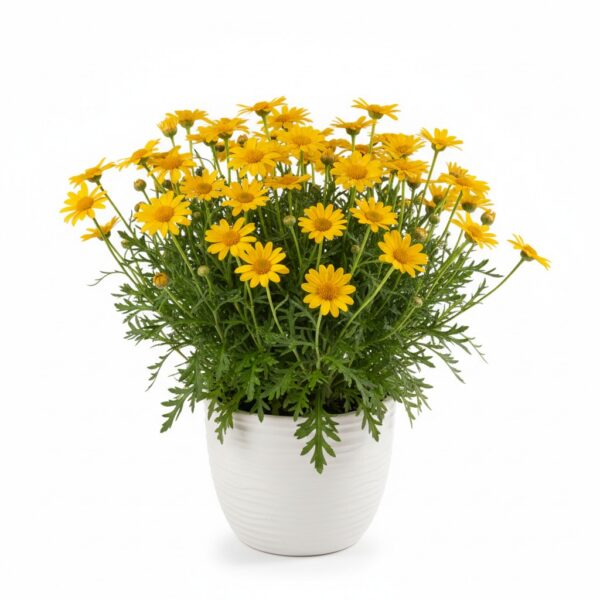
Golden Marguerite
Anthemis tinctoria
Anthemis tinctoria, commonly known as Golden Marguerite, is a perennial herbaceous plant prized for its vibrant, daisy-like yellow flowers. It typically grows to a height of 60-90 cm (2-3 feet) with finely divided, aromatic foliage. This plant is primarily grown outdoors in gardens and meadows for its cheerful blooms, which attract pollinators like bees and butterflies. While it can be attempted indoors, it requires very bright light and may not thrive as well as it does outdoors. People grow it for its ornamental value, use in natural dyeing (yielding yellow dyes), and its relatively low maintenance.

Knotweed
Reynoutria japonica (syn. Fallopia japonica)
Japanese Knotweed is a highly invasive herbaceous perennial known for its rapid growth and aggressive spread. It features hollow, bamboo-like stems that can reach up to 3 meters in height. The plant has broad, oval leaves and produces clusters of small, white or greenish-white flowers in late summer. While it has been used in traditional medicine, its aggressive nature makes it a significant ecological problem in many regions. It is almost exclusively an outdoor plant, and its aggressive growth makes it unsuitable for indoor cultivation.
Quick Plant Comparison
| Feature | Golden Marguerite | Knotweed |
|---|---|---|
| Light | Full sun (at least 6-8 hours of direct sunlight daily) | Full sun to partial shade |
| Watering | Every 7-10 days, depending on weather and soil drainage | Outdoors: As needed, depending on rainfall and soil drainage. Indoors: Not applicable. |
| Humidity | 30-50% | 30-50% |
| Temperature | 15-24°C | 10-25°C |
| Care Level | Expert | Expert |
| Growth Rate | Moderate | Extremely Fast And Aggressive Spreader |
| Max Height | 30-60 cm (indoors, likely smaller) | Not applicable indoors. Outdoors: Up to 3 meters |
| Pet Safety | ❌ Toxic To Pets | ❌ Toxic To Pets |
| Soil | Well-draining soil, such as a sandy loam | Tolerates a wide range of soil types, including poor soils, but prefers well-drained soil. |
| Beginner Friendly | ❌ No | ❌ No |
| Weekly Maintenance | 10 minutes weekly (deadheading, watering) | Significant time required for monitoring and controlling spread. |
🔬 Botanical Information — Comparing These Plants
Golden Marguerite
| Scientific Name | Anthemis tinctoria |
|---|---|
| Family | Asteraceae |
| Native To | Europe, Western Asia |
| Also Known As | Golden Marguerite, Dyer's Chamomile, Yellow Chamomile, Oxeye Chamomile |
| Leaves | Finely divided, fern-like leaves that are aromatic when crushed. The leaves are typically green to grayish-green in color and are arranged alternately along the stems. They are usually 5-10 cm long. |
| Flowers | Rarely flowers indoors due to insufficient light. Outdoors, it produces abundant daisy-like flowers with bright yellow petals and a yellow central disc. The flowers are typically 2-5 cm in diameter and bloom from late spring to late summer. |
Knotweed
| Scientific Name | Reynoutria japonica (syn. Fallopia japonica) |
|---|---|
| Family | Polygonaceae |
| Native To | East Asia (Japan, Korea, China) |
| Also Known As | Japanese Knotweed, Fleeceflower, Himalayan Fleece Vine, Donkey Rhubarb, Pea Shooters |
| Leaves | Broad, oval leaves, typically 10-20 cm long, with a pointed tip and a slightly heart-shaped base. The leaves are green and have a smooth texture. |
| Flowers | Produces clusters of small, white or greenish-white flowers in late summer. Flowering is not relevant indoors as it is not suited to indoor growth. |
📏 Size & Growth — Plant Comparison
Golden Marguerite
Knotweed
🌱 Propagation — Comparing Plant Growth
Golden Marguerite
Methods: Seed, Division, Stem cuttings
Difficulty: Easy
Tips: For seeds, sow indoors 6-8 weeks before the last frost or directly outdoors in spring. Division is best done in spring or fall. Stem cuttings can be taken in late spring or early summer.
Knotweed
Methods: Rhizome division, stem cuttings, seed (though seed propagation is less common)
Difficulty: Easy
Tips: Rhizome division is the most effective method. Dig up a section of rhizome and replant it in a new location. Stem cuttings can also be taken in spring or summer.
✨ Benefits & Features — Comparing Plant Value
Golden Marguerite
Golden Marguerite is known for its bright yellow, daisy-like flowers and its use as a natural dye. It is a relatively low-maintenance perennial that attracts pollinators to the garden. Its aromatic foliage is also a distinguishing feature.
- ✓ Attracts pollinators to the garden
- ✓ Provides a natural dye source
- ✓ Adds vibrant color to outdoor spaces
- ✓ Relatively low maintenance once established
- ✓ Can be used in cut flower arrangements
- ⚠️ Toxic to pets
Knotweed
Its aggressive growth and ability to spread through rhizomes make it a highly invasive species. It can tolerate a wide range of conditions and is difficult to eradicate once established.
- ✓ Rapid ground cover
- ✓ Soil stabilization
- ✓ Potential phytoremediation
- ✓ Tolerance of poor conditions
- ✓ Biomass production
- ⚠️ Toxic to pets
📅 Maintenance Schedule — Plant Care Comparison
Golden Marguerite
Knotweed
🌞 Light Requirements
Golden Marguerite
Full sun (at least 6-8 hours of direct sunlight daily)
Low light tolerant: ❌ No
Knotweed
Full sun to partial shade
Low light tolerant: ❌ No
💧 Watering Needs
Golden Marguerite
Water thoroughly when the top inch of soil feels dry to the touch. Avoid overwatering, as this can lead to root rot. Signs of overwatering include yellowing leaves and a soggy soil. Underwatering is indicated by wilting and dry, crispy leaves.
Knotweed
Water deeply when the soil is dry, but avoid overwatering. Established plants are drought-tolerant. Indoors, this is not applicable as it's not suitable.
🌡️ Temperature & Humidity
Golden Marguerite
Temperature: 15-24°C
Humidity: 30-50%
Knotweed
Temperature: 10-25°C
Humidity: 30-50%
🤔 Which Plant Is Right For You?
Golden Marguerite
Anthemis tinctoriaExperienced gardeners who want a vibrant, low-maintenance perennial for their outdoor garden.
✅ Choose This Plant If...
- You want a plant that attracts pollinators to your garden.
- You need a natural dye source.
- You have a sunny garden spot.
- You enjoy daisy-like flowers.
- You want a relatively low-maintenance perennial.
❌ Skip This Plant If...
- You have pets that might ingest the plant.
- You don't have a location with full sun.
- You are looking for an easy indoor plant.
Knotweed
Reynoutria japonica (syn. Fallopia japonica)Landowners needing a fast-growing ground cover in challenging outdoor conditions, understanding the risks of invasiveness.
✅ Choose This Plant If...
- You need a plant that can quickly cover a large area in poor soil.
- You are interested in phytoremediation and need a plant that can absorb pollutants.
- You are conducting research on invasive species.
- You need a plant that can tolerate harsh conditions.
- You are looking for a plant with potential medicinal properties (with caution and expert advice).
❌ Skip This Plant If...
- You want a low-maintenance garden.
- You have limited space.
- You are concerned about invasiveness.
- You have pets that might ingest it.
- You are looking for an indoor plant.
🎯 Quick Verdict
⚡ Key Differences Between These Plants
Golden Marguerite needs full sun (at least 6-8 hours of direct sunlight daily), while Knotweed prefers full sun to partial shade.
Golden Marguerite has moderate growth, while Knotweed grows extremely fast and aggressive spreader.
💡 Pro Tips For Comparing These Plants
Golden Marguerite Care Tips
Golden Marguerite is primarily an outdoor plant that requires full sun and well-draining soil. Indoor cultivation is challenging due to its high light requirements. Regular watering and occasional fertilization are needed. Toxicity to pets is a significant concern for indoor growers.
- Provide well-draining soil to prevent root rot.
- Deadhead spent flowers regularly to encourage more blooms.
- Divide plants every 2-3 years to prevent overcrowding.
- Fertilize sparingly to avoid excessive foliage growth at the expense of flowers.
- Monitor for pests and diseases and treat promptly.
Knotweed Care Tips
Japanese Knotweed is an extremely aggressive outdoor plant that is not suitable for indoor cultivation. Its rapid growth and invasive nature make it challenging to control. It requires full sun and tolerates a wide range of soil conditions. Due to its toxicity to pets, caution should be exercised if pets are present in the area where it grows.
- Monitor rhizome spread carefully.
- Use physical barriers to contain growth.
- Consider professional help for eradication if necessary.
- Avoid planting near buildings or infrastructure.
- Dispose of plant waste properly to prevent further spread.
⚠️ Common Problems & Solutions — Plant Care Comparison
Golden Marguerite
Knotweed
❓ Frequently Asked Questions — Comparing These Plants
Golden Marguerite
What are the light requirements for Golden Marguerite?
Golden Marguerite requires at least six hours of direct sunlight daily to thrive and produce abundant blooms. Insufficient light can lead to leggy growth, fewer flowers, and paler foliage. In hotter climates, some afternoon shade can be beneficial to prevent scorching of the leaves. When grown indoors, place Golden Marguerite near a south-facing window or supplement with grow lights to ensure adequate light exposure. Rotate the plant regularly to ensure even light distribution. Consider the intensity of the sunlight and adjust placement accordingly, especially during peak summer months.
How do I care for Golden Marguerite?
Golden Marguerite thrives in full sun and well-drained soil. Water regularly, especially during dry periods, but avoid overwatering. Fertilize lightly in spring with a balanced fertilizer to encourage blooming. Deadhead spent flowers to promote continuous flowering throughout the summer. Prune back the plant in late fall or early spring to maintain its shape and encourage bushier growth. Golden Marguerite is relatively drought-tolerant once established. Protect from frost in colder climates by mulching around the base of the plant. Regular monitoring for pests and diseases is essential to maintain plant health. Proper air circulation helps prevent fungal issues.
How do I propagate Golden Marguerite?
Golden Marguerite can be propagated by division, stem cuttings, or seeds.
Knotweed
What are the light requirements for Knotweed?
Knotweed vines thrive best in full sun, requiring at least six hours of direct sunlight daily to promote vigorous growth and abundant flowering. However, they can also tolerate partial shade, particularly in hotter climates where intense afternoon sun might scorch the leaves. Insufficient light can lead to leggy growth, reduced flowering, and overall weakened health. When planting Knotweed, choose a location that receives ample sunlight. If growing indoors, supplement with grow lights if natural light is limited. Rotate the plant regularly to ensure even light exposure.
How do I care for Knotweed?
Knotweed thrives in well-draining soil and prefers full sun to partial shade. Water regularly, especially during dry periods, but avoid overwatering to prevent root rot. Provide a sturdy support structure, such as a trellis or fence, for the vine to climb. Prune regularly to control its growth and maintain the desired shape. Fertilize in spring with a balanced fertilizer to promote healthy growth. Monitor for pests and diseases, and treat promptly if necessary. Knotweed is generally low-maintenance but benefits from occasional attention to ensure its vigorous growth remains contained. Regularly check for any signs of invasive spread and take appropriate measures to prevent it.
How do I propagate Knotweed?
Knotweed is easily propagated through stem cuttings or layering. For stem cuttings, take 4-6 inch cuttings from healthy stems in spring or summer. Remove the lower leaves and place the cuttings in water or directly into moist potting mix. Keep the soil consistently moist. Roots should develop within a few weeks. For layering, bend a low-growing stem to the ground and bury a section of it, leaving the tip exposed. Secure the buried section with a rock or clip. Once roots have formed, sever the new plant from the parent plant and transplant it. Both methods are reliable for expanding your Knotweed collection.
Last updated: April 27, 2026 — Plant care data reviewed and verified by our editorial team.