
Floss Flower vs Ragweed Plant Comparison
Compare these two plants side by side — care needs, key differences, and which is right for your home.
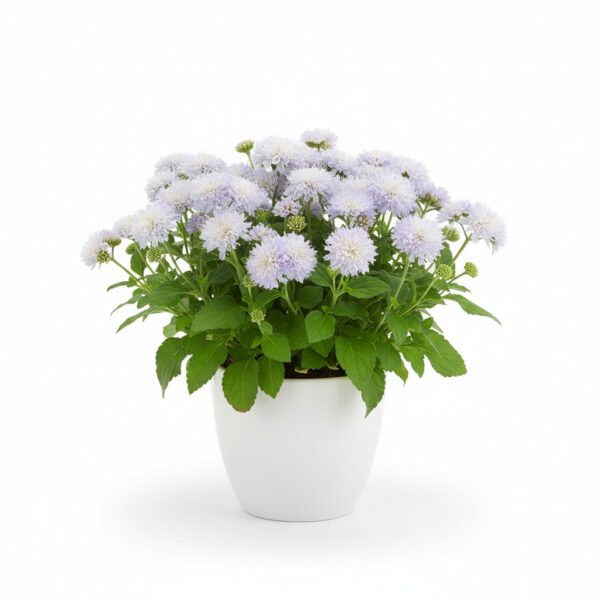
Floss Flower
Ageratum houstonianum
Ageratum houstonianum, commonly known as Floss Flower, is an annual flowering plant characterized by its fuzzy, pom-pom-like flower heads. It typically grows to a height of 6-18 inches. The flowers are most commonly blue, but cultivars are available in pink, white, and purple. It is primarily grown outdoors as a bedding plant or in containers for its long-lasting blooms and attractive appearance. While it can be attempted indoors, it requires very bright light and consistent care to thrive, making it more challenging than other indoor plants.

Ragweed
Ambrosia artemisiifolia
Common ragweed is an annual plant typically growing to a height of 1-4 feet. It features deeply divided, fern-like leaves and inconspicuous greenish flowers. It is primarily an outdoor plant, thriving in disturbed soils and open areas. Ragweed is notorious for producing copious amounts of pollen, a major allergen responsible for seasonal allergic rhinitis (hay fever). It is not typically grown intentionally but is a common weed found in agricultural fields, roadsides, and vacant lots. It is not suitable as an indoor plant.
Quick Plant Comparison
| Feature | Floss Flower | Ragweed |
|---|---|---|
| Light | Full sun to partial shade outdoors. Indoors, requires very bright, direct light for at least 6 hours daily. | Full sun |
| Watering | Every 3-7 days outdoors, depending on weather. Every 5-10 days indoors, depending on light and humidity. | Dependent on rainfall; typically, no supplemental watering is needed outdoors. |
| Humidity | 40-60% | 30-50% |
| Temperature | 18-24°C | 15-30°C |
| Care Level | Expert | Expert |
| Growth Rate | Moderate | Fast |
| Max Height | 6-18 inches (15-45 cm) indoors, potentially smaller | N/A (Outdoor plant, not suitable for indoor growing) |
| Pet Safety | ❌ Toxic To Pets | ❌ Toxic To Pets |
| Soil | Well-draining potting mix. A mix of peat moss, perlite, and vermiculite is suitable. | Adaptable to various soil types, but prefers well-drained soil. Tolerates poor soil conditions. |
| Beginner Friendly | ❌ No | ❌ No |
| Weekly Maintenance | 10-15 minutes weekly | Time spent is usually for removal, not care. |
🔬 Botanical Information — Comparing These Plants
Floss Flower
| Scientific Name | Ageratum houstonianum |
|---|---|
| Family | Asteraceae |
| Native To | Central America, Mexico |
| Also Known As | Floss Flower, Blueweed, Mexican Ageratum |
| Leaves | The leaves are oval to heart-shaped, with slightly serrated edges. They are typically medium green in color and have a slightly rough texture. |
| Flowers | It flowers readily outdoors. Indoors, flowering is possible with sufficient light, but less reliable. The flowers are small, fuzzy, and clustered together in dense, pom-pom-like heads. They are most commonly blue, but cultivars are available in pink, white, and purple. |
Ragweed
| Scientific Name | Ambrosia artemisiifolia |
|---|---|
| Family | Asteraceae |
| Native To | Native to North America |
| Also Known As | Common Ragweed, Annual Ragweed, Short Ragweed |
| Leaves | Leaves are deeply divided, fern-like, and alternate along the stem. They are typically green in color and have a slightly rough texture. |
| Flowers | Does not flower indoors. Outdoors, it produces inconspicuous greenish flowers in late summer and early fall. The flowers are wind-pollinated. |
📏 Size & Growth — Plant Comparison
Floss Flower
Ragweed
🌱 Propagation — Comparing Plant Growth
Floss Flower
Methods: Seed, Stem cuttings
Difficulty: Easy
Tips: For seeds, sow indoors 6-8 weeks before the last frost. For stem cuttings, take 4-6 inch cuttings in spring or summer and root in water or moist potting mix.
Ragweed
Methods: Seed
Difficulty: Easy
Tips: Seeds germinate readily in disturbed soil. No special treatment is required.
✨ Benefits & Features — Comparing Plant Value
Floss Flower
The fuzzy, pom-pom-like flower heads are unique and add a soft texture to the garden. The plant's long blooming period provides continuous color throughout the growing season. It is also attractive to pollinators, making it a beneficial addition to any garden.
- ✓ Attracts pollinators
- ✓ Adds vibrant color to the garden
- ✓ Long blooming period
- ✓ Relatively easy to propagate
- ✓ Can be used in cut flower arrangements
- ⚠️ Toxic to pets
Ragweed
Its extremely high pollen production makes it a significant allergen. Its ability to thrive in poor soil conditions contributes to its widespread presence.
- ✓ No benefits; it is a weed.
- ✓ It is a source of food for some insects.
- ✓ It can be used in some traditional medicines, but this is not recommended due to the risk of allergic reactions.
- ✓ It can be used as a soil stabilizer in disturbed areas.
- ✓ It can be used as a green manure.
- ⚠️ Toxic to pets
📅 Maintenance Schedule — Plant Care Comparison
Floss Flower
Ragweed
🌞 Light Requirements
Floss Flower
Full sun to partial shade outdoors. Indoors, requires very bright, direct light for at least 6 hours daily.
Low light tolerant: ❌ No
Ragweed
Full sun
Low light tolerant: ❌ No
💧 Watering Needs
Floss Flower
Water thoroughly when the top inch of soil feels dry. Avoid overwatering, which can lead to root rot. Ensure good drainage. Indoors, allow the soil to dry slightly between waterings. Signs of overwatering include yellowing leaves and wilting, while underwatering results in dry, crispy leaves.
Ragweed
Ragweed prefers well-drained soil. Water deeply when the top inch of soil is dry. Overwatering can lead to root rot, while underwatering can cause wilting and stunted growth. As a weed, it is fairly drought-tolerant once established.
🌡️ Temperature & Humidity
Floss Flower
Temperature: 18-24°C
Humidity: 40-60%
Ragweed
Temperature: 15-30°C
Humidity: 30-50%
🤔 Which Plant Is Right For You?
Floss Flower
Ageratum houstonianumExperienced gardeners who want a colorful, long-blooming annual for outdoor beds and containers, and are aware of the toxicity to pets.
✅ Choose This Plant If...
- You want a long-blooming annual for your garden.
- You need a plant that attracts butterflies and bees.
- You have a sunny outdoor space.
- You are experienced with plant care and can provide the necessary conditions.
- You are looking for a plant with a unique, fuzzy flower texture.
❌ Skip This Plant If...
- You have pets that may ingest the plant.
- You cannot provide full sun or very bright light.
- You are a beginner gardener.
- You prefer low-maintenance plants.
- You are looking for a plant that thrives indoors.
Ragweed
Ambrosia artemisiifoliaNot recommended for anyone due to its allergenic properties. It is a weed to be controlled, not cultivated.
✅ Choose This Plant If...
- There are no good reasons to intentionally grow ragweed. It is a noxious weed and a major allergen.
- It is not suitable for indoor cultivation.
- It offers no ornamental value.
- It poses a health risk to allergy sufferers.
- It can easily become an invasive problem.
❌ Skip This Plant If...
- You have allergies or live with someone who does.
- You want a low-maintenance indoor plant.
- You want a plant that is safe for pets.
- You don't want to contribute to pollen pollution.
- You prefer plants with ornamental value.
🎯 Quick Verdict
⚡ Key Differences Between These Plants
Floss Flower has moderate growth, while Ragweed grows fast.
💡 Pro Tips For Comparing These Plants
Floss Flower Care Tips
Floss Flower is primarily an outdoor plant that requires full sun and well-drained soil. Indoor cultivation is challenging due to its high light requirements. It needs consistent watering and fertilization. Toxicity to pets is a significant concern.
- Provide well-draining soil to prevent root rot.
- Deadhead spent flowers regularly to encourage more blooms.
- Fertilize every 2-4 weeks during the growing season.
- Protect from strong winds.
- Monitor for pests and diseases and treat promptly.
Ragweed Care Tips
Ragweed is an outdoor weed and not suitable for indoor cultivation. It requires full sun and well-drained soil. It is primarily known for its allergenic pollen and is generally not a desirable plant to cultivate. Attempting to grow it indoors would be challenging due to its light and space requirements.
- Do not cultivate ragweed.
- Remove plants before they flower to prevent pollen release.
- Wear gloves and a mask when handling ragweed to avoid skin irritation and allergic reactions.
- Dispose of removed plants properly to prevent seed dispersal.
- Monitor your property regularly for new ragweed growth.
⚠️ Common Problems & Solutions — Plant Care Comparison
Floss Flower
Ragweed
❓ Frequently Asked Questions — Comparing These Plants
Floss Flower
What are the light requirements for Floss Flower?
Floss Flower requires at least six hours of direct sunlight per day to thrive and produce abundant blooms. A sunny south-facing window is ideal for indoor cultivation. If natural light is insufficient, supplement with grow lights. Insufficient light can lead to leggy growth and reduced flowering. Rotate the plant regularly to ensure even light exposure on all sides. Avoid placing the plant in overly shaded areas, as this can weaken the plant and make it more susceptible to diseases. Early morning sun is preferable to harsh afternoon sun, especially in hot climates.
How do I care for Floss Flower?
Floss Flower thrives in well-draining soil and prefers a sunny location, although it can tolerate partial shade. Water regularly, especially during hot, dry periods, keeping the soil consistently moist but not waterlogged. Fertilize every 2-3 weeks during the growing season with a balanced liquid fertilizer to promote abundant blooms. Deadhead spent flowers regularly to encourage continuous flowering. Prune back leggy growth to maintain a compact shape. Protect from frost and freezing temperatures, as Floss Flower is sensitive to cold. Indoors, ensure adequate air circulation to prevent fungal diseases. Monitor for pests like aphids and spider mites and treat promptly. Repotting is generally not necessary for annual varieties, but container-grown perennials may benefit from repotting every 1-2 years.
How do I propagate Floss Flower?
Floss Flower is easily propagated by seeds. Sow seeds directly into the garden in spring after the last frost or start indoors 6-8 weeks earlier. For stem cuttings, take 4-6 inch cuttings from healthy stems, remove the lower leaves, and place in water or moist potting mix until roots develop. Division is possible for perennial varieties. Carefully dig up the plant and separate the root ball into smaller sections, ensuring each section has healthy roots and foliage. Replant the divisions in fresh soil. Keiki propagation is not applicable to Floss Flower.
Ragweed
What are the light requirements for Ragweed?
Ragweed demands ample sunlight to thrive. It requires a minimum of 6-8 hours of direct sunlight daily. Ideal placement is outdoors in a sunny location where it can receive unfiltered sunlight throughout the day. Insufficient light can lead to leggy growth, reduced flowering, and overall weakened health.
How do I care for Ragweed?
Ragweed requires a well-draining soil mix, ideally a sandy loam. Water thoroughly when the top inch of soil feels dry, allowing excess water to drain. Fertilize sparingly with a balanced fertilizer during the growing season (spring and summer) to promote healthy growth. Ragweed thrives in full sun, needing at least 6-8 hours of direct sunlight daily. Prune regularly to maintain shape and remove any dead or diseased foliage.
How do I propagate Ragweed?
Ragweed can be propagated by seed or division. Seed propagation involves sowing seeds in a well-draining potting mix and keeping them moist until germination. Division involves separating the root ball into multiple sections, each with its own set of roots and shoots.
Last updated: April 18, 2026 — Plant care data reviewed and verified by our editorial team.