
Floss Flower vs Himalayan Honeysuckle Plant Comparison
Compare these two plants side by side — care needs, key differences, and which is right for your home.
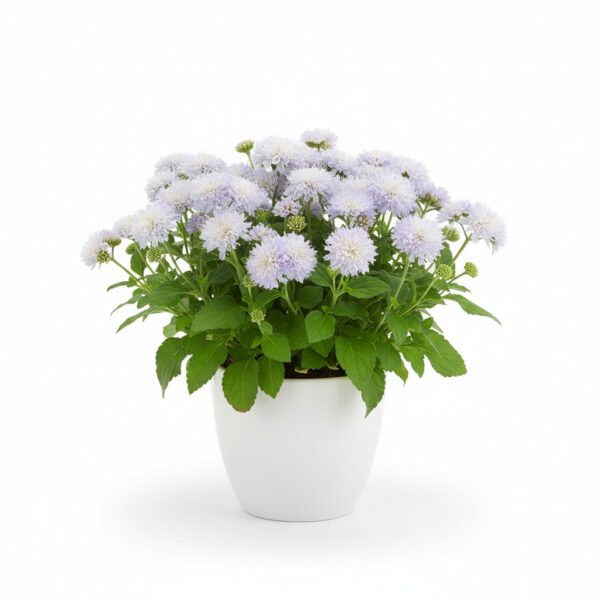
Floss Flower
Ageratum houstonianum
Ageratum houstonianum, commonly known as Floss Flower, is an annual flowering plant characterized by its fuzzy, pom-pom-like flower heads. It typically grows to a height of 6-18 inches. The flowers are most commonly blue, but cultivars are available in pink, white, and purple. It is primarily grown outdoors as a bedding plant or in containers for its long-lasting blooms and attractive appearance. While it can be attempted indoors, it requires very bright light and consistent care to thrive, making it more challenging than other indoor plants.

Himalayan Honeysuckle
Leycesteria formosa
Leycesteria formosa, or Himalayan Honeysuckle, is a deciduous shrub known for its pendulous, claret-red bracts and white flowers that bloom in summer. It produces dark purple berries that are attractive to birds. Typically grown outdoors as an ornamental shrub, it reaches a height of 1.5-2.5 meters. While some attempt to grow it indoors, its need for bright light and distinct seasonal changes makes it challenging. People grow it for its unique, exotic appearance and wildlife attraction.
Quick Plant Comparison
| Feature | Floss Flower | Himalayan Honeysuckle |
|---|---|---|
| Light | Full sun to partial shade outdoors. Indoors, requires very bright, direct light for at least 6 hours daily. | Full sun to partial shade outdoors. Indoors requires very bright, direct light for at least 6 hours daily. |
| Watering | Every 3-7 days outdoors, depending on weather. Every 5-10 days indoors, depending on light and humidity. | Outdoors: Every 7-10 days in summer, less frequently in cooler months. Indoors: Every 5-7 days, adjusting based on light and temperature. |
| Humidity | 40-60% | 40-60% |
| Temperature | 18-24°C | 15-24°C |
| Care Level | Expert | Expert |
| Growth Rate | Moderate | Fast |
| Max Height | 6-18 inches (15-45 cm) indoors, potentially smaller | Outdoors: 1.5-2.5 meters. Indoors: 1-1.5 meters (if successfully grown) |
| Pet Safety | ❌ Toxic To Pets | ❌ Toxic To Pets |
| Soil | Well-draining potting mix. A mix of peat moss, perlite, and vermiculite is suitable. | Well-draining, fertile soil. A mix of potting soil, perlite, and compost is suitable. |
| Beginner Friendly | ❌ No | ❌ No |
| Weekly Maintenance | 10-15 minutes weekly | 30 minutes weekly (watering, pruning, fertilizing) |
🔬 Botanical Information — Comparing These Plants
Floss Flower
| Scientific Name | Ageratum houstonianum |
|---|---|
| Family | Asteraceae |
| Native To | Central America, Mexico |
| Also Known As | Floss Flower, Blueweed, Mexican Ageratum |
| Leaves | The leaves are oval to heart-shaped, with slightly serrated edges. They are typically medium green in color and have a slightly rough texture. |
| Flowers | It flowers readily outdoors. Indoors, flowering is possible with sufficient light, but less reliable. The flowers are small, fuzzy, and clustered together in dense, pom-pom-like heads. They are most commonly blue, but cultivars are available in pink, white, and purple. |
Himalayan Honeysuckle
| Scientific Name | Leycesteria formosa |
|---|---|
| Family | Caprifoliaceae |
| Native To | Himalayas, southwestern China |
| Also Known As | Himalayan Honeysuckle, Flowering Nutmeg, Pheasant Berry |
| Leaves | The leaves are ovate to lanceolate, 10-20 cm long, and mid-green in color. They are opposite and have a slightly rough texture. |
| Flowers | It rarely flowers indoors. Outdoors, it produces white, tubular flowers in summer, surrounded by showy, claret-red bracts. |
📏 Size & Growth — Plant Comparison
Floss Flower
Himalayan Honeysuckle
🌱 Propagation — Comparing Plant Growth
Floss Flower
Methods: Seed, Stem cuttings
Difficulty: Easy
Tips: For seeds, sow indoors 6-8 weeks before the last frost. For stem cuttings, take 4-6 inch cuttings in spring or summer and root in water or moist potting mix.
Himalayan Honeysuckle
Methods: Stem cuttings, Seed
Difficulty: Moderate
Tips: Take semi-hardwood cuttings in late summer. Dip the cut end in rooting hormone and plant in well-draining soil. Keep the soil moist and provide humidity. Seeds can be sown in spring after stratification.
✨ Benefits & Features — Comparing Plant Value
Floss Flower
The fuzzy, pom-pom-like flower heads are unique and add a soft texture to the garden. The plant's long blooming period provides continuous color throughout the growing season. It is also attractive to pollinators, making it a beneficial addition to any garden.
- ✓ Attracts pollinators
- ✓ Adds vibrant color to the garden
- ✓ Long blooming period
- ✓ Relatively easy to propagate
- ✓ Can be used in cut flower arrangements
- ⚠️ Toxic to pets
Himalayan Honeysuckle
The Himalayan Honeysuckle is unique due to its pendulous, claret-red bracts and white flowers, followed by dark purple berries. These features give it an exotic appearance, setting it apart from other honeysuckle varieties.
- ✓ Attracts birds and other wildlife
- ✓ Provides visual interest with its unique bracts and berries
- ✓ Offers seasonal color changes
- ✓ Can be used as a screening plant
- ✓ Relatively easy to grow outdoors in suitable climates
- ⚠️ Toxic to pets
📅 Maintenance Schedule — Plant Care Comparison
Floss Flower
Himalayan Honeysuckle
🌞 Light Requirements
Floss Flower
Full sun to partial shade outdoors. Indoors, requires very bright, direct light for at least 6 hours daily.
Low light tolerant: ❌ No
Himalayan Honeysuckle
Full sun to partial shade outdoors. Indoors requires very bright, direct light for at least 6 hours daily.
Low light tolerant: ❌ No
💧 Watering Needs
Floss Flower
Water thoroughly when the top inch of soil feels dry. Avoid overwatering, which can lead to root rot. Ensure good drainage. Indoors, allow the soil to dry slightly between waterings. Signs of overwatering include yellowing leaves and wilting, while underwatering results in dry, crispy leaves.
Himalayan Honeysuckle
Water thoroughly when the top inch of soil feels dry. Avoid overwatering, which can lead to root rot. In winter, reduce watering frequency. Signs of overwatering include yellowing leaves and soggy soil. Underwatering results in wilting and dry, crispy leaves.
🌡️ Temperature & Humidity
Floss Flower
Temperature: 18-24°C
Humidity: 40-60%
Himalayan Honeysuckle
Temperature: 15-24°C
Humidity: 40-60%
🤔 Which Plant Is Right For You?
Floss Flower
Ageratum houstonianumExperienced gardeners who want a colorful, long-blooming annual for outdoor beds and containers, and are aware of the toxicity to pets.
✅ Choose This Plant If...
- You want a long-blooming annual for your garden.
- You need a plant that attracts butterflies and bees.
- You have a sunny outdoor space.
- You are experienced with plant care and can provide the necessary conditions.
- You are looking for a plant with a unique, fuzzy flower texture.
❌ Skip This Plant If...
- You have pets that may ingest the plant.
- You cannot provide full sun or very bright light.
- You are a beginner gardener.
- You prefer low-maintenance plants.
- You are looking for a plant that thrives indoors.
Himalayan Honeysuckle
Leycesteria formosaExperienced gardeners in temperate climates who want an attractive, wildlife-friendly shrub for their garden.
✅ Choose This Plant If...
- You want a unique ornamental shrub for your garden
- You want to attract birds to your yard
- You live in a temperate climate with mild winters
- You have a sunny spot in your garden
- You appreciate plants with interesting bracts and berries
❌ Skip This Plant If...
- You live in a very cold climate with harsh winters
- You want a low-maintenance indoor plant
- You have pets that might ingest the plant
- You don't have a sunny garden space
- You are a beginner gardener
🎯 Quick Verdict
⚡ Key Differences Between These Plants
Floss Flower has moderate growth, while Himalayan Honeysuckle grows fast.
💡 Pro Tips For Comparing These Plants
Floss Flower Care Tips
Floss Flower is primarily an outdoor plant that requires full sun and well-drained soil. Indoor cultivation is challenging due to its high light requirements. It needs consistent watering and fertilization. Toxicity to pets is a significant concern.
- Provide well-draining soil to prevent root rot.
- Deadhead spent flowers regularly to encourage more blooms.
- Fertilize every 2-4 weeks during the growing season.
- Protect from strong winds.
- Monitor for pests and diseases and treat promptly.
Himalayan Honeysuckle Care Tips
Himalayan Honeysuckle is primarily an outdoor shrub. Growing it indoors is challenging due to its high light requirements and need for seasonal temperature fluctuations. It requires very bright light, careful watering, and attention to humidity. Expect limited flowering indoors.
- Provide well-draining soil to prevent root rot.
- Prune after flowering to encourage bushier growth.
- Fertilize regularly during the growing season.
- Protect from strong winds.
- Mulch around the base of the plant to retain moisture.
⚠️ Common Problems & Solutions — Plant Care Comparison
Floss Flower
Himalayan Honeysuckle
❓ Frequently Asked Questions — Comparing These Plants
Floss Flower
What are the light requirements for Floss Flower?
Floss Flower requires at least six hours of direct sunlight per day to thrive and produce abundant blooms. A sunny south-facing window is ideal for indoor cultivation. If natural light is insufficient, supplement with grow lights. Insufficient light can lead to leggy growth and reduced flowering. Rotate the plant regularly to ensure even light exposure on all sides. Avoid placing the plant in overly shaded areas, as this can weaken the plant and make it more susceptible to diseases. Early morning sun is preferable to harsh afternoon sun, especially in hot climates.
How do I care for Floss Flower?
Floss Flower thrives in well-draining soil and prefers a sunny location, although it can tolerate partial shade. Water regularly, especially during hot, dry periods, keeping the soil consistently moist but not waterlogged. Fertilize every 2-3 weeks during the growing season with a balanced liquid fertilizer to promote abundant blooms. Deadhead spent flowers regularly to encourage continuous flowering. Prune back leggy growth to maintain a compact shape. Protect from frost and freezing temperatures, as Floss Flower is sensitive to cold. Indoors, ensure adequate air circulation to prevent fungal diseases. Monitor for pests like aphids and spider mites and treat promptly. Repotting is generally not necessary for annual varieties, but container-grown perennials may benefit from repotting every 1-2 years.
How do I propagate Floss Flower?
Floss Flower is easily propagated by seeds. Sow seeds directly into the garden in spring after the last frost or start indoors 6-8 weeks earlier. For stem cuttings, take 4-6 inch cuttings from healthy stems, remove the lower leaves, and place in water or moist potting mix until roots develop. Division is possible for perennial varieties. Carefully dig up the plant and separate the root ball into smaller sections, ensuring each section has healthy roots and foliage. Replant the divisions in fresh soil. Keiki propagation is not applicable to Floss Flower.
Himalayan Honeysuckle
What are the light requirements for Himalayan Honeysuckle?
Himalayan Honeysuckle thrives in partial shade, receiving about 4-6 hours of direct sunlight per day. Morning sun is ideal, as it protects the plant from the intense heat of the afternoon. In hotter climates, providing afternoon shade is crucial to prevent leaf scorch. While it can tolerate full sun in cooler regions, the foliage may become less vibrant and the flowers may fade more quickly. Insufficient light can lead to reduced flowering and leggy growth. When planting, consider the amount of sunlight the area receives throughout the day and choose a location that provides the optimal balance.
How do I care for Himalayan Honeysuckle?
Himalayan Honeysuckle prefers well-draining soil and thrives in partial shade, although it can tolerate full sun in cooler climates. Water regularly, especially during dry periods, ensuring the soil remains consistently moist but not waterlogged. Fertilize in early spring with a balanced fertilizer to promote healthy growth and abundant flowering. Prune annually in late winter or early spring to remove any dead or damaged wood and to shape the plant. Himalayan Honeysuckle is relatively pest and disease resistant, but monitor for aphids or powdery mildew and treat accordingly. Providing adequate air circulation can help prevent fungal issues. Mulching around the base of the plant helps retain moisture and suppress weeds.
How do I propagate Himalayan Honeysuckle?
Himalayan Honeysuckle can be propagated through several methods. Stem cuttings are a popular choice: take 4-6 inch cuttings from new growth in late spring or early summer. Remove the lower leaves and dip the cut end in rooting hormone. Plant the cuttings in a well-draining potting mix and keep them moist. Division is another method, especially for established plants. Carefully dig up the plant and separate the root ball into smaller sections, each with healthy roots and stems. Replant the divisions in separate pots or directly into the ground. Keiki propagation is not applicable to Himalayan Honeysuckle.
Last updated: April 26, 2026 — Plant care data reviewed and verified by our editorial team.