
Devil's Ivy vs Peace Lily Plant Comparison
Compare these two plants side by side — care needs, key differences, and which is right for your home.
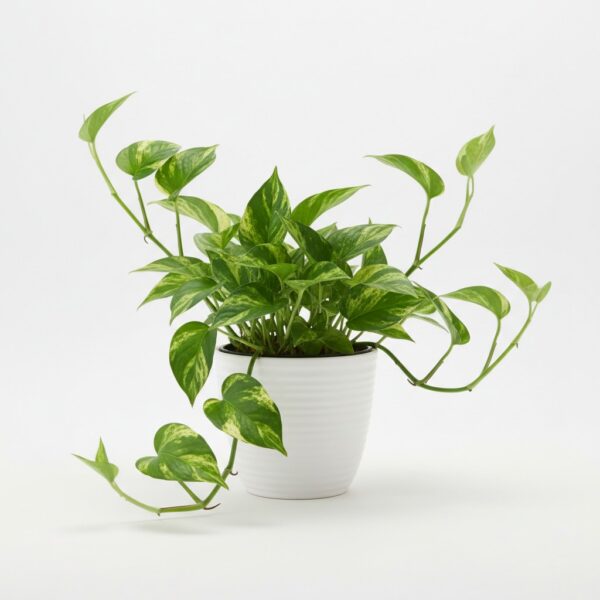
Devil's Ivy
Epipremnum aureum
Epipremnum aureum, commonly known as Devil's Ivy or Golden Pothos, is a popular evergreen vine prized for its ease of care and attractive foliage. Native to Moorea, it's widely cultivated as an ornamental plant. Its leaves are heart-shaped and glossy, often variegated with shades of yellow or white. Devil's Ivy is a climbing plant in its natural habitat, but indoors it is typically grown in hanging baskets or trained to climb on supports. People grow it for its air-purifying qualities and aesthetic appeal, adding a touch of greenery to homes and offices.

Peace Lily
Spathiphyllum wallisii
The Peace Lily is a popular evergreen herbaceous perennial known for its elegant white 'flowers' (actually modified leaves called spathes) and glossy, dark green leaves. It's primarily grown as an indoor plant for its air-purifying qualities and attractive appearance. It features a clumping growth habit, arising from rhizomes. While it can be grown outdoors in very warm, humid climates, it's most commonly found as a houseplant due to its adaptability to indoor conditions and tolerance of lower light levels. The plant's beauty and ease of care make it a favorite for homes and offices.
Quick Plant Comparison
| Feature | Devil's Ivy | Peace Lily |
|---|---|---|
| Light | Bright, indirect light is ideal. Can tolerate lower light conditions, but variegation may fade. | Bright, indirect light. Avoid direct sunlight, which can scorch the leaves. |
| Watering | Every 1-2 weeks, depending on environmental conditions. | Every 7-10 days, depending on environmental conditions |
| Humidity | 40-70% | 50-70% |
| Temperature | 18-27°C | 18-24°C |
| Care Level | Easy | Easy |
| Growth Rate | Fast | Moderate |
| Max Height | Indoors, typically 0.6-3 meters (2-10 feet) | 30-60 cm |
| Pet Safety | ❌ Toxic To Pets | ❌ Toxic To Pets |
| Soil | Well-draining potting mix, such as a mix of peat moss, perlite, and vermiculite. | Well-draining potting mix, such as a mix of peat moss, perlite, and vermiculite |
| Beginner Friendly | ✅ Yes | ✅ Yes |
| Weekly Maintenance | 5 minutes weekly | 5-10 minutes weekly |
🔬 Botanical Information — Comparing These Plants
Devil's Ivy
| Scientific Name | Epipremnum aureum |
|---|---|
| Family | Araceae |
| Native To | Moorea, French Polynesia |
| Also Known As | Devil's Ivy, Golden Pothos, Pothos, Hunter's Robe, Ivy Arum, Money Plant |
| Leaves | Heart-shaped leaves, typically 5-10 cm (2-4 inches) long. Glossy texture with variegation in shades of yellow, white, or light green. The amount of variegation can vary depending on light exposure. |
| Flowers | Rarely flowers indoors. In its natural habitat, it can produce small, inconspicuous flowers on a spadix, but this is extremely uncommon in indoor cultivation. |
Peace Lily
| Scientific Name | Spathiphyllum wallisii |
|---|---|
| Family | Araceae |
| Native To | Tropical rainforests of Central and South America |
| Also Known As | Peace Lily, White Sails, Spathe Flower |
| Leaves | The leaves are glossy, dark green, and lance-shaped, with prominent veins. They can grow up to 25 cm long and have a slightly wavy texture. |
| Flowers | Peace Lilies can flower indoors under the right conditions, typically in spring or early summer. The 'flower' is a white spathe that surrounds a central spadix covered in small, true flowers. The spathe will eventually turn green as it ages. |
📏 Size & Growth — Plant Comparison
Devil's Ivy
Peace Lily
🌱 Propagation — Comparing Plant Growth
Devil's Ivy
Methods: Stem cuttings
Difficulty: Easy
Tips: Take stem cuttings with at least one node. Place the cutting in water or directly into moist potting mix. Roots will typically develop within a few weeks.
Peace Lily
Methods: Division
Difficulty: Easy
Tips: Divide the plant at the root ball, ensuring each division has healthy roots and leaves. Repot immediately.
✨ Benefits & Features — Comparing Plant Value
Devil's Ivy
Devil's Ivy is known for its resilience and ability to thrive in a wide range of conditions. Its variegated leaves add visual interest, and it's an effective air purifier. It can adapt to different light levels, making it a versatile houseplant.
- ✓ Air purification, removing toxins like formaldehyde and xylene.
- ✓ Easy to care for, requiring minimal maintenance.
- ✓ Visually appealing, adding a touch of greenery to any space.
- ✓ Versatile, can be grown in various ways and locations.
- ✓ Boosts mood and reduces stress, creating a more relaxing environment.
- 🌬️ NASA-verified air purifier
- ⚠️ Toxic to pets
Peace Lily
The Peace Lily is known for its elegant white spathe, which resembles a flower but is actually a modified leaf. It's also a popular choice for its air-purifying qualities, removing toxins like formaldehyde and benzene from the air.
- ✓ Improved indoor air quality
- ✓ Elegant and calming aesthetic
- ✓ Relatively low-maintenance
- ✓ Adds a touch of greenery to any space
- ✓ Can help to reduce stress levels
- 🌬️ NASA-verified air purifier
- ⚠️ Toxic to pets
📅 Maintenance Schedule — Plant Care Comparison
Devil's Ivy
Peace Lily
🌞 Light Requirements
Devil's Ivy
Bright, indirect light is ideal. Can tolerate lower light conditions, but variegation may fade.
Low light tolerant: ✅ Yes
Peace Lily
Bright, indirect light. Avoid direct sunlight, which can scorch the leaves.
Low light tolerant: ✅ Yes
💧 Watering Needs
Devil's Ivy
Water thoroughly when the top inch of soil is dry. Allow excess water to drain away. Overwatering can lead to root rot, indicated by yellowing leaves and a musty smell. Underwatering results in wilting and dry, crispy leaf edges.
Peace Lily
Water thoroughly when the top inch of soil feels dry to the touch. Allow excess water to drain away. Overwatering can lead to root rot, indicated by yellowing leaves and a musty smell. Underwatering will cause the leaves to droop dramatically.
🌡️ Temperature & Humidity
Devil's Ivy
Temperature: 18-27°C
Humidity: 40-70%
Peace Lily
Temperature: 18-24°C
Humidity: 50-70%
🤔 Which Plant Is Right For You?
Devil's Ivy
Epipremnum aureumBeginners looking for a low-maintenance, visually appealing houseplant.
✅ Choose This Plant If...
- You want a plant that is easy to care for and can tolerate neglect.
- You want a plant that can help purify the air in your home.
- You want a plant that can be grown in a variety of ways, such as in a hanging basket or trained to climb.
- You want a plant that is relatively inexpensive and readily available.
- You want a plant that adds a touch of greenery to your home without requiring a lot of maintenance.
❌ Skip This Plant If...
- You have pets that may chew on plants, as it is toxic to them.
- You are looking for a plant that requires very little light, as it needs some light to thrive.
- You are looking for a plant that stays small, as it can grow quite long.
Peace Lily
Spathiphyllum wallisiiIndividuals looking for an elegant, low-maintenance houseplant that can improve indoor air quality.
✅ Choose This Plant If...
- It's a beautiful and elegant plant that adds a touch of sophistication to any room.
- It's relatively low-maintenance and easy to care for, making it a good choice for beginners.
- It's known for its air-purifying qualities, helping to improve indoor air quality.
- It tolerates low light conditions, making it suitable for rooms with less natural light.
- It's a great way to add a touch of greenery to your home or office.
❌ Skip This Plant If...
- It's toxic to pets if ingested.
- It can be sensitive to fluoride in tap water.
- It requires consistent watering and can be prone to root rot if overwatered.
🎯 Quick Verdict
⚡ Key Differences Between These Plants
Devil's Ivy has fast growth, while Peace Lily grows moderate.
💡 Pro Tips For Comparing These Plants
Devil's Ivy Care Tips
Devil's Ivy is a low-maintenance plant that thrives in a variety of conditions. It is relatively tolerant of neglect, making it a good choice for beginners. However, it is toxic to pets and should be kept out of their reach.
- Allow the top inch of soil to dry out completely before watering to prevent root rot.
- Provide bright, indirect light for optimal growth and variegation.
- Fertilize regularly during the growing season (spring and summer) with a balanced liquid fertilizer.
- Prune regularly to control size and shape, and to encourage bushier growth.
- Wipe leaves occasionally with a damp cloth to remove dust and improve air purification.
Peace Lily Care Tips
Peace Lilies are relatively easy to care for indoors. They thrive in bright, indirect light and require regular watering. Avoid direct sunlight and overwatering. They are sensitive to fluoride in tap water, so use filtered or distilled water if possible.
- Use filtered or distilled water to avoid fluoride toxicity.
- Wipe the leaves regularly with a damp cloth to remove dust and improve photosynthesis.
- Provide adequate humidity by misting the plant or using a humidifier.
- Avoid placing the plant near drafts or heating vents.
- Repot the plant in fresh soil every 1-2 years to provide nutrients and improve drainage.
⚠️ Common Problems & Solutions — Plant Care Comparison
Devil's Ivy
Peace Lily
❓ Frequently Asked Questions — Comparing These Plants
Devil's Ivy
What are the light requirements for Devil's Ivy?
Devil’s Ivy thrives in bright, indirect light. Placing it near an east-facing window is often ideal, as it receives gentle morning sun. Avoid direct sunlight, especially during the hottest part of the day, as it can cause the leaves to burn. If the leaves start to lose their variegation, it may indicate that the plant is not receiving enough light. Rotate the plant regularly to ensure even growth. Devil’s Ivy can tolerate low light conditions, but its growth will be slower and the variegation may be less pronounced. Artificial grow lights can supplement natural light, especially during the darker months.
How do I care for Devil's Ivy?
Devil’s Ivy is a relatively easy plant to care for. Place it in bright, indirect light to maintain its vibrant variegation; avoid direct sunlight, which can scorch the leaves. Water thoroughly when the top inch of soil feels dry, allowing excess water to drain away. Overwatering can lead to root rot, so ensure the pot has good drainage. Maintain humidity levels of 50-70% by misting regularly or using a humidifier, especially in dry climates. Fertilize monthly during the growing season (spring and summer) with a balanced liquid fertilizer diluted to half strength. Repot every 1-2 years in spring, using a well-draining potting mix. Prune regularly to maintain shape and encourage bushier growth. Keep temperatures between 65-85°F (18-29°C).
How do I propagate Devil's Ivy?
Devil’s Ivy is easily propagated through stem cuttings. Cut a 4-6 inch section of stem with at least one node. Remove the lower leaves and place the cutting in water. Roots will typically develop within a few weeks. Once the roots are an inch or two long, plant the cutting in well-draining potting mix. For division, carefully separate the root ball of a mature plant into smaller sections, ensuring each section has healthy roots and foliage. Plant each section in its own pot. Air layering involves wrapping a stem node with moist sphagnum moss and covering it with plastic wrap until roots develop, then cutting the stem below the roots and planting.
Peace Lily
What are the light requirements for Peace Lily?
Peace Lilies thrive in medium to low indirect light. Avoid direct sunlight, which can scorch their leaves. An east-facing window is ideal, providing gentle morning light. If placed near a south or west-facing window, use a sheer curtain to filter the light. Too little light can result in fewer flowers and slower growth. Observe your plant for signs of inadequate light, such as leggy growth or a lack of blooms. You can also use artificial light, such as fluorescent or LED grow lights, if natural light is limited. Rotate your plant occasionally to ensure even light exposure on all sides. Remember that darker-leaved varieties can tolerate slightly lower light levels than lighter-leaved ones.
How do I care for Peace Lily?
Peace Lilies thrive in indirect light; avoid direct sunlight to prevent leaf burn. Water thoroughly when the top inch of soil is dry, allowing excess water to drain. They prefer high humidity, so mist regularly or place near a humidifier. Fertilize sparingly during the growing season (spring/summer) with a balanced liquid fertilizer diluted to half strength. Repot every 1-2 years as needed, using a well-draining potting mix. Keep temperatures between 65-80°F (18-27°C). Prune away any yellow or brown leaves to maintain appearance. Protect from drafts and sudden temperature changes. Monitor for pests like spider mites or mealybugs and treat accordingly. Provide adequate air circulation to prevent fungal diseases. With proper care, your Peace Lily will reward you with beautiful foliage and elegant blooms.
How do I propagate Peace Lily?
Peace Lilies are commonly propagated by division. Carefully remove the plant from its pot and gently separate the root ball into smaller clumps, ensuring each clump has healthy roots and leaves. Plant each division into its own pot with fresh potting mix. Keep the soil consistently moist and provide bright, indirect light. Propagation by stem cuttings is less common but can be attempted by taking a cutting with a leaf and a node and placing it in water until roots develop before planting in soil. Air layering is another option, but it’s more complex and not typically used for Peace Lilies. Division is the most reliable method.
Last updated: May 20, 2026 — Plant care data reviewed and verified by our editorial team.