
Curry Plant vs Succulent Plant Comparison
Compare these two plants side by side — care needs, key differences, and which is right for your home.
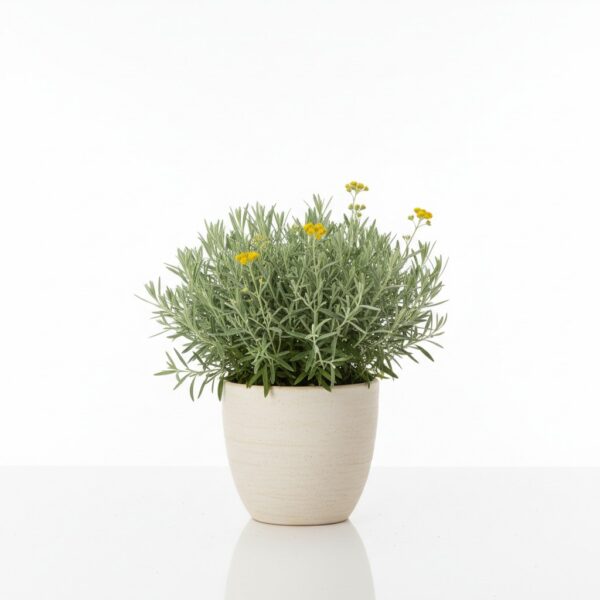
Curry Plant
Helichrysum italicum
Helichrysum italicum, commonly known as the Curry Plant, is a small, aromatic shrub characterized by its silvery-gray, needle-like foliage. It typically grows to a height of 60-90 cm. The plant is native to the Mediterranean and is prized for its distinctive curry-like aroma, which intensifies when the leaves are touched or bruised. It produces clusters of small, yellow flowers in summer. While it can be grown indoors, it thrives best outdoors in well-drained soil and full sun. People grow it for its fragrance, ornamental value, and culinary uses (though the flavor is not as strong as the aroma).

Succulent
Aloe vera
Aloe vera is a succulent plant species known for its medicinal properties. It features thick, fleshy, green leaves that are often edged with small, harmless teeth. The leaves grow in a rosette pattern. It's primarily an outdoor plant in warmer climates but is commonly grown indoors for its ease of care and the soothing gel found within its leaves, which is used to treat burns and skin irritations. While it can tolerate indoor conditions, it thrives with ample sunlight.
Quick Plant Comparison
| Feature | Curry Plant | Succulent |
|---|---|---|
| Light | Full sun (at least 6-8 hours of direct sunlight daily) | Bright, indirect light to full sun. Requires at least 6 hours of direct sunlight daily for optimal growth. |
| Watering | Every 1-2 weeks, depending on environmental conditions | Every 2-3 weeks, more frequently in summer, less in winter. |
| Humidity | 30-50% | 40-60% |
| Temperature | 15-25°C | 18-24°C |
| Care Level | Expert | Easy |
| Growth Rate | Moderate | Slow |
| Max Height | 30-60 cm indoors | 30-60 cm |
| Pet Safety | ✅ Safe | ❌ Toxic To Pets |
| Soil | Well-draining soil mix (e.g., cactus mix or a blend of potting soil, perlite, and sand) | Well-draining succulent or cactus mix |
| Beginner Friendly | ❌ No | ✅ Yes |
| Weekly Maintenance | 15 minutes weekly | 5 minutes weekly |
🔬 Botanical Information — Comparing These Plants
Curry Plant
| Scientific Name | Helichrysum italicum |
|---|---|
| Family | Asteraceae |
| Native To | Mediterranean region (Italy, Spain, France, Balkans) |
| Also Known As | Curry Plant, Italian Everlasting |
| Leaves | The leaves of the Curry Plant are small, narrow, and needle-like, measuring about 1-4 cm in length. They are silvery-gray in color and have a slightly fuzzy texture. The leaves are densely packed along the stems, giving the plant a bushy appearance. |
| Flowers | The Curry Plant produces clusters of small, bright yellow flowers in the summer. While it can flower indoors under ideal conditions, flowering is more common and prolific when grown outdoors in full sun. |
Succulent
| Scientific Name | Aloe vera |
|---|---|
| Family | Asphodelaceae |
| Native To | Arabian Peninsula |
| Also Known As | Aloe, Burn Aloe, First Aid Plant |
| Leaves | Thick, fleshy, lance-shaped leaves that are typically green or grey-green. The leaves often have small, harmless teeth along the edges. They are smooth and contain a clear gel inside. |
| Flowers | Rarely flowers indoors. When it does, it produces a tall spike with tubular yellow or orange flowers. |
📏 Size & Growth — Plant Comparison
Curry Plant
Succulent
🌱 Propagation — Comparing Plant Growth
Curry Plant
Methods: Stem cuttings, Seed
Difficulty: Moderate
Tips: Take stem cuttings in spring or summer. Dip the cut end in rooting hormone and plant in well-draining soil. Keep the soil moist and provide bright, indirect light. Seeds can be sown in spring after the last frost.
Succulent
Methods: Offsets (pups), Leaf cuttings (less reliable)
Difficulty: Easy
Tips: Separate offsets from the mother plant when they are about 1/3 the size of the parent. Allow the cut end to callous over for a few days before planting in well-draining soil.
✨ Benefits & Features — Comparing Plant Value
Curry Plant
The Curry Plant is unique for its strong curry-like aroma, which is released when the leaves are touched. Unlike many herbs, its flavor is much milder than its scent. It also has a distinctive silvery-gray foliage that adds visual interest to gardens.
- ✓ Aromatic foliage provides a pleasant scent.
- ✓ Adds visual interest with its silvery-gray leaves.
- ✓ Can be used in culinary applications (though flavor is mild).
- ✓ Attracts pollinators to the garden.
- ✓ Relatively drought-tolerant once established.
- 🐾 Pet Safe
Succulent
Aloe vera is known for its medicinal properties, specifically the soothing gel found within its leaves. It's a relatively low-maintenance succulent that can tolerate infrequent watering, making it a popular choice for beginners.
- ✓ Provides soothing gel for minor burns and skin irritations.
- ✓ Easy to care for and requires minimal maintenance.
- ✓ Adds a touch of greenery to any space.
- ✓ Can tolerate neglect, making it ideal for busy individuals.
- ✓ Unique architectural form provides visual interest.
- 🌬️ NASA-verified air purifier
- ⚠️ Toxic to pets
📅 Maintenance Schedule — Plant Care Comparison
Curry Plant
Succulent
🌞 Light Requirements
Curry Plant
Full sun (at least 6-8 hours of direct sunlight daily)
Low light tolerant: ❌ No
Succulent
Bright, indirect light to full sun. Requires at least 6 hours of direct sunlight daily for optimal growth.
Low light tolerant: ❌ No
💧 Watering Needs
Curry Plant
Allow the soil to dry out slightly between waterings. Overwatering can lead to root rot. Water thoroughly when the top inch of soil feels dry to the touch. Reduce watering frequency during the winter months. Signs of overwatering include yellowing leaves and a musty smell. Underwatering results in wilting and dry, crispy leaves.
Succulent
Allow the soil to dry out completely between waterings. Water thoroughly when the soil is dry to the touch. Overwatering can lead to root rot. Signs of overwatering include yellowing or mushy leaves. Underwatering is indicated by shriveled, flattened leaves.
🌡️ Temperature & Humidity
Curry Plant
Temperature: 15-25°C
Humidity: 30-50%
Succulent
Temperature: 18-24°C
Humidity: 40-60%
🤔 Which Plant Is Right For You?
Curry Plant
Helichrysum italicumExperienced gardeners who can provide the specific growing conditions this plant needs.
✅ Choose This Plant If...
- You love aromatic plants and enjoy the scent of curry.
- You have a sunny outdoor space with well-draining soil.
- You are an experienced gardener looking for a unique plant to add to your collection.
- You want to use the plant's aroma in potpourri or dried arrangements.
- You are interested in the plant's potential medicinal properties (consult a professional).
❌ Skip This Plant If...
- You have limited sunlight indoors.
- You tend to overwater plants.
- You are a beginner gardener looking for an easy-care houseplant.
Succulent
Aloe veraBeginners looking for a low-maintenance plant with medicinal benefits.
✅ Choose This Plant If...
- You want a plant with medicinal properties for minor burns and skin irritations.
- You are a beginner gardener looking for a low-maintenance plant.
- You have a sunny windowsill or bright indoor space.
- You want a plant that can tolerate infrequent watering.
- You appreciate the unique architectural form of succulent plants.
❌ Skip This Plant If...
- You have pets that might ingest the plant.
- You tend to overwater plants.
- You don't have a bright enough location for it to thrive.
🎯 Quick Verdict
⚡ Key Differences Between These Plants
Curry Plant is rated Expert care level, while Succulent is Easy.
Curry Plant has moderate growth, while Succulent grows slow.
💡 Pro Tips For Comparing These Plants
Curry Plant Care Tips
Curry Plant is best suited for outdoor growing due to its high light requirements. Indoor cultivation is challenging and requires very bright light, excellent drainage, and careful watering to prevent root rot. It needs regular pruning to maintain shape. It is not a typical houseplant and requires more attention than most.
- Provide at least 6 hours of direct sunlight daily.
- Use well-draining soil to prevent root rot.
- Water sparingly, allowing the soil to dry out between waterings.
- Prune regularly to maintain shape and encourage bushier growth.
- Fertilize lightly during the growing season.
Succulent Care Tips
Aloe vera is easy to care for indoors, requiring bright light and infrequent watering. Overwatering is the biggest threat. Be aware of its toxicity to pets. It's a popular choice for its medicinal properties and attractive appearance.
- Allow the soil to dry out completely between waterings to prevent root rot.
- Provide bright, indirect light to prevent scorching.
- Avoid getting water on the leaves when watering to prevent leaf spot.
- Repot in well-draining succulent mix every 2-3 years.
- Fertilize sparingly, only during the growing season.
⚠️ Common Problems & Solutions — Plant Care Comparison
Curry Plant
Succulent
❓ Frequently Asked Questions — Comparing These Plants
Curry Plant
What are the light requirements for Curry Plant?
Curry Plant requires at least 6-8 hours of direct sunlight per day to thrive. Insufficient light can lead to leggy growth and reduced aroma. Place your Curry Plant in a south-facing window indoors, or in a sunny spot outdoors. If growing indoors and natural light is limited, supplement with a grow light. Rotate the plant regularly to ensure even light exposure on all sides. The intensity of sunlight affects the plant’s oil production, thus affecting the strength of the curry scent. Insufficient light may cause the plant to stretch towards the light source, resulting in weak stems.
How do I care for Curry Plant?
Curry Plant thrives in full sun and well-draining soil. Water sparingly, allowing the soil to dry out between waterings. Overwatering can lead to root rot. Fertilize lightly in spring with a balanced fertilizer to promote growth. Prune regularly to maintain shape and encourage bushier growth. Provide good air circulation to prevent fungal diseases. Protect from frost in colder climates, as it is not fully frost-hardy. Repot every 1-2 years in spring. Monitor for pests like aphids and spider mites. Avoid using excessive amounts of fertilizer, as this can diminish the plant’s aroma. Ensure proper drainage in pots to prevent waterlogging.
How do I propagate Curry Plant?
Curry Plant can be propagated through stem cuttings. Take a 4-6 inch cutting from a healthy stem. Remove the lower leaves and dip the cut end in rooting hormone. Plant the cutting in well-draining soil and keep it moist. Roots should develop in 2-4 weeks. Division is another method: Carefully separate the root ball into smaller sections and repot each section in its own container. Ensure each division has healthy roots and foliage. Keiki propagation is not applicable to Curry Plant. Provide adequate light and moisture to promote new growth.
Succulent
What are the light requirements for Succulent?
Succulents need at least six hours of bright, indirect sunlight per day to thrive. Insufficient light can lead to etiolation, where the plant stretches and becomes leggy. South-facing windows are often ideal, but east or west-facing windows can also work. If natural light is insufficient, consider using a grow light to supplement. Rotate your succulent regularly to ensure even light exposure on all sides. Avoid placing succulents in direct, intense sunlight, especially during the hottest part of the day, as this can cause sunburn.
How do I care for Succulent?
Succulents thrive in bright, indirect sunlight and require well-draining soil to prevent root rot. Water thoroughly only when the soil is completely dry, typically every 2-4 weeks, depending on the environment. Overwatering is a common mistake, so ensure proper drainage. Fertilize sparingly during the growing season (spring and summer) with a diluted succulent fertilizer. Maintain a temperature range of 65-80°F (18-27°C). Protect from frost and extreme cold. Repot every 1-2 years into a slightly larger pot with fresh succulent mix. Prune any dead or damaged leaves to maintain the plant’s health and appearance. Provide adequate air circulation to prevent fungal diseases.
How do I propagate Succulent?
Succulents are easily propagated through leaf cuttings, stem cuttings, or offsets. For leaf cuttings, gently twist a healthy leaf from the stem, allow it to callus for a few days, and then place it on top of well-draining soil. Mist lightly and wait for roots and a new plant to form. For stem cuttings, cut a stem, let it callus, and plant it in soil. Offsets (baby plants growing from the base) can be separated and planted individually. Ensure the soil is well-draining and provide bright, indirect light. Water sparingly until roots establish.
Last updated: May 3, 2026 — Plant care data reviewed and verified by our editorial team.