
Crown of Thorns vs Queen Anne's Lace Plant Comparison
Compare these two plants side by side — care needs, key differences, and which is right for your home.
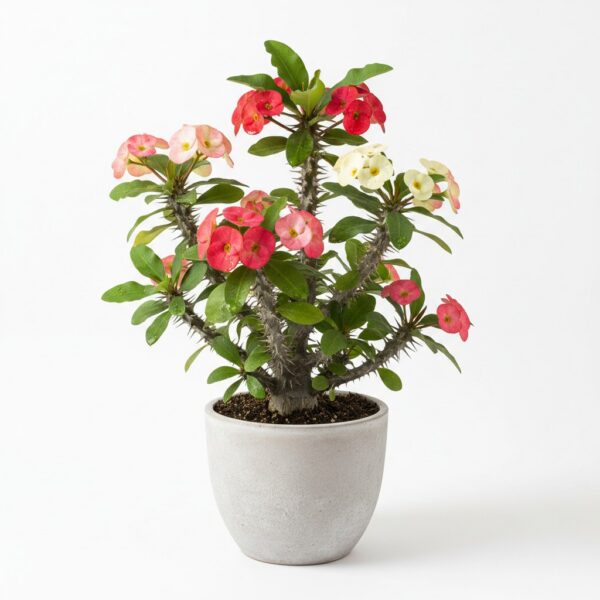
Crown of Thorns
Euphorbia milii
Euphorbia milii, commonly known as Crown of Thorns, is a succulent shrub characterized by its thorny stems and vibrant bracts surrounding small, inconspicuous flowers. Native to Madagascar, it is a popular ornamental plant grown for its drought tolerance and long-lasting blooms. It typically grows as a sprawling shrub, reaching up to 1-2 meters in height. While it can be grown indoors, it thrives best with ample sunlight, often making it more suitable as an outdoor plant in warmer climates. People grow it for its unique appearance and relatively easy care.

Queen Anne's Lace
Daucus carota
Queen Anne's Lace, or Wild Carrot, is a biennial plant characterized by its lacy, white flower umbels that often feature a single, small, dark purple flower in the center. In its first year, it forms a rosette of fern-like leaves. The second year brings a flowering stalk that can reach up to 4 feet tall. It is primarily an outdoor plant, thriving in meadows and along roadsides. People appreciate its delicate beauty and use it in wildflower gardens, although its aggressive spreading can be a concern.
Quick Plant Comparison
| Feature | Crown of Thorns | Queen Anne's Lace |
|---|---|---|
| Light | Requires at least 4-6 hours of direct sunlight daily. Insufficient light will result in leggy growth and reduced flowering. | Full sun |
| Watering | Every 2-3 weeks, depending on environmental conditions and pot size. | Once or twice a week, depending on weather conditions |
| Humidity | 30-50% | 30-50% |
| Temperature | 18-27°C | 15-25°C |
| Care Level | Moderate | Expert |
| Growth Rate | Slow | Fast |
| Max Height | 0.3-0.6 meters (indoors) | N/A (Outdoor plant, not suitable for indoor growing) |
| Pet Safety | ❌ Toxic To Pets | ❌ Toxic To Pets |
| Soil | Well-draining succulent or cactus mix | Well-draining soil; sandy or loamy soil is ideal |
| Beginner Friendly | With Caution | ❌ No |
| Weekly Maintenance | 10 minutes weekly | 15 minutes weekly (for weeding and deadheading) |
🔬 Botanical Information — Comparing These Plants
Crown of Thorns
| Scientific Name | Euphorbia milii |
|---|---|
| Family | Euphorbiaceae |
| Native To | Madagascar |
| Also Known As | Crown of Thorns, Christ Plant, Christ Thorn |
| Leaves | The leaves are small, oval-shaped, and typically bright green. They are deciduous, meaning they may drop off during periods of stress or dormancy, especially in winter. |
| Flowers | It can flower indoors, but flowering is more prolific with ample sunlight. The true flowers are small and inconspicuous, surrounded by colorful bracts that can be red, pink, yellow, or white. |
Queen Anne's Lace
| Scientific Name | Daucus carota |
|---|---|
| Family | Apiaceae |
| Native To | Europe and Southwest Asia |
| Also Known As | Wild Carrot, Bird's Nest, Bishop's Lace |
| Leaves | The leaves are finely divided and fern-like, resembling carrot leaves. They are typically green and arranged alternately along the stem. |
| Flowers | Does not flower indoors. Outdoors, it produces large, flat-topped umbels of small, white flowers. A single, small, dark purple flower is often found in the center of the umbel. |
📏 Size & Growth — Plant Comparison
Crown of Thorns
Queen Anne's Lace
🌱 Propagation — Comparing Plant Growth
Crown of Thorns
Methods: Stem cuttings
Difficulty: Easy
Tips: Allow the cut end to callus over for a few days before planting in well-draining soil. Use rooting hormone for better success.
Queen Anne's Lace
Methods: Seed
Difficulty: Easy
Tips: Sow seeds directly into the ground in the fall or early spring. Seeds require a period of cold stratification for optimal germination.
✨ Benefits & Features — Comparing Plant Value
Crown of Thorns
The Crown of Thorns is unique due to its thorny stems and the colorful bracts that surround its small flowers. Unlike many flowering plants, the bracts provide color for extended periods, making it a long-lasting ornamental plant.
- ✓ Drought tolerance makes it easy to care for
- ✓ Long-lasting blooms add color to your space
- ✓ Unique appearance provides visual interest
- ✓ Can tolerate neglect, making it suitable for busy individuals
- ✓ Adds a touch of history and symbolism to your plant collection
- ⚠️ Toxic to pets
Queen Anne's Lace
The single dark purple flower in the center of the white umbel is a distinctive feature. The flower head curls up into a bird's nest shape as it goes to seed, aiding in seed dispersal.
- ✓ Attracts beneficial insects and pollinators.
- ✓ Adds a natural, wildflower aesthetic to the garden.
- ✓ Drought-tolerant once established.
- ✓ Provides a food source for wildlife.
- ✓ Has traditional medicinal uses (with caution and research).
- ⚠️ Toxic to pets
📅 Maintenance Schedule — Plant Care Comparison
Crown of Thorns
Queen Anne's Lace
🌞 Light Requirements
Crown of Thorns
Requires at least 4-6 hours of direct sunlight daily. Insufficient light will result in leggy growth and reduced flowering.
Low light tolerant: ❌ No
Queen Anne's Lace
Full sun
Low light tolerant: ❌ No
💧 Watering Needs
Crown of Thorns
Allow the soil to dry out completely between waterings. Overwatering can lead to root rot. Water thoroughly when the soil is dry to the touch. Signs of overwatering include yellowing leaves and stem rot. Underwatering will cause leaf drop and shriveling.
Queen Anne's Lace
Water deeply when the top inch of soil is dry. Avoid overwatering, which can lead to root rot. Established plants are drought-tolerant. Signs of underwatering include wilting and dry, crispy leaves. Overwatering can cause yellowing leaves and a musty smell.
🌡️ Temperature & Humidity
Crown of Thorns
Temperature: 18-27°C
Humidity: 30-50%
Queen Anne's Lace
Temperature: 15-25°C
Humidity: 30-50%
🤔 Which Plant Is Right For You?
Crown of Thorns
Euphorbia miliiExperienced plant owners who can provide bright light and are aware of the plant's toxicity.
✅ Choose This Plant If...
- You want a drought-tolerant plant that flowers for a long period.
- You have a sunny location where the plant can thrive.
- You are experienced with caring for succulents and understand their watering needs.
- You are looking for a unique and interesting plant with a historical connection.
- You can keep the plant away from pets and children due to its toxicity.
❌ Skip This Plant If...
- You have pets or small children who might ingest the plant.
- You cannot provide adequate sunlight.
- You tend to overwater plants.
- You are looking for a low-maintenance plant that thrives in low-light conditions.
Queen Anne's Lace
Daucus carotaGardeners looking to add a wildflower element to their landscape, understanding its potential for aggressive spread.
✅ Choose This Plant If...
- You want to attract pollinators to your garden.
- You appreciate the wildflower aesthetic.
- You have a large outdoor space where its spreading habit can be managed.
- You are interested in the plant's traditional medicinal uses (with proper research and caution).
- You want a drought-tolerant plant.
❌ Skip This Plant If...
- You have limited outdoor space.
- You are concerned about invasive plants.
- You have pets that might ingest the plant.
- You are looking for an indoor plant.
🎯 Quick Verdict
⚡ Key Differences Between These Plants
Crown of Thorns is rated Moderate care level, while Queen Anne's Lace is Expert.
Crown of Thorns has slow growth, while Queen Anne's Lace grows fast.
💡 Pro Tips For Comparing These Plants
Crown of Thorns Care Tips
Crown of Thorns requires bright sunlight and well-draining soil. Overwatering is a common issue. It can be grown indoors with sufficient light, but may not flower as profusely as when grown outdoors. Toxicity to pets is a significant concern.
- Provide at least 4-6 hours of direct sunlight daily for optimal growth and flowering.
- Allow the soil to dry out completely between waterings to prevent root rot.
- Use a well-draining succulent or cactus mix to ensure proper drainage.
- Fertilize sparingly during the growing season with a balanced liquid fertilizer.
- Wear gloves when pruning or handling the plant to avoid skin irritation from the sap.
Queen Anne's Lace Care Tips
Queen Anne's Lace is an outdoor plant that is not suitable for indoor cultivation. It requires full sun and well-draining soil. It can become invasive, so careful management is necessary. Indoor cultivation is extremely difficult due to light and space requirements.
- Control its spread by removing seed heads before they mature.
- Provide well-draining soil to prevent root rot.
- Monitor for pests and diseases regularly.
- Avoid over-fertilizing.
- Plant in full sun for optimal flowering.
⚠️ Common Problems & Solutions — Plant Care Comparison
Crown of Thorns
Queen Anne's Lace
❓ Frequently Asked Questions — Comparing These Plants
Crown of Thorns
What are the light requirements for Crown of Thorns?
Crown of Thorns requires bright, direct sunlight to thrive. Ideally, place it in a south-facing window where it can receive at least 4-6 hours of sunlight per day. Insufficient light can lead to leggy growth, reduced flowering, and a loss of vibrancy in the bracts. If you don’t have a sufficiently sunny window, consider supplementing with a grow light. Rotate the plant regularly to ensure even light exposure on all sides. During the summer months, you can move your Crown of Thorns outdoors to a sunny location, but be sure to acclimate it gradually to avoid sunburn. The plant’s ability to flower profusely depends on adequate light.
How do I care for Crown of Thorns?
Crown of Thorns thrives on neglect, making it an easy-care succulent. Plant it in well-draining soil, such as a cactus mix, to prevent root rot. Provide it with bright, direct sunlight for at least 4-6 hours daily. Water sparingly, allowing the soil to dry completely between waterings. Reduce watering frequency during the dormant winter months. Fertilize lightly during the growing season (spring and summer) with a balanced liquid fertilizer diluted to half strength. Maintain a room temperature between 65-75°F (18-24°C). Avoid overwatering, as this is the most common cause of problems. Repot every 2-3 years, or when the plant becomes root-bound. Prune to maintain shape and remove dead or damaged stems. Be cautious of the milky sap, which can be irritating to the skin and eyes.
How do I propagate Crown of Thorns?
Crown of Thorns can be propagated through stem cuttings. Allow the cut end to callous over for several days before planting in well-draining soil. Keep the soil slightly moist until roots develop. Leaf cuttings are not generally successful. Offsets, or small plantlets that grow at the base of the plant, can be carefully separated and potted individually. Wear gloves to protect your skin from the irritating sap. Rooting hormone can improve the success rate of stem cuttings. Provide bright, indirect light during the rooting process. Avoid overwatering, as this can lead to rot. Propagation is best done during the growing season (spring and summer).
Queen Anne's Lace
What are the light requirements for Queen Anne's Lace?
Queen Anne’s Lace demands ample sunlight to flourish. Aim for a minimum of six hours of direct sunlight each day. Insufficient light will result in weak, leggy growth and reduced flowering. In indoor settings, position the plant near a south-facing window for maximum exposure. If natural light is limited, supplement with grow lights to ensure adequate illumination. Rotate the plant regularly to ensure even light distribution and prevent it from leaning towards the light source. Monitor the plant for signs of light stress, such as pale or scorched leaves, and adjust its position accordingly.
How do I care for Queen Anne's Lace?
Queen Anne’s Lace thrives in full sun, requiring at least 6 hours of direct sunlight daily. Well-draining soil is crucial to prevent root rot; amend heavy clay soils with compost or sand. Water deeply but infrequently, allowing the soil to dry out slightly between waterings. Fertilize sparingly with a balanced fertilizer during the growing season (spring and early summer) to encourage blooming. Deadhead spent flowers to promote continued blooming and prevent unwanted self-seeding. Provide support if the plant becomes leggy or top-heavy. Monitor for common pests such as aphids and carrot weevils. Maintain good air circulation to minimize fungal diseases. Queen Anne’s Lace is generally drought-tolerant once established. Avoid over-fertilizing, as this can lead to excessive foliage growth at the expense of flowers.
How do I propagate Queen Anne's Lace?
Queen Anne’s Lace is most commonly propagated by seed. Collect seeds from dried flower heads in the fall. Direct sow seeds in a prepared garden bed in early spring or late fall. Keep the soil consistently moist until germination. Thin seedlings to allow adequate spacing. Alternatively, you can start seeds indoors 6-8 weeks before the last frost and transplant seedlings outdoors after the danger of frost has passed. Division is also possible, carefully separate the root clumps in early spring or late fall. Ensure each division has healthy roots and foliage. Replant immediately in well-draining soil. Note that stem cuttings and keiki propagation are not applicable to Queen Anne’s Lace.
Last updated: April 20, 2026 — Plant care data reviewed and verified by our editorial team.