
Cobaea vs Princess Flower Plant Comparison
Compare these two plants side by side — care needs, key differences, and which is right for your home.
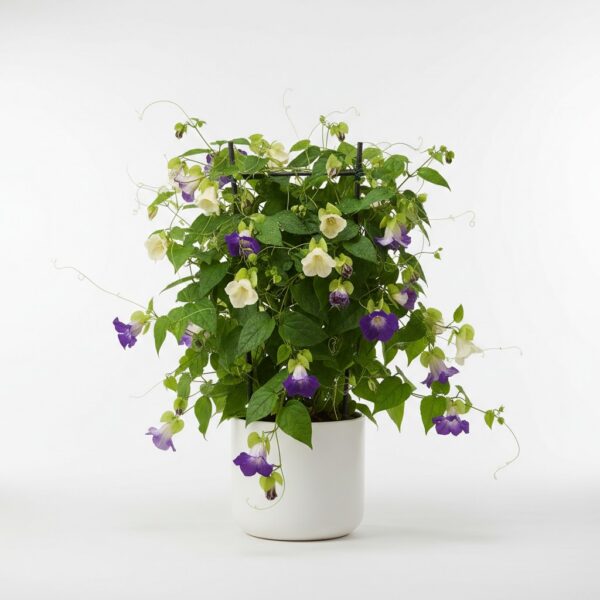
Cobaea
Cobaea scandens
Cobaea scandens is a vigorous, fast-growing perennial vine, often grown as an annual in temperate climates. It is characterized by its twining habit and ability to quickly cover structures. The vine features distinctive cup-shaped flowers with prominent saucers, initially greenish-white, maturing to a rich purple. It's primarily an outdoor plant, valued for its rapid growth and attractive flowers, making it ideal for covering fences, arbors, and trellises. Indoor cultivation is challenging due to its high light and space requirements.

Princess Flower
Tibouchina urvilleana
Tibouchina urvilleana, commonly known as Princess Flower, is a fast-growing evergreen shrub or small tree prized for its vibrant purple flowers. Native to Brazil, it typically grows outdoors in warm climates. It features velvety, dark green leaves and produces profuse blooms throughout the warmer months. While it can be grown in containers, it requires significant sunlight and humidity to thrive, making it challenging to maintain indoors long-term. People grow it for its showy flowers and tropical appearance.
Quick Plant Comparison
| Feature | Cobaea | Princess Flower |
|---|---|---|
| Light | Full sun to partial shade outdoors. Requires at least 6 hours of direct sunlight daily. | Full sun to partial shade. Requires at least 6 hours of direct sunlight daily for optimal flowering. |
| Watering | Every 2-5 days outdoors, depending on weather conditions. | Every 3-7 days, depending on environmental conditions and pot size. |
| Humidity | 40-60% | 50-70% |
| Temperature | 18-27°C | 18-27°C |
| Care Level | Expert | Expert |
| Growth Rate | Fast | Fast |
| Max Height | Rarely flowers or reaches full size indoors; outdoors up to 9-12 meters | 1-2 meters (indoors, rarely reaches outdoor size) |
| Pet Safety | ❌ Toxic To Pets | ❌ Toxic To Pets |
| Soil | Well-draining, fertile soil. A mix of garden soil, compost, and perlite is suitable. | Well-draining, slightly acidic soil mix. A mix of potting soil, peat moss, and perlite is suitable. |
| Beginner Friendly | ❌ No | ❌ No |
| Weekly Maintenance | 30 minutes weekly during growing season. | 30 minutes weekly |
🔬 Botanical Information — Comparing These Plants
Cobaea
| Scientific Name | Cobaea scandens |
|---|---|
| Family | Polemoniaceae |
| Native To | Mexico |
| Also Known As | Cup-and-Saucer Vine, Cathedral Bells, Mexican Ivy |
| Leaves | The leaves are pinnately compound, with 3-5 oval-shaped leaflets. The leaflets are typically 5-10 cm long and have a smooth texture. They are a medium green color. The tendrils emerge from the leaf axils and are used for climbing. |
| Flowers | It rarely flowers indoors. Outdoors, the flowers are bell-shaped, about 5 cm across, and have a prominent saucer-like calyx. They start out greenish-white and mature to a deep purple color. The flowers have a sweet, slightly musky fragrance. |
Princess Flower
| Scientific Name | Tibouchina urvilleana |
|---|---|
| Family | Melastomataceae |
| Native To | Brazil |
| Also Known As | Princess Flower, Glory Bush, Lasiandra |
| Leaves | Oppositely arranged, ovate to lance-shaped leaves with a velvety texture. The leaves are typically dark green and can grow up to 15 cm long. |
| Flowers | Produces profuse, showy purple flowers with prominent stamens. Flowers are typically 7-10 cm in diameter. Flowering is less likely indoors due to insufficient light. |
📏 Size & Growth — Plant Comparison
Cobaea
Princess Flower
🌱 Propagation — Comparing Plant Growth
Cobaea
Methods: Seed, Stem cuttings
Difficulty: Moderate
Tips: For seeds, scarify and soak them before planting. Stem cuttings should be taken in spring or summer and rooted in a well-draining medium.
Princess Flower
Methods: Stem cuttings, Seed
Difficulty: Moderate
Tips: Take stem cuttings in spring or summer. Dip the cut end in rooting hormone and plant in moist potting mix. Keep the cuttings in a warm, humid environment until roots develop.
✨ Benefits & Features — Comparing Plant Value
Cobaea
The cup-and-saucer shape of the flowers is quite distinctive and unusual. The flowers also change color as they mature, adding to their visual appeal. The rapid growth rate makes it a great choice for quickly covering a large area.
- ✓ Provides shade and privacy.
- ✓ Attracts pollinators like bees and hummingbirds.
- ✓ Adds vertical interest to the garden.
- ✓ Offers a visually appealing display of unique flowers.
- ✓ Can be used to create a natural screen or backdrop.
- ⚠️ Toxic to pets
Princess Flower
The velvety texture of the leaves and the vibrant purple color of the flowers make this plant stand out. It's also a fast grower, quickly filling in garden spaces.
- ✓ Provides vibrant color to gardens and patios.
- ✓ Attracts pollinators like bees and butterflies.
- ✓ Can be pruned into a desired shape.
- ✓ Offers a tropical aesthetic.
- ✓ Can be grown in containers on patios or balconies.
- ⚠️ Toxic to pets
📅 Maintenance Schedule — Plant Care Comparison
Cobaea
Princess Flower
🌞 Light Requirements
Cobaea
Full sun to partial shade outdoors. Requires at least 6 hours of direct sunlight daily.
Low light tolerant: ❌ No
Princess Flower
Full sun to partial shade. Requires at least 6 hours of direct sunlight daily for optimal flowering.
Low light tolerant: ❌ No
💧 Watering Needs
Cobaea
Water deeply when the top inch of soil feels dry. Avoid overwatering, which can lead to root rot. In hot weather, more frequent watering may be necessary. Reduce watering in cooler months.
Princess Flower
Water thoroughly when the top inch of soil feels dry. Avoid overwatering, which can lead to root rot. Allow excess water to drain away. Signs of underwatering include wilting leaves; signs of overwatering include yellowing leaves and soggy soil.
🌡️ Temperature & Humidity
Cobaea
Temperature: 18-27°C
Humidity: 40-60%
Princess Flower
Temperature: 18-27°C
Humidity: 50-70%
🤔 Which Plant Is Right For You?
Cobaea
Cobaea scandensGardeners with outdoor space looking for a fast-growing vine to cover structures.
✅ Choose This Plant If...
- You have a large outdoor space to cover quickly.
- You want a vine with unique and attractive flowers.
- You live in a warm climate where it can thrive year-round.
- You are experienced with managing fast-growing vines.
- You want to attract pollinators to your garden.
❌ Skip This Plant If...
- You have limited indoor space.
- You are a beginner gardener.
- You have pets that might ingest the plant.
- You live in a climate with harsh winters.
- You cannot provide full sun.
Princess Flower
Tibouchina urvilleanaExperienced gardeners in warm climates who want a showy flowering shrub for their garden.
✅ Choose This Plant If...
- You live in a warm climate with plenty of sunshine.
- You want a plant with vibrant purple flowers.
- You have experience caring for demanding plants.
- You have a greenhouse or sunroom to provide adequate light and humidity.
- You are willing to provide regular pruning and fertilization.
❌ Skip This Plant If...
- You live in a cold climate with limited sunlight.
- You are a beginner gardener.
- You have pets that may ingest the plant.
- You don't have time for regular pruning and fertilization.
- You don't have a bright, sunny location.
🎯 Quick Verdict
⚡ Key Differences Between These Plants
Both plants have similar basic care requirements but differ in appearance and specific needs. Compare plants carefully to find the best fit for your space.
💡 Pro Tips For Comparing These Plants
Cobaea Care Tips
Cobaea scandens is primarily an outdoor plant that requires full sun, regular watering, and support for climbing. Indoor cultivation is extremely difficult due to the plant's high light requirements and vigorous growth habit. Expect challenges with flowering and overall plant health indoors.
- Provide a sturdy support structure for the vine to climb.
- Water deeply and regularly, especially during hot weather.
- Fertilize every 2-4 weeks during the growing season.
- Prune regularly to control growth and shape.
- Monitor for pests and diseases and treat promptly.
Princess Flower Care Tips
Princess Flower is primarily an outdoor plant that requires full sun and high humidity. Indoor cultivation is challenging due to the difficulty of providing adequate light and humidity. It needs regular watering and fertilization. Expect reduced flowering and potential pest issues indoors.
- Provide at least 6 hours of direct sunlight daily.
- Water thoroughly when the top inch of soil is dry.
- Fertilize regularly during the growing season.
- Prune after flowering to maintain shape.
- Monitor for pests and diseases regularly.
⚠️ Common Problems & Solutions — Plant Care Comparison
Cobaea
Princess Flower
❓ Frequently Asked Questions — Comparing These Plants
Cobaea
What are the light requirements for Cobaea?
Cobaea scandens requires plenty of sunlight to thrive and produce abundant blooms. Ideally, it should receive at least 6 hours of direct sunlight each day. In hotter climates, some afternoon shade can prevent leaf scorch. If growing indoors, place it near a south-facing window where it can receive the most intense light. Insufficient light can lead to leggy growth, reduced flowering, and pale foliage. If natural light is limited, consider supplementing with grow lights. Rotate the plant regularly to ensure even light exposure on all sides. Provide adequate support structures so the plant can grow towards the light source.
How do I care for Cobaea?
Cobaea thrives in well-draining soil and requires regular watering, especially during the growing season. Provide a sturdy support structure like a trellis or fence for the vine to climb. Prune regularly to control its size and shape, encouraging bushier growth and more blooms. Fertilize every 2-3 weeks with a balanced liquid fertilizer during the spring and summer months. Ensure it receives ample sunlight, ideally at least 6 hours of direct sun per day. Protect from frost, as it’s not fully hardy in colder climates. Monitor for pests like aphids and spider mites, and treat promptly. Repot young plants annually in the spring to provide fresh soil and room for growth. A location with good air circulation is essential.
How do I propagate Cobaea?
Cobaea can be propagated easily through stem cuttings or layering. For stem cuttings, take a 4-6 inch cutting from a healthy stem in spring or summer. Remove the lower leaves and dip the cut end in rooting hormone. Plant the cutting in moist, well-draining potting mix. Cover with a plastic bag or humidity dome to maintain moisture. Keep in a warm, bright location until roots develop, usually within a few weeks. For layering, bend a long stem down to the ground and bury a section of it in the soil, leaving the tip exposed. Secure the stem with a rock or garden staple. Once roots have formed, sever the new plant from the parent plant and transplant it.
Princess Flower
What are the light requirements for Princess Flower?
Princess Flower thrives in bright, indirect sunlight. Ideally, it needs at least 6 hours of sunlight per day to produce abundant blooms. A location near an east- or west-facing window is often suitable indoors. Avoid direct afternoon sun, which can scorch the leaves. If grown outdoors, provide partial shade during the hottest part of the day. Insufficient light can result in fewer blooms and leggy growth. Rotate the plant regularly to ensure even light exposure on all sides. During the winter months, when sunlight is less intense, consider supplementing with artificial grow lights.
How do I care for Princess Flower?
Princess Flower requires well-draining, acidic soil with a pH of 5.5 to 6.5. Water thoroughly when the top inch of soil feels dry, allowing excess water to drain. Fertilize every 2-4 weeks during the growing season (spring to fall) with a balanced fertilizer formulated for flowering plants. Prune regularly to maintain shape and encourage bushier growth and more blooms. Provide bright, indirect sunlight for at least 6 hours a day. Maintain a moderate humidity level, especially indoors. Protect from frost and freezing temperatures. Repot every 1-2 years as needed, using a slightly larger pot. Monitor for pests like aphids and spider mites, and treat promptly if detected. Ensure good air circulation to prevent fungal diseases.
How do I propagate Princess Flower?
Princess Flower can be propagated using stem cuttings. Take 4-6 inch cuttings from new growth in spring or summer. Remove the lower leaves and dip the cut end in rooting hormone. Plant the cuttings in a well-draining potting mix. Keep the soil moist and provide bright, indirect light. Rooting typically occurs within 4-8 weeks. Division can be done when repotting mature plants, carefully separating the root ball. Keikis are not common on Princess Flower.
Last updated: May 1, 2026 — Plant care data reviewed and verified by our editorial team.