
Cape Daisy vs Sensitive Plant Plant Comparison
Compare these two plants side by side — care needs, key differences, and which is right for your home.
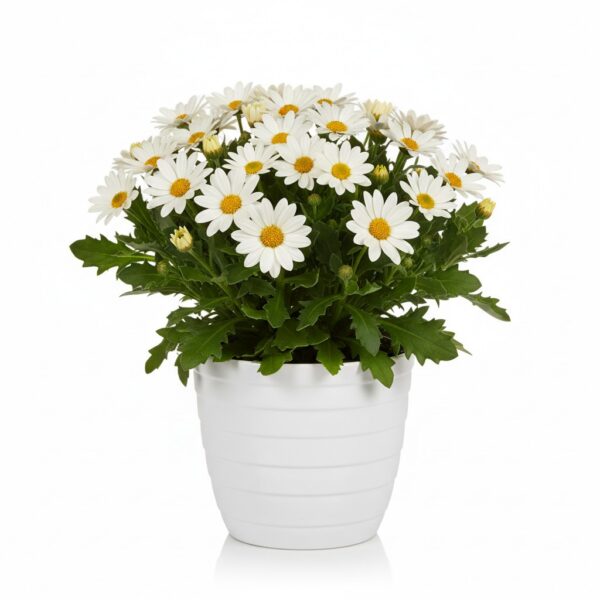
Cape Daisy
Osteospermum spp.
Cape Daisies are vibrant, daisy-like flowering plants native to South Africa. They are popular for their colorful blooms, which come in a wide range of shades including purple, pink, white, yellow, and orange. Typically grown as an annual in cooler climates and a perennial in warmer regions, they feature a bushy growth habit and can reach heights of 1-2 feet. While primarily outdoor plants, they are sometimes brought indoors for short periods to enjoy their flowers. However, they require very bright light to thrive indoors and often struggle to bloom.

Sensitive Plant
Mimosa pudica
Mimosa pudica, commonly known as the Sensitive Plant, is a fascinating perennial often grown as an annual. It's characterized by its compound leaves that dramatically fold inward and droop when touched or shaken, a defense mechanism against herbivores. The plant features small, globular pink or lavender flower heads. While it can be grown indoors, it thrives best outdoors in warm climates. People grow it for its unique and interactive response to touch, making it a popular novelty plant. It has a somewhat sprawling growth habit.
Quick Plant Comparison
| Feature | Cape Daisy | Sensitive Plant |
|---|---|---|
| Light | Full sun (at least 6 hours of direct sunlight daily) | Full sun to partial shade |
| Watering | Every 2-5 days outdoors, depending on weather conditions. Indoors, less frequently. | Every 2-5 days, depending on environmental conditions and pot size |
| Humidity | 30-50% | 50-70% |
| Temperature | 15-24°C | 21-27°C |
| Care Level | Expert | Moderate |
| Growth Rate | Moderate | Fast |
| Max Height | 0.3-0.6 meters (1-2 feet) | 30-60 cm (indoors) |
| Pet Safety | ❌ Toxic To Pets | ❌ Toxic To Pets |
| Soil | Well-draining potting mix or garden soil | Well-draining potting mix, such as a mix of peat moss, perlite, and vermiculite |
| Beginner Friendly | ❌ No | With Caution |
| Weekly Maintenance | 10 minutes weekly | 15 minutes weekly |
🔬 Botanical Information — Comparing These Plants
Cape Daisy
| Scientific Name | Osteospermum spp. |
|---|---|
| Family | Asteraceae |
| Native To | South Africa |
| Also Known As | Cape Daisy, African Daisy, South African Daisy |
| Leaves | The leaves are typically lance-shaped or spoon-shaped, green in color, and slightly succulent. They are arranged alternately along the stems. |
| Flowers | They rarely flower indoors due to insufficient light. Outdoors, they produce daisy-like flowers with a central disc and colorful petals. The flowers come in a wide range of colors, including purple, pink, white, yellow, and orange. |
Sensitive Plant
| Scientific Name | Mimosa pudica |
|---|---|
| Family | Fabaceae |
| Native To | Tropical South America and Central America |
| Also Known As | Sensitive Plant, Humble Plant, Shameplant, Touch-me-not |
| Leaves | The leaves are compound, bipinnate, and fern-like. They are light green and consist of numerous small leaflets that fold inward when touched or exposed to heat. Each leaf is typically 2-4 inches long. |
| Flowers | It can flower indoors, especially with sufficient sunlight. The flowers are small, globular, and pink or lavender in color. They resemble fluffy balls and add to the plant's visual appeal. |
📏 Size & Growth — Plant Comparison
Cape Daisy
Sensitive Plant
🌱 Propagation — Comparing Plant Growth
Cape Daisy
Methods: Stem cuttings, Seed
Difficulty: Easy
Tips: Take stem cuttings in spring or summer. Remove the lower leaves and place the cutting in water or moist potting mix until roots develop. For seeds, sow indoors 6-8 weeks before the last frost or directly outdoors after the last frost.
Sensitive Plant
Methods: Seed, Stem cuttings
Difficulty: Easy
Tips: For seeds, scarify them lightly before sowing in moist soil. For stem cuttings, take 4-6 inch cuttings and root them in water or moist soil.
✨ Benefits & Features — Comparing Plant Value
Cape Daisy
Cape Daisies are known for their vibrant, daisy-like flowers that come in a wide range of colors. They also have the unique ability to close their petals at night or during cloudy weather.
- ✓ Adds vibrant color to gardens
- ✓ Attracts pollinators
- ✓ Relatively low-maintenance outdoors
- ✓ Provides long-lasting blooms
- ✓ Can be used in cut flower arrangements
- ⚠️ Toxic to pets
Sensitive Plant
The most unique characteristic is its rapid leaf movement in response to touch, known as thigmotropism. This is a defense mechanism against herbivores. It also produces attractive, globular pink flower heads.
- ✓ Provides a unique and interactive experience.
- ✓ Adds a touch of the tropics to your home.
- ✓ Can be educational for children and adults alike.
- ✓ Offers a conversation-starting element to your decor.
- ✓ May have some traditional medicinal uses (though not recommended without expert advice).
- ⚠️ Toxic to pets
📅 Maintenance Schedule — Plant Care Comparison
Cape Daisy
Sensitive Plant
🌞 Light Requirements
Cape Daisy
Full sun (at least 6 hours of direct sunlight daily)
Low light tolerant: ❌ No
Sensitive Plant
Full sun to partial shade
Low light tolerant: ❌ No
💧 Watering Needs
Cape Daisy
Water thoroughly when the top inch of soil feels dry. Avoid overwatering, which can lead to root rot. Allow excess water to drain away. Signs of overwatering include yellowing leaves and wilting, even with moist soil. Underwatering is indicated by dry, crispy leaves and drooping.
Sensitive Plant
Water thoroughly when the top inch of soil feels dry. Avoid overwatering, which can lead to root rot. Signs of overwatering include yellowing leaves and a soggy soil. Underwatering will cause the leaves to droop and become crispy.
🌡️ Temperature & Humidity
Cape Daisy
Temperature: 15-24°C
Humidity: 30-50%
Sensitive Plant
Temperature: 21-27°C
Humidity: 50-70%
🤔 Which Plant Is Right For You?
Cape Daisy
Osteospermum spp.Gardeners looking for vibrant, low-maintenance flowering plants for sunny outdoor locations.
✅ Choose This Plant If...
- You want a burst of color in your garden.
- You want to attract pollinators to your yard.
- You live in a warm climate where they can be grown as perennials.
- You have a very sunny outdoor space.
- You enjoy deadheading flowers to encourage more blooms.
❌ Skip This Plant If...
- You have pets that might ingest the plant.
- You don't have a sunny outdoor space.
- You are looking for a low-maintenance indoor plant.
Sensitive Plant
Mimosa pudicaThose who enjoy interactive plants and have a warm, sunny location.
✅ Choose This Plant If...
- You are fascinated by plants that exhibit movement.
- You have a sunny windowsill or greenhouse where the plant can thrive.
- You want a unique conversation starter.
- You are careful about keeping toxic plants away from pets and children.
- You enjoy the challenge of providing the specific conditions this plant needs.
❌ Skip This Plant If...
- You have pets or small children who might ingest the plant.
- You struggle to provide adequate sunlight for plants.
- You tend to overwater your plants.
- You want a low-maintenance plant that doesn't require much attention.
🎯 Quick Verdict
⚡ Key Differences Between These Plants
Cape Daisy needs full sun (at least 6 hours of direct sunlight daily), while Sensitive Plant prefers full sun to partial shade.
Cape Daisy is rated Expert care level, while Sensitive Plant is Moderate.
Cape Daisy has moderate growth, while Sensitive Plant grows fast.
💡 Pro Tips For Comparing These Plants
Cape Daisy Care Tips
Cape Daisies are primarily outdoor plants that require full sun and well-draining soil. They are relatively easy to care for outdoors, but challenging to grow indoors due to their high light requirements. Indoor plants often become leggy and fail to bloom without sufficient sunlight.
- Provide at least 6 hours of direct sunlight daily.
- Deadhead spent flowers regularly to encourage more blooms.
- Water thoroughly when the top inch of soil feels dry.
- Fertilize every 2-4 weeks during the growing season.
- Protect from frost in colder climates.
Sensitive Plant Care Tips
Mimosa pudica requires bright light and consistent moisture. While it can be grown indoors, providing enough sunlight is crucial for its health. The plant is sensitive to overwatering and cold temperatures. Its unique response to touch makes it a fun plant to grow, but be mindful of its toxicity to pets.
- Provide bright, direct sunlight for at least 6 hours a day.
- Water thoroughly when the top inch of soil is dry, but avoid overwatering.
- Maintain a humidity level of 50-70% by misting regularly or using a humidifier.
- Fertilize every 4-6 weeks during the growing season with a balanced liquid fertilizer.
- Handle the plant gently and avoid excessive touching, as this can stress it.
⚠️ Common Problems & Solutions — Plant Care Comparison
Cape Daisy
Sensitive Plant
❓ Frequently Asked Questions — Comparing These Plants
Cape Daisy
What are the light requirements for Cape Daisy?
Cape Daisies require ample sunlight to thrive and produce abundant blooms. Ideally, they should receive at least 6 hours of direct sunlight each day. Indoors, place them near a south-facing window where they can soak up the most light. If natural light is insufficient, consider supplementing with grow lights. Insufficient light can lead to leggy growth and reduced flowering. Rotate the plant regularly to ensure even exposure to light on all sides. During the winter months, when sunlight is limited, providing supplemental lighting becomes even more crucial. The intensity of the light directly impacts the vibrancy and abundance of the flowers.
How do I care for Cape Daisy?
Cape Daisies thrive in full sun, requiring at least 6 hours of direct sunlight daily. Water thoroughly when the top inch of soil feels dry, ensuring good drainage to prevent root rot. Fertilize every 2-4 weeks during the growing season (spring and summer) with a balanced liquid fertilizer, diluted to half strength. Prune regularly to encourage bushier growth and more blooms, removing spent flowers to promote further flowering. Maintain a temperature between 60-75°F (15-24°C). Provide well-draining soil, such as a mix of potting soil, perlite, and vermiculite. Repot in spring if the plant becomes root-bound. Watch out for pests like aphids and whiteflies and treat promptly. Ensure good air circulation to prevent fungal diseases.
How do I propagate Cape Daisy?
Cape Daisies can be propagated through stem cuttings, division, and sometimes from seed, though cuttings are most common.
Sensitive Plant
What are the light requirements for Sensitive Plant?
The Sensitive Plant needs bright, indirect light to flourish. A south-facing or east-facing window is ideal, providing ample light without direct sunlight, which can scorch the leaves. If natural light is insufficient, supplement with a grow light, placing it 12-18 inches above the plant. Rotate the plant regularly to ensure even light exposure on all sides. Insufficient light can lead to leggy growth, reduced blooming, and loss of sensitivity. Monitor the plant’s response to light and adjust its position accordingly. During the winter months, when light levels are lower, consider increasing the duration of artificial lighting to maintain healthy growth.
How do I care for Sensitive Plant?
Mimosa pudica thrives in bright, indirect light, requiring at least 6 hours daily. Water thoroughly when the top inch of soil feels dry, ensuring good drainage to prevent root rot. Maintain a temperature between 65-80°F (18-27°C) and a humidity level of 50-60%. Fertilize every 2-4 weeks during the growing season (spring and summer) with a balanced liquid fertilizer diluted to half strength, focusing on a formula that encourages blooming. Use well-draining potting mix. Repot in spring if the plant becomes root-bound. Avoid over-handling the plant, as excessive touching can stress it. Prune lightly to maintain shape and remove dead or yellowing leaves. Provide support if the plant becomes leggy. Watch for pests like spider mites and aphids, and treat promptly. Proper care will reward you with healthy growth and beautiful blooms.
How do I propagate Sensitive Plant?
Sensitive Plants can be propagated from seeds or stem cuttings. For seeds, scarify the seeds and soak them in warm water for 24 hours before sowing in a moist seed-starting mix. Keep them warm and humid until germination, which usually takes 1-3 weeks. For stem cuttings, take a 4-6 inch cutting from a healthy stem, remove the lower leaves, and dip the cut end in rooting hormone. Plant the cutting in a moist potting mix and cover it with a plastic bag to maintain humidity. Place it in a warm, bright location, avoiding direct sunlight. Roots should develop in 2-4 weeks. Keiki propagation is not applicable to this plant.
Last updated: April 21, 2026 — Plant care data reviewed and verified by our editorial team.