
Camellia vs Iceland Poppy Plant Comparison
Compare these two plants side by side — care needs, key differences, and which is right for your home.

Camellia
Camellia japonica
Camellia japonica is an evergreen shrub or small tree known for its beautiful, showy flowers. It typically grows to a height of 1.5 to 6 meters, but can reach up to 11 meters in its native habitat. The plant features glossy, dark green leaves and produces large, rose-like flowers in shades of red, pink, white, and variegated patterns. Camellias are primarily outdoor plants, prized for their winter blooms and ornamental value in gardens and landscapes. They are not ideally suited for indoor growing due to their need for specific temperature and humidity conditions.
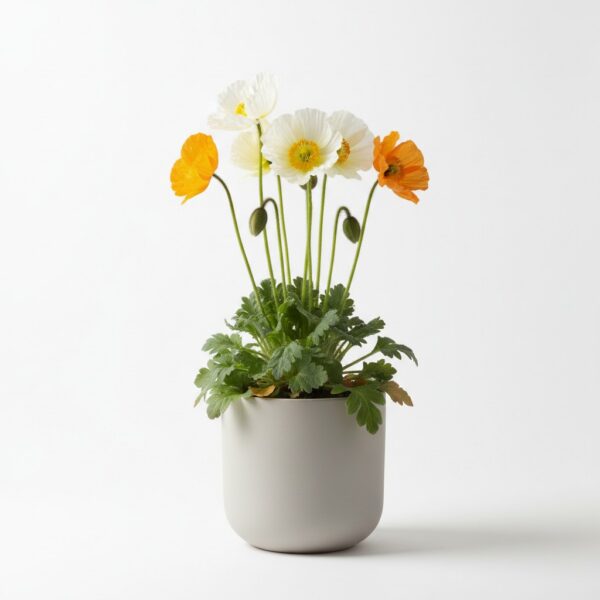
Iceland Poppy
Papaver nudicaule
The Iceland Poppy is a short-lived perennial or biennial often grown as an annual, prized for its delicate, crepe-paper-like flowers in a range of colors including yellow, orange, red, pink, and white. It typically reaches a height of 30-60 cm. While primarily an outdoor plant, it is grown for its vibrant blooms in garden beds, borders, and containers. Its cup-shaped flowers are borne on slender, hairy stems above a rosette of bluish-green, deeply lobed leaves. It is not naturally an indoor plant and struggles to thrive indoors due to high light requirements and specific temperature needs.
Quick Plant Comparison
| Feature | Camellia | Iceland Poppy |
|---|---|---|
| Light | Partial shade to full sun. Requires at least 4-6 hours of direct sunlight outdoors. | Full sun (at least 6 hours of direct sunlight daily) |
| Watering | Every 7-10 days, depending on weather and soil drainage. | Every 7-10 days, depending on weather and soil drainage |
| Humidity | 50-60% | 30-50% |
| Temperature | 10-21°C | 10-21°C |
| Care Level | Expert | Expert |
| Growth Rate | Slow | Moderate |
| Max Height | 1-2 meters (indoors - unlikely to thrive) | 30-60 cm outdoors; significantly smaller and weaker indoors (if grown) |
| Pet Safety | ❌ Toxic To Pets | ❌ Toxic To Pets |
| Soil | Well-draining, acidic soil rich in organic matter. A mix of peat moss, pine bark, and perlite is ideal. | Well-draining, moderately fertile soil. A mix of garden soil, sand, and compost is suitable. |
| Beginner Friendly | ❌ No | ❌ No |
| Weekly Maintenance | 30 minutes weekly (outdoor) | 15 minutes weekly during the growing season |
🔬 Botanical Information — Comparing These Plants
Camellia
| Scientific Name | Camellia japonica |
|---|---|
| Family | Theaceae |
| Native To | Japan, Korea, China |
| Also Known As | Common Camellia, Japanese Camellia |
| Leaves | The leaves of Camellia japonica are glossy, dark green, and oval-shaped with serrated edges. They are typically 5-10 cm long and have a leathery texture. |
| Flowers | Camellias rarely flower indoors. Outdoors, they produce large, showy flowers in shades of red, pink, white, and variegated patterns. The flowers are typically 7-12 cm in diameter and can be single, semi-double, or double. |
Iceland Poppy
| Scientific Name | Papaver nudicaule |
|---|---|
| Family | Papaveraceae |
| Native To | Subpolar regions of Europe, Asia, and North America, including Iceland |
| Also Known As | Iceland Poppy, Arctic Poppy |
| Leaves | The leaves are bluish-green, deeply lobed, and form a basal rosette. They are typically 10-20 cm long and have a slightly hairy texture. |
| Flowers | It rarely flowers indoors. Outdoors, it produces cup-shaped flowers in a variety of colors, including yellow, orange, red, pink, and white. The flowers are typically 5-7 cm in diameter and have a delicate, crepe-paper-like texture. |
📏 Size & Growth — Plant Comparison
Camellia
Iceland Poppy
🌱 Propagation — Comparing Plant Growth
Camellia
Methods: Stem cuttings, Air layering, Seed
Difficulty: Moderate
Tips: Take semi-hardwood cuttings in late summer. Use rooting hormone and provide high humidity.
Iceland Poppy
Methods: Seed
Difficulty: Easy
Tips: Sow seeds directly in the garden in early spring or late fall. Seeds require light to germinate, so do not cover them with too much soil. Keep the soil consistently moist until germination.
✨ Benefits & Features — Comparing Plant Value
Camellia
Camellias are known for their beautiful, showy flowers that bloom in winter, providing color and interest during a time when many other plants are dormant. Their glossy, evergreen foliage adds year-round appeal.
- ✓ Provides beautiful winter blooms
- ✓ Evergreen foliage adds year-round interest
- ✓ Attracts pollinators
- ✓ Can be used as a hedge or screen
- ✓ Adds a touch of elegance to the garden
- ⚠️ Toxic to pets
Iceland Poppy
The crepe-paper-like texture of the petals and the wide range of vibrant colors make Iceland Poppies unique. They are also relatively deer-resistant, making them a good choice for gardens where deer are a problem. They are also known for their delicate, papery blooms and ability to thrive in cooler climates.
- ✓ Adds vibrant color to the garden
- ✓ Attracts pollinators like bees and butterflies
- ✓ Provides cut flowers for arrangements
- ✓ Deer resistant, protecting other plants
- ✓ Relatively easy to grow from seed outdoors
- ⚠️ Toxic to pets
📅 Maintenance Schedule — Plant Care Comparison
Camellia
Iceland Poppy
🌞 Light Requirements
Camellia
Partial shade to full sun. Requires at least 4-6 hours of direct sunlight outdoors.
Low light tolerant: ❌ No
Iceland Poppy
Full sun (at least 6 hours of direct sunlight daily)
Low light tolerant: ❌ No
💧 Watering Needs
Camellia
Water deeply when the top inch of soil feels dry. Avoid overwatering, which can lead to root rot. Camellias prefer slightly acidic water. Signs of underwatering include drooping leaves and dry soil. Overwatering can cause yellowing leaves and root rot.
Iceland Poppy
Water thoroughly when the top inch of soil feels dry to the touch. Avoid overwatering, as it can lead to root rot. Ensure good drainage. Overwatering signs include yellowing leaves and wilting, while underwatering presents as drooping leaves and dry, crispy edges.
🌡️ Temperature & Humidity
Camellia
Temperature: 10-21°C
Humidity: 50-60%
Iceland Poppy
Temperature: 10-21°C
Humidity: 30-50%
🤔 Which Plant Is Right For You?
Camellia
Camellia japonicaGardeners in regions with mild winters who want beautiful winter blooms.
✅ Choose This Plant If...
- You want beautiful winter blooms in your garden.
- You live in a region with mild winters.
- You have acidic soil.
- You are looking for an evergreen shrub with glossy foliage.
- You want to attract pollinators to your garden.
❌ Skip This Plant If...
- You live in a region with harsh winters.
- You have alkaline soil.
- You are looking for a low-maintenance plant.
- You want a plant that thrives indoors.
- You have pets that might ingest the plant.
Iceland Poppy
Papaver nudicauleGardeners in cooler climates seeking vibrant, early-season color in their flower beds.
✅ Choose This Plant If...
- You want vibrant, early-season color in your garden.
- You live in a cooler climate where they thrive.
- You want to attract pollinators to your garden.
- You enjoy cut flowers with a long vase life.
- You want a deer-resistant plant.
❌ Skip This Plant If...
- You live in a hot, humid climate.
- You are looking for a long-lived perennial.
- You have pets that might ingest the plant.
🎯 Quick Verdict
⚡ Key Differences Between These Plants
Camellia has slow growth, while Iceland Poppy grows moderate.
💡 Pro Tips For Comparing These Plants
Camellia Care Tips
Camellias are challenging to grow indoors due to their need for high humidity, cool temperatures, and bright, indirect light. They are best suited for outdoor environments where they can receive proper sunlight and temperature fluctuations. Indoor care requires meticulous attention to watering, humidity, and temperature control.
- Water deeply and regularly, especially during dry periods.
- Mulch around the base of the plant to retain moisture and suppress weeds.
- Fertilize with an acid-forming fertilizer in early spring and late summer.
- Protect from frost in winter.
- Prune after flowering to shape the plant.
Iceland Poppy Care Tips
Iceland Poppies are best grown outdoors. Indoor cultivation is extremely challenging due to their high light requirements and need for cool temperatures. They are prone to fungal diseases if kept too humid. Success indoors is unlikely without supplemental lighting and careful environmental control.
- Sow seeds directly in the garden in early spring or late fall for best results.
- Ensure well-draining soil to prevent root rot.
- Deadhead spent flowers regularly to encourage more blooms.
- Provide full sun for optimal flowering.
- Protect from strong winds, which can damage the delicate stems.
⚠️ Common Problems & Solutions — Plant Care Comparison
Camellia
Iceland Poppy
❓ Frequently Asked Questions — Comparing These Plants
Camellia
What are the light requirements for Camellia?
Camellias prefer partial shade, ideally receiving morning sun and afternoon shade. Direct sunlight can scorch their leaves, especially during the hottest part of the day. If growing indoors, place your Camellia near an east-facing window or a window with sheer curtains to filter the light. Insufficient light can result in fewer blooms and leggy growth. Rotate the plant regularly to ensure even light exposure. Observe the leaves for signs of stress. If the leaves appear pale or yellow, it may indicate too much light. If the plant is not blooming well, it may need more light. Adjust the plant’s location accordingly to provide optimal light conditions.
How do I care for Camellia?
Camellias thrive in partial shade with acidic soil. Water deeply but infrequently, allowing the top inch of soil to dry out between waterings. Use rainwater or filtered water to avoid alkaline tap water. Fertilize in early spring and again in early summer with a fertilizer formulated for acid-loving plants. Prune after flowering to maintain shape and remove any dead or diseased branches. Provide protection from harsh winter winds and frost. Ensure good air circulation to prevent fungal diseases. Regularly check for pests and treat promptly if necessary. Repot every 2-3 years into a slightly larger container with well-draining acidic potting mix. Maintain humidity levels around 50-60%. Avoid overwatering, which can lead to root rot. Mulch around the base of the plant to retain moisture and regulate soil temperature.
How do I propagate Camellia?
Camellias can be propagated through stem cuttings, air layering, or grafting. For stem cuttings, take 4-6 inch cuttings from new growth in late spring or early summer. Remove the lower leaves and dip the cut end in rooting hormone. Plant the cuttings in a well-draining rooting medium, such as perlite or vermiculite. Keep the cuttings moist and humid by covering them with a plastic bag or dome. Place the cuttings in a warm, shaded location. Roots should develop within 6-8 weeks. Once rooted, transplant the cuttings into individual pots. Division is possible for some varieties that produce suckers. Air layering involves wounding a branch and wrapping it in moist sphagnum moss until roots develop. Grafting is a more advanced technique used to propagate desirable cultivars onto hardy rootstocks.
Iceland Poppy
What are the light requirements for Iceland Poppy?
Iceland Poppies require at least six hours of direct sunlight per day to thrive and produce abundant blooms. Ideally, provide them with morning sun and some afternoon shade, especially in hotter climates. Insufficient light can lead to leggy growth, fewer flowers, and duller colors. When growing indoors, place them near a sunny south-facing window. Rotate the plants regularly to ensure even light exposure on all sides. If natural light is insufficient, supplement with grow lights, positioning them about 6-12 inches above the plants. Light intensity is crucial for vibrant blooms.
How do I care for Iceland Poppy?
Iceland Poppies thrive in full sun and well-drained soil. Water regularly, especially during dry periods, but avoid overwatering to prevent root rot. Fertilize sparingly with a balanced fertilizer, focusing on a formula higher in phosphorus to encourage blooming. Deadhead spent flowers to promote continuous blooming. Provide support for taller varieties to prevent them from flopping over. Protect from strong winds and extreme heat. In warmer climates, provide afternoon shade. Regularly check for pests and diseases. Mulch around the base of the plant to retain moisture and suppress weeds. Ensure good air circulation to prevent fungal diseases. Iceland Poppies are generally short-lived perennials, often grown as annuals.
How do I propagate Iceland Poppy?
Iceland Poppies are primarily propagated by seed. Direct sowing is preferred as they don’t like root disturbance.
Last updated: April 27, 2026 — Plant care data reviewed and verified by our editorial team.