
California Poppy vs Crown of Thorns Plant Comparison
Compare these two plants side by side — care needs, key differences, and which is right for your home.

California Poppy
Eschscholzia californica
The California Poppy is an herbaceous annual or perennial plant native to the western United States and Mexico. It's known for its vibrant cup-shaped flowers, typically orange but also available in yellow, red, pink, and white. The plant typically grows to 12-18 inches tall. It's primarily an outdoor plant, thriving in sunny, well-drained locations. People grow it for its showy flowers, drought tolerance, and ability to attract pollinators. While it can be attempted indoors, it rarely thrives due to high light requirements.
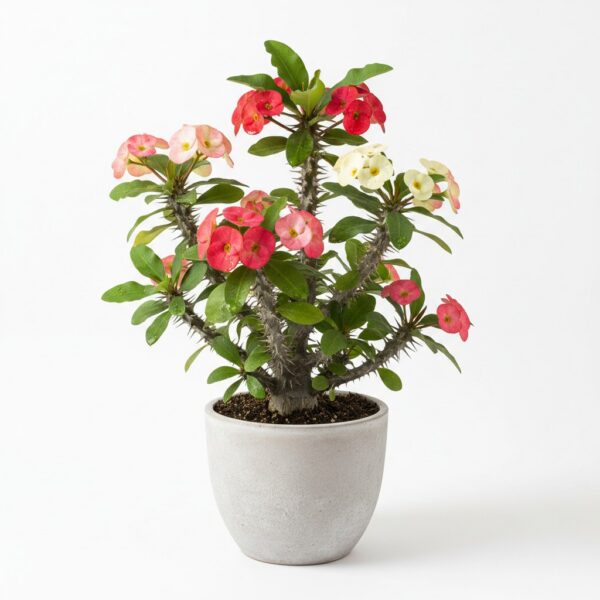
Crown of Thorns
Euphorbia milii
Euphorbia milii, commonly known as Crown of Thorns, is a succulent shrub characterized by its thorny stems and vibrant bracts surrounding small, inconspicuous flowers. Native to Madagascar, it is a popular ornamental plant grown for its drought tolerance and long-lasting blooms. It typically grows as a sprawling shrub, reaching up to 1-2 meters in height. While it can be grown indoors, it thrives best with ample sunlight, often making it more suitable as an outdoor plant in warmer climates. People grow it for its unique appearance and relatively easy care.
Quick Plant Comparison
| Feature | California Poppy | Crown of Thorns |
|---|---|---|
| Light | Full sun (at least 6-8 hours of direct sunlight daily) | Requires at least 4-6 hours of direct sunlight daily. Insufficient light will result in leggy growth and reduced flowering. |
| Watering | Every 1-2 weeks, depending on weather and soil drainage | Every 2-3 weeks, depending on environmental conditions and pot size. |
| Humidity | 20-40% | 30-50% |
| Temperature | 15-24°C | 18-27°C |
| Care Level | Expert | Moderate |
| Growth Rate | Fast | Slow |
| Max Height | 12-18 inches outdoors, less indoors | 0.3-0.6 meters (indoors) |
| Pet Safety | ❌ Toxic To Pets | ❌ Toxic To Pets |
| Soil | Well-drained, sandy or loamy soil | Well-draining succulent or cactus mix |
| Beginner Friendly | ❌ No | With Caution |
| Weekly Maintenance | 5 minutes weekly | 10 minutes weekly |
🔬 Botanical Information — Comparing These Plants
California Poppy
| Scientific Name | Eschscholzia californica |
|---|---|
| Family | Papaveraceae |
| Native To | California and parts of Oregon, Nevada, Washington, Arizona, and Baja California |
| Also Known As | California Poppy, Golden Poppy, California Sunlight |
| Leaves | The leaves are finely divided and lacy, with a bluish-green color. They are alternate along the stem and have a delicate, fern-like appearance. |
| Flowers | Rarely flowers indoors. Outdoors, it produces vibrant, cup-shaped flowers, typically orange, but also in shades of yellow, red, pink, and white. The flowers close at night and on cloudy days. |
Crown of Thorns
| Scientific Name | Euphorbia milii |
|---|---|
| Family | Euphorbiaceae |
| Native To | Madagascar |
| Also Known As | Crown of Thorns, Christ Plant, Christ Thorn |
| Leaves | The leaves are small, oval-shaped, and typically bright green. They are deciduous, meaning they may drop off during periods of stress or dormancy, especially in winter. |
| Flowers | It can flower indoors, but flowering is more prolific with ample sunlight. The true flowers are small and inconspicuous, surrounded by colorful bracts that can be red, pink, yellow, or white. |
📏 Size & Growth — Plant Comparison
California Poppy
Crown of Thorns
🌱 Propagation — Comparing Plant Growth
California Poppy
Methods: Seed
Difficulty: Easy
Tips: Sow seeds directly into the ground in early spring or fall. No pre-treatment needed. Keep soil moist until germination.
Crown of Thorns
Methods: Stem cuttings
Difficulty: Easy
Tips: Allow the cut end to callus over for a few days before planting in well-draining soil. Use rooting hormone for better success.
✨ Benefits & Features — Comparing Plant Value
California Poppy
The California Poppy is known for its vibrant orange flowers that close at night and on cloudy days. It's also drought-tolerant and reseeds readily, making it a low-maintenance addition to any garden.
- ✓ Attracts pollinators like bees and butterflies
- ✓ Adds vibrant color to the garden
- ✓ Drought-tolerant, reducing water usage
- ✓ Low-maintenance and easy to grow outdoors
- ✓ Provides a natural, wildflower aesthetic
- ⚠️ Toxic to pets
Crown of Thorns
The Crown of Thorns is unique due to its thorny stems and the colorful bracts that surround its small flowers. Unlike many flowering plants, the bracts provide color for extended periods, making it a long-lasting ornamental plant.
- ✓ Drought tolerance makes it easy to care for
- ✓ Long-lasting blooms add color to your space
- ✓ Unique appearance provides visual interest
- ✓ Can tolerate neglect, making it suitable for busy individuals
- ✓ Adds a touch of history and symbolism to your plant collection
- ⚠️ Toxic to pets
📅 Maintenance Schedule — Plant Care Comparison
California Poppy
Crown of Thorns
🌞 Light Requirements
California Poppy
Full sun (at least 6-8 hours of direct sunlight daily)
Low light tolerant: ❌ No
Crown of Thorns
Requires at least 4-6 hours of direct sunlight daily. Insufficient light will result in leggy growth and reduced flowering.
Low light tolerant: ❌ No
💧 Watering Needs
California Poppy
Water deeply when the top inch of soil is dry. Avoid overwatering, which can lead to root rot. Allow the soil to dry out slightly between waterings. Indoors, this is difficult to achieve.
Crown of Thorns
Allow the soil to dry out completely between waterings. Overwatering can lead to root rot. Water thoroughly when the soil is dry to the touch. Signs of overwatering include yellowing leaves and stem rot. Underwatering will cause leaf drop and shriveling.
🌡️ Temperature & Humidity
California Poppy
Temperature: 15-24°C
Humidity: 20-40%
Crown of Thorns
Temperature: 18-27°C
Humidity: 30-50%
🤔 Which Plant Is Right For You?
California Poppy
Eschscholzia californicaGardeners in sunny, dry climates looking for a low-maintenance, pollinator-attracting plant.
✅ Choose This Plant If...
- You want a drought-tolerant plant for a sunny garden.
- You want to attract pollinators to your yard.
- You appreciate vibrant, cheerful flowers.
- You live in a climate with mild winters.
- You want a low-maintenance plant that reseeds itself.
❌ Skip This Plant If...
- You have pets that might ingest the plant.
- You don't have a location with full sun.
- You want a plant that thrives indoors.
Crown of Thorns
Euphorbia miliiExperienced plant owners who can provide bright light and are aware of the plant's toxicity.
✅ Choose This Plant If...
- You want a drought-tolerant plant that flowers for a long period.
- You have a sunny location where the plant can thrive.
- You are experienced with caring for succulents and understand their watering needs.
- You are looking for a unique and interesting plant with a historical connection.
- You can keep the plant away from pets and children due to its toxicity.
❌ Skip This Plant If...
- You have pets or small children who might ingest the plant.
- You cannot provide adequate sunlight.
- You tend to overwater plants.
- You are looking for a low-maintenance plant that thrives in low-light conditions.
🎯 Quick Verdict
⚡ Key Differences Between These Plants
California Poppy is rated Expert care level, while Crown of Thorns is Moderate.
California Poppy has fast growth, while Crown of Thorns grows slow.
💡 Pro Tips For Comparing These Plants
California Poppy Care Tips
California Poppies are easy to grow outdoors in the right conditions. However, they are challenging to grow indoors due to their high light requirements and need for well-drained soil. Indoor plants often become leggy and fail to flower.
- Sow seeds directly in the ground in early spring or fall.
- Choose a location with full sun and well-drained soil.
- Water deeply but infrequently, allowing the soil to dry out between waterings.
- Deadhead spent flowers to encourage more blooms.
- Avoid over-fertilizing, as this can lead to leggy growth.
Crown of Thorns Care Tips
Crown of Thorns requires bright sunlight and well-draining soil. Overwatering is a common issue. It can be grown indoors with sufficient light, but may not flower as profusely as when grown outdoors. Toxicity to pets is a significant concern.
- Provide at least 4-6 hours of direct sunlight daily for optimal growth and flowering.
- Allow the soil to dry out completely between waterings to prevent root rot.
- Use a well-draining succulent or cactus mix to ensure proper drainage.
- Fertilize sparingly during the growing season with a balanced liquid fertilizer.
- Wear gloves when pruning or handling the plant to avoid skin irritation from the sap.
⚠️ Common Problems & Solutions — Plant Care Comparison
California Poppy
Crown of Thorns
❓ Frequently Asked Questions — Comparing These Plants
California Poppy
What are the light requirements for California Poppy?
California Poppies demand abundant sunshine to thrive. Aim for at least six to eight hours of direct sunlight per day. Insufficient light can result in leggy growth and reduced flowering. When growing indoors, place your California Poppy near a south-facing window where it can receive the most intense light. If natural light is limited, supplement with a grow light to ensure optimal growth. Rotate the plant regularly to ensure even exposure to light on all sides. Avoid placing the plant in a shady location, as this will hinder its ability to produce vibrant blooms. The amount of sunlight is directly related to bloom quantity.
How do I care for California Poppy?
California Poppies are relatively easy to care for, making them ideal for beginner gardeners. They thrive in full sun and well-drained soil. Water sparingly, allowing the soil to dry out between waterings. Avoid overwatering, as this can lead to root rot. Fertilize lightly with a balanced fertilizer during the growing season to encourage abundant blooms. Deadhead spent flowers to promote continuous flowering. California Poppies are self-seeding, so allow some flowers to go to seed if you want them to return the following year. Provide adequate spacing between plants to allow for good air circulation. Protect from strong winds, which can damage the delicate stems. Pruning is generally not necessary, but you can trim back leggy growth to maintain a compact shape.
How do I propagate California Poppy?
California Poppies are best propagated by seed, as they do not transplant well. Sow seeds directly into the garden in early spring or fall. Scatter the seeds lightly over the soil surface and gently press them in. Keep the soil moist until germination, which usually occurs within 10-14 days. Thin seedlings to allow for adequate spacing between plants. California Poppies can also self-seed readily if allowed to. Alternatively, you can collect the seeds from dried seed pods and store them in a cool, dry place until you are ready to sow them. They do not propagate by division, stem cuttings or keiki.
Crown of Thorns
What are the light requirements for Crown of Thorns?
Crown of Thorns requires bright, direct sunlight to thrive. Ideally, place it in a south-facing window where it can receive at least 4-6 hours of sunlight per day. Insufficient light can lead to leggy growth, reduced flowering, and a loss of vibrancy in the bracts. If you don’t have a sufficiently sunny window, consider supplementing with a grow light. Rotate the plant regularly to ensure even light exposure on all sides. During the summer months, you can move your Crown of Thorns outdoors to a sunny location, but be sure to acclimate it gradually to avoid sunburn. The plant’s ability to flower profusely depends on adequate light.
How do I care for Crown of Thorns?
Crown of Thorns thrives on neglect, making it an easy-care succulent. Plant it in well-draining soil, such as a cactus mix, to prevent root rot. Provide it with bright, direct sunlight for at least 4-6 hours daily. Water sparingly, allowing the soil to dry completely between waterings. Reduce watering frequency during the dormant winter months. Fertilize lightly during the growing season (spring and summer) with a balanced liquid fertilizer diluted to half strength. Maintain a room temperature between 65-75°F (18-24°C). Avoid overwatering, as this is the most common cause of problems. Repot every 2-3 years, or when the plant becomes root-bound. Prune to maintain shape and remove dead or damaged stems. Be cautious of the milky sap, which can be irritating to the skin and eyes.
How do I propagate Crown of Thorns?
Crown of Thorns can be propagated through stem cuttings. Allow the cut end to callous over for several days before planting in well-draining soil. Keep the soil slightly moist until roots develop. Leaf cuttings are not generally successful. Offsets, or small plantlets that grow at the base of the plant, can be carefully separated and potted individually. Wear gloves to protect your skin from the irritating sap. Rooting hormone can improve the success rate of stem cuttings. Provide bright, indirect light during the rooting process. Avoid overwatering, as this can lead to rot. Propagation is best done during the growing season (spring and summer).
Last updated: April 22, 2026 — Plant care data reviewed and verified by our editorial team.