
Butterfly Weed vs Periwinkle Plant Comparison
Compare these two plants side by side — care needs, key differences, and which is right for your home.
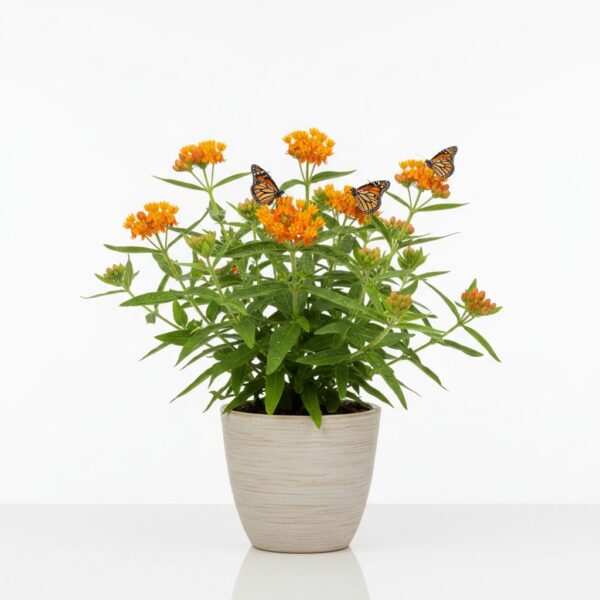
Butterfly Weed
Asclepias tuberosa
Butterfly Weed is a herbaceous perennial native to North America, known for its vibrant orange (sometimes yellow or red) flowers. It typically grows to a height of 1-3 feet with an upright, bushy habit. Unlike other milkweeds, it does not have milky sap. It's primarily an outdoor plant, valued for attracting butterflies, especially Monarchs, and other pollinators to gardens. It is grown for its bright blooms and its role as a host plant for Monarch butterfly larvae.

Periwinkle
Vinca minor
Vinca minor, or Common Periwinkle, is a trailing, evergreen perennial vine often used as a ground cover. It features glossy, dark green, ovate leaves and produces small, five-petaled, typically blue-violet flowers in spring and sporadically throughout the growing season. While appreciated for its ability to quickly cover ground and suppress weeds outdoors, it is not ideally suited for indoor cultivation. People grow it for its attractive foliage, low maintenance, and ability to thrive in shady areas outdoors. It spreads via creeping stems that root at the nodes.
Quick Plant Comparison
| Feature | Butterfly Weed | Periwinkle |
|---|---|---|
| Light | Full sun (at least 6 hours of direct sunlight daily) | Partial shade to full shade outdoors. Bright, indirect light if attempted indoors. |
| Watering | Once established, water deeply every 2-4 weeks, or more frequently during prolonged dry spells. | Outdoors: Water deeply once a week during dry periods. Indoors: Every 7-10 days, allowing the top inch of soil to dry out slightly between waterings. |
| Humidity | 30-50% | 30-50% |
| Temperature | 18-30°C | 15-24°C |
| Care Level | Expert | Expert |
| Growth Rate | Moderate | Fast |
| Max Height | N/A - Primarily an outdoor plant; difficult to maintain indoors. | Outdoors: 10-15 cm. Indoors: Difficult to maintain, typically shorter. |
| Pet Safety | ❌ Toxic To Pets | ❌ Toxic To Pets |
| Soil | Well-draining sandy or loamy soil. Avoid heavy clay soils. | Well-draining soil, loamy or sandy soil is best. Indoors, use a standard potting mix. |
| Beginner Friendly | ❌ No | ❌ No |
| Weekly Maintenance | 10 minutes weekly (weeding, deadheading, pest control) | 5-10 minutes weekly (mostly for pruning outdoors) |
🔬 Botanical Information — Comparing These Plants
Butterfly Weed
| Scientific Name | Asclepias tuberosa |
|---|---|
| Family | Apocynaceae |
| Native To | North America |
| Also Known As | Butterfly Weed, Pleurisy Root, Orange Milkweed, Butterfly Milkweed |
| Leaves | The leaves are lance-shaped, 2-6 inches long, and arranged alternately along the stems. They are smooth, green, and have a slightly leathery texture. |
| Flowers | Butterfly Weed produces clusters of bright orange (sometimes yellow or red) flowers in umbels at the ends of the stems. Flowering typically occurs from late spring to late summer. It does not flower indoors. |
Periwinkle
| Scientific Name | Vinca minor |
|---|---|
| Family | Apocynaceae |
| Native To | Central and Southern Europe |
| Also Known As | Common Periwinkle, Lesser Periwinkle, Creeping Myrtle |
| Leaves | The leaves of Vinca minor are small, ovate, and glossy dark green. They are typically 2-5 cm long and arranged oppositely along the stems. The texture is smooth and slightly leathery. |
| Flowers | Vinca minor produces small, five-petaled flowers, typically blue-violet, in spring and sporadically throughout the growing season. While it can flower indoors under ideal conditions, it is rare and not the primary reason for growing it. |
📏 Size & Growth — Plant Comparison
Butterfly Weed
Periwinkle
🌱 Propagation — Comparing Plant Growth
Butterfly Weed
Methods: Seed, Root cuttings, Division
Difficulty: Moderate
Tips: For seeds, cold stratification (placing seeds in a refrigerator for several weeks) improves germination. Root cuttings should be taken in late fall or early spring. Division is best done in early spring or fall.
Periwinkle
Methods: Stem cuttings, Division, Layering
Difficulty: Easy
Tips: Take stem cuttings in spring or summer. Root them in water or directly in moist soil. For division, separate rooted sections of the plant and replant them.
✨ Benefits & Features — Comparing Plant Value
Butterfly Weed
Unlike many other milkweeds, Butterfly Weed has clear sap instead of milky sap. It is also known for its vibrant orange flowers, which are a favorite of butterflies.
- ✓ Attracts pollinators, supporting local ecosystems.
- ✓ Provides food and habitat for Monarch butterflies.
- ✓ Adds vibrant color to the garden.
- ✓ Drought-tolerant, reducing water consumption.
- ✓ Relatively low-maintenance once established.
- ⚠️ Toxic to pets
Periwinkle
Vinca minor is known for its ability to thrive in shady conditions where other plants struggle. Its evergreen foliage provides year-round ground cover, and it's relatively low-maintenance once established.
- ✓ Erosion control on slopes.
- ✓ Suppresses weed growth.
- ✓ Provides year-round evergreen foliage.
- ✓ Low maintenance once established.
- ✓ Attracts pollinators (bees and butterflies) when flowering.
- ⚠️ Toxic to pets
📅 Maintenance Schedule — Plant Care Comparison
Butterfly Weed
Periwinkle
🌞 Light Requirements
Butterfly Weed
Full sun (at least 6 hours of direct sunlight daily)
Low light tolerant: ❌ No
Periwinkle
Partial shade to full shade outdoors. Bright, indirect light if attempted indoors.
Low light tolerant: ❌ No
💧 Watering Needs
Butterfly Weed
Water deeply when planting and during establishment. Once established, it is drought-tolerant and prefers well-draining soil. Overwatering can lead to root rot. Check soil moisture before watering; allow the top inch or two to dry out. Signs of underwatering include wilting leaves; overwatering presents as yellowing leaves and soggy soil.
Periwinkle
Outdoors, water regularly during the first growing season to establish a strong root system. Once established, it is drought-tolerant. Indoors, keep the soil consistently moist but not soggy. Overwatering can lead to root rot, while underwatering will cause the leaves to wilt.
🌡️ Temperature & Humidity
Butterfly Weed
Temperature: 18-30°C
Humidity: 30-50%
Periwinkle
Temperature: 15-24°C
Humidity: 30-50%
🤔 Which Plant Is Right For You?
Butterfly Weed
Asclepias tuberosaGardeners looking to attract butterflies and pollinators to their outdoor gardens.
✅ Choose This Plant If...
- You want to attract Monarch butterflies to your garden.
- You have a sunny, well-drained garden space.
- You are looking for a drought-tolerant perennial.
- You want to support native pollinators.
- You appreciate vibrant orange flowers.
❌ Skip This Plant If...
- You have pets that might ingest the plant.
- You don't have a location with full sun.
- You are looking for an easy-to-grow indoor plant.
Periwinkle
Vinca minorGardeners looking for a low-maintenance, evergreen ground cover for shady areas outdoors.
✅ Choose This Plant If...
- You need a fast-spreading ground cover for a shady area outdoors.
- You want an evergreen plant that provides year-round interest.
- You are looking for a low-maintenance plant that requires minimal care once established.
- You need a plant that helps control erosion on slopes.
- You want to suppress weed growth in your garden.
❌ Skip This Plant If...
- You have pets that might ingest it, as it is toxic.
- You are looking for an easy-to-grow indoor plant.
- You don't want a plant that spreads aggressively.
🎯 Quick Verdict
⚡ Key Differences Between These Plants
Butterfly Weed has moderate growth, while Periwinkle grows fast.
💡 Pro Tips For Comparing These Plants
Butterfly Weed Care Tips
Butterfly Weed is primarily an outdoor plant that thrives in full sun and well-drained soil. It is very difficult to grow indoors due to its high light requirements and dormancy needs. Attempting to grow it indoors will likely result in a weak, leggy plant that does not flower well, if at all.
- Ensure well-draining soil to prevent root rot.
- Provide full sun for optimal flowering.
- Deadhead spent flowers to encourage more blooms.
- Monitor for aphids and other pests.
- Avoid over-fertilizing, as this can reduce flowering.
Periwinkle Care Tips
Vinca minor is primarily an outdoor ground cover and is challenging to grow indoors. It requires bright, indirect light, consistent moisture, and well-draining soil. Its aggressive spreading habit makes it difficult to contain in a pot. It is also toxic to pets.
- Plant in well-draining soil to prevent root rot.
- Prune regularly to control its spread.
- Water deeply during dry periods, especially when newly planted.
- Fertilize in spring with a balanced fertilizer.
- Monitor for pests and diseases and treat promptly.
⚠️ Common Problems & Solutions — Plant Care Comparison
Butterfly Weed
Periwinkle
❓ Frequently Asked Questions — Comparing These Plants
Butterfly Weed
What are the light requirements for Butterfly Weed?
Butterfly Weed requires at least six hours of direct sunlight daily to thrive and produce abundant blooms. A sunny location is crucial for its growth and flowering potential. Insufficient light can result in leggy growth, reduced blooming, and weaker stems. When planting, choose a spot that receives full sun throughout the day. If growing in containers, rotate the plant regularly to ensure even light exposure on all sides. In areas with intense summer heat, some afternoon shade may be beneficial to prevent scorching. Observe your plant and adjust its location if needed to ensure it receives adequate sunlight.
How do I care for Butterfly Weed?
Butterfly Weed thrives in full sun and well-drained soil. Water deeply but infrequently, allowing the soil to dry out between waterings. Fertilize sparingly, if at all, as excessive fertilization can reduce flowering. Deadhead spent flowers to encourage continued blooming. Prune back stems in late fall or early spring to promote bushier growth. Provide support if needed, especially in windy areas. Monitor for pests such as aphids and treat accordingly. Ensure good air circulation to prevent fungal diseases. Butterfly Weed is relatively drought-tolerant once established, but regular watering is important during the first year. Avoid overwatering, which can lead to root rot.
How do I propagate Butterfly Weed?
Butterfly Weed can be propagated by seed, division, or root cuttings. For seed propagation, sow seeds in the fall or stratify them in the refrigerator for 30-60 days before planting in the spring. Division is best done in early spring or late fall. Carefully dig up the plant and divide the root ball into smaller sections, ensuring each section has healthy roots and stems. Replant the divisions in well-drained soil. Root cuttings can be taken in late winter or early spring. Dig up a portion of the root system and cut it into 2-3 inch sections. Plant the cuttings horizontally in a well-draining potting mix and keep them moist until new growth appears.
Periwinkle
What are the light requirements for Periwinkle?
Periwinkle flourishes in bright, indirect light, but it can also tolerate some direct sunlight, especially in the morning or late afternoon. Insufficient light can lead to leggy growth and reduced flowering. When grown indoors, place your Periwinkle near an east- or west-facing window where it can receive ample light without being scorched by the midday sun. If natural light is limited, supplement with a grow light for 12-14 hours per day. Rotate the plant regularly to ensure even light exposure on all sides. In outdoor settings, choose a location that offers partial shade, especially in hotter climates.
How do I care for Periwinkle?
Periwinkle thrives with bright, indirect light, but can tolerate some direct sunlight. Water when the top inch of soil feels dry to the touch, ensuring good drainage to prevent root rot. Fertilize monthly during the growing season (spring and summer) with a balanced liquid fertilizer diluted to half strength to encourage blooming. Prune regularly to maintain shape and remove any dead or yellowing foliage. Maintain a humidity level of around 40-60%. Repot in spring every 1-2 years using a well-draining potting mix. Monitor for pests like aphids or spider mites and treat promptly. Provide adequate air circulation to prevent fungal diseases. Avoid overwatering, especially during the winter months.
How do I propagate Periwinkle?
Periwinkle is easily propagated through stem cuttings. Take a 4-6 inch cutting from a healthy stem, removing the lower leaves. Dip the cut end in rooting hormone and plant it in moist, well-draining potting mix. Keep the cutting in a warm, humid environment until roots develop, typically in 2-4 weeks. Division can be done by carefully separating the root ball of a mature plant into smaller sections and replanting them. Periwinkle does not produce keiki.
Last updated: May 5, 2026 — Plant care data reviewed and verified by our editorial team.