
Banana Plant vs Floss Flower Plant Comparison
Compare these two plants side by side — care needs, key differences, and which is right for your home.

Banana Plant
Musa spp.
Banana plants are large, herbaceous perennials (though often referred to as trees) known for their rapid growth and production of edible fruit. They feature a pseudostem formed from tightly overlapping leaf sheaths, from which large, paddle-shaped leaves emerge. While primarily outdoor plants in tropical and subtropical climates, some dwarf varieties are grown indoors for their ornamental foliage. They are grown for their fruit, ornamental value, and large tropical leaves.
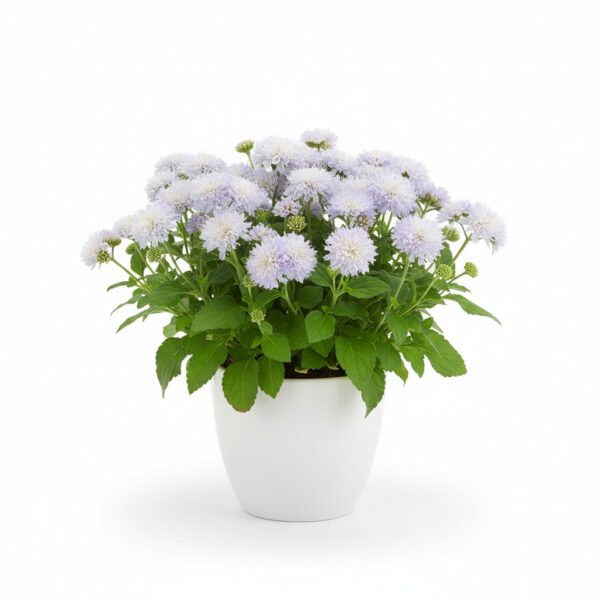
Floss Flower
Ageratum houstonianum
Ageratum houstonianum, commonly known as Floss Flower, is an annual flowering plant characterized by its fuzzy, pom-pom-like flower heads. It typically grows to a height of 6-18 inches. The flowers are most commonly blue, but cultivars are available in pink, white, and purple. It is primarily grown outdoors as a bedding plant or in containers for its long-lasting blooms and attractive appearance. While it can be attempted indoors, it requires very bright light and consistent care to thrive, making it more challenging than other indoor plants.
Quick Plant Comparison
| Feature | Banana Plant | Floss Flower |
|---|---|---|
| Light | Full sun to partial shade. Requires at least 6-8 hours of direct sunlight daily for optimal growth and fruit production. | Full sun to partial shade outdoors. Indoors, requires very bright, direct light for at least 6 hours daily. |
| Watering | Every 3-7 days, depending on environmental conditions and pot size. | Every 3-7 days outdoors, depending on weather. Every 5-10 days indoors, depending on light and humidity. |
| Humidity | 50-60% | 40-60% |
| Temperature | 24-30°C | 18-24°C |
| Care Level | Expert | Expert |
| Growth Rate | Fast | Moderate |
| Max Height | 1-3 meters indoors (dwarf varieties), up to 9 meters outdoors | 6-18 inches (15-45 cm) indoors, potentially smaller |
| Pet Safety | ❌ Toxic To Pets | ❌ Toxic To Pets |
| Soil | Well-draining, fertile soil rich in organic matter. A mix of potting soil, perlite, and compost is suitable. | Well-draining potting mix. A mix of peat moss, perlite, and vermiculite is suitable. |
| Beginner Friendly | ❌ No | ❌ No |
| Weekly Maintenance | 30-60 minutes weekly | 10-15 minutes weekly |
🔬 Botanical Information — Comparing These Plants
Banana Plant
| Scientific Name | Musa spp. |
|---|---|
| Family | Musaceae |
| Native To | Southeast Asia |
| Also Known As | Banana, Plantain |
| Leaves | Large, paddle-shaped leaves that can grow up to several feet long. The leaves are typically bright green, with prominent veins running perpendicular to the midrib. They are delicate and can tear easily in windy conditions. |
| Flowers | Rarely flowers indoors. Outdoors, flowers emerge from the center of the pseudostem in a large, pendulous inflorescence. The flowers are typically creamy white or yellow, and are followed by the development of bananas. |
Floss Flower
| Scientific Name | Ageratum houstonianum |
|---|---|
| Family | Asteraceae |
| Native To | Central America, Mexico |
| Also Known As | Floss Flower, Blueweed, Mexican Ageratum |
| Leaves | The leaves are oval to heart-shaped, with slightly serrated edges. They are typically medium green in color and have a slightly rough texture. |
| Flowers | It flowers readily outdoors. Indoors, flowering is possible with sufficient light, but less reliable. The flowers are small, fuzzy, and clustered together in dense, pom-pom-like heads. They are most commonly blue, but cultivars are available in pink, white, and purple. |
📏 Size & Growth — Plant Comparison
Banana Plant
Floss Flower
🌱 Propagation — Comparing Plant Growth
Banana Plant
Methods: Division of rhizomes, seed (less common)
Difficulty: Moderate
Tips: Separate pups (small offshoots) from the main plant when they are about 1/3 the size of the parent. Ensure each pup has roots. Plant in well-draining soil and keep moist.
Floss Flower
Methods: Seed, Stem cuttings
Difficulty: Easy
Tips: For seeds, sow indoors 6-8 weeks before the last frost. For stem cuttings, take 4-6 inch cuttings in spring or summer and root in water or moist potting mix.
✨ Benefits & Features — Comparing Plant Value
Banana Plant
Banana plants are not trees, but giant herbs. Their large leaves and rapid growth make them a striking addition to any collection. While fruiting indoors is rare, the foliage provides a tropical ambiance.
- ✓ Adds a tropical aesthetic to your home
- ✓ Provides a sense of accomplishment when successfully grown
- ✓ Can potentially produce fruit (though rare indoors)
- ✓ Large leaves can help to humidify the air slightly
- ✓ Offers a unique and interesting focal point
- ⚠️ Toxic to pets
Floss Flower
The fuzzy, pom-pom-like flower heads are unique and add a soft texture to the garden. The plant's long blooming period provides continuous color throughout the growing season. It is also attractive to pollinators, making it a beneficial addition to any garden.
- ✓ Attracts pollinators
- ✓ Adds vibrant color to the garden
- ✓ Long blooming period
- ✓ Relatively easy to propagate
- ✓ Can be used in cut flower arrangements
- ⚠️ Toxic to pets
📅 Maintenance Schedule — Plant Care Comparison
Banana Plant
Floss Flower
🌞 Light Requirements
Banana Plant
Full sun to partial shade. Requires at least 6-8 hours of direct sunlight daily for optimal growth and fruit production.
Low light tolerant: ❌ No
Floss Flower
Full sun to partial shade outdoors. Indoors, requires very bright, direct light for at least 6 hours daily.
Low light tolerant: ❌ No
💧 Watering Needs
Banana Plant
Water thoroughly when the top inch of soil feels dry. Avoid overwatering, which can lead to root rot. Allow excess water to drain away. Signs of underwatering include drooping leaves and dry soil. Overwatering can cause yellowing leaves and a musty smell.
Floss Flower
Water thoroughly when the top inch of soil feels dry. Avoid overwatering, which can lead to root rot. Ensure good drainage. Indoors, allow the soil to dry slightly between waterings. Signs of overwatering include yellowing leaves and wilting, while underwatering results in dry, crispy leaves.
🌡️ Temperature & Humidity
Banana Plant
Temperature: 24-30°C
Humidity: 50-60%
Floss Flower
Temperature: 18-24°C
Humidity: 40-60%
🤔 Which Plant Is Right For You?
Banana Plant
Musa spp.Experienced plant enthusiasts who can provide the necessary light, humidity, and space.
✅ Choose This Plant If...
- You want a dramatic, tropical statement plant
- You have a very sunny location indoors or a greenhouse
- You are experienced with plant care and can meet its high needs
- You are fascinated by unusual plants and their growth habits
- You want to try growing your own bananas (though unlikely indoors)
❌ Skip This Plant If...
- You have limited space indoors
- You cannot provide adequate light or humidity
- You have pets that may ingest the plant
- You are a beginner plant owner
- You dislike frequent repotting and fertilizing
Floss Flower
Ageratum houstonianumExperienced gardeners who want a colorful, long-blooming annual for outdoor beds and containers, and are aware of the toxicity to pets.
✅ Choose This Plant If...
- You want a long-blooming annual for your garden.
- You need a plant that attracts butterflies and bees.
- You have a sunny outdoor space.
- You are experienced with plant care and can provide the necessary conditions.
- You are looking for a plant with a unique, fuzzy flower texture.
❌ Skip This Plant If...
- You have pets that may ingest the plant.
- You cannot provide full sun or very bright light.
- You are a beginner gardener.
- You prefer low-maintenance plants.
- You are looking for a plant that thrives indoors.
🎯 Quick Verdict
⚡ Key Differences Between These Plants
Banana Plant has fast growth, while Floss Flower grows moderate.
💡 Pro Tips For Comparing These Plants
Banana Plant Care Tips
Banana plants are challenging to grow indoors due to their high light and humidity requirements. Dwarf varieties are more manageable, but still require significant attention. They are fast-growing and need regular fertilization and repotting. Maintaining adequate humidity is crucial.
- Provide ample sunlight, at least 6-8 hours daily.
- Maintain high humidity levels with a humidifier or pebble tray.
- Fertilize regularly during the growing season with a balanced liquid fertilizer.
- Water thoroughly when the top inch of soil is dry, but avoid overwatering.
- Repot annually or bi-annually as needed to accommodate its rapid growth.
Floss Flower Care Tips
Floss Flower is primarily an outdoor plant that requires full sun and well-drained soil. Indoor cultivation is challenging due to its high light requirements. It needs consistent watering and fertilization. Toxicity to pets is a significant concern.
- Provide well-draining soil to prevent root rot.
- Deadhead spent flowers regularly to encourage more blooms.
- Fertilize every 2-4 weeks during the growing season.
- Protect from strong winds.
- Monitor for pests and diseases and treat promptly.
⚠️ Common Problems & Solutions — Plant Care Comparison
Banana Plant
Floss Flower
❓ Frequently Asked Questions — Comparing These Plants
Banana Plant
What are the light requirements for Banana Plant?
Banana plants need bright, indirect light to thrive indoors. Insufficient light will result in slow growth and pale leaves. Place your banana plant near a south- or east-facing window where it can receive plenty of light without being exposed to direct sunlight, which can scorch the leaves. If natural light is limited, supplement with grow lights to ensure adequate illumination. Rotate the plant regularly to ensure all sides receive equal light exposure. Observe the plant’s leaves and adjust its position accordingly. A slight lean towards the light source is normal, but excessive bending indicates insufficient light.
How do I care for Banana Plant?
Banana plants thrive in bright, indirect light. Water thoroughly when the top inch of soil feels dry. Ensure good drainage to prevent root rot. Maintain a stable temperature between 65-80°F (18-27°C) and avoid sudden temperature fluctuations. Fertilize regularly during the growing season (spring and summer) with a balanced liquid fertilizer. Repot annually in spring to provide fresh soil and more space for growth. Prune away any dead or damaged leaves to maintain the plant’s appearance and health. Provide adequate humidity, especially during dry winter months, by misting the leaves or using a humidifier. Rotate the plant regularly to ensure even growth on all sides. Protect from drafts and direct sunlight.
How do I propagate Banana Plant?
Banana plants can be propagated through stem cuttings or air layering. For stem cuttings, select a healthy stem and cut it into sections with at least one node. Allow the cut ends to callous over for a few days, then plant in well-draining soil. Keep the soil moist and provide warmth and humidity. For air layering, make a small incision on a stem, wrap it with moist sphagnum moss, and cover with plastic wrap. Once roots develop, cut the stem below the roots and plant in a pot. These methods are most successful during the growing season. Ensure the cutting is kept in a warm, humid environment to encourage root growth.
Floss Flower
What are the light requirements for Floss Flower?
Floss Flower requires at least six hours of direct sunlight per day to thrive and produce abundant blooms. A sunny south-facing window is ideal for indoor cultivation. If natural light is insufficient, supplement with grow lights. Insufficient light can lead to leggy growth and reduced flowering. Rotate the plant regularly to ensure even light exposure on all sides. Avoid placing the plant in overly shaded areas, as this can weaken the plant and make it more susceptible to diseases. Early morning sun is preferable to harsh afternoon sun, especially in hot climates.
How do I care for Floss Flower?
Floss Flower thrives in well-draining soil and prefers a sunny location, although it can tolerate partial shade. Water regularly, especially during hot, dry periods, keeping the soil consistently moist but not waterlogged. Fertilize every 2-3 weeks during the growing season with a balanced liquid fertilizer to promote abundant blooms. Deadhead spent flowers regularly to encourage continuous flowering. Prune back leggy growth to maintain a compact shape. Protect from frost and freezing temperatures, as Floss Flower is sensitive to cold. Indoors, ensure adequate air circulation to prevent fungal diseases. Monitor for pests like aphids and spider mites and treat promptly. Repotting is generally not necessary for annual varieties, but container-grown perennials may benefit from repotting every 1-2 years.
How do I propagate Floss Flower?
Floss Flower is easily propagated by seeds. Sow seeds directly into the garden in spring after the last frost or start indoors 6-8 weeks earlier. For stem cuttings, take 4-6 inch cuttings from healthy stems, remove the lower leaves, and place in water or moist potting mix until roots develop. Division is possible for perennial varieties. Carefully dig up the plant and separate the root ball into smaller sections, ensuring each section has healthy roots and foliage. Replant the divisions in fresh soil. Keiki propagation is not applicable to Floss Flower.
Last updated: April 30, 2026 — Plant care data reviewed and verified by our editorial team.