
Aspidistra vs Inkberry Plant Comparison
Compare these two plants side by side — care needs, key differences, and which is right for your home.

Aspidistra
Aspidistra elatior
Aspidistra elatior, the Cast Iron Plant, is a rhizomatous perennial known for its exceptional tolerance of neglect. It features dark green, lance-shaped leaves that arise directly from the soil. It's primarily grown as an indoor plant due to its ability to thrive in low light, low humidity, and infrequent watering. While it can tolerate outdoor conditions in shade, it's not frost-hardy. People grow it for its resilience and ability to add greenery to challenging indoor environments. It is not a naturally indoor plant, but it adapts well.
Inkberry
Ilex glabra
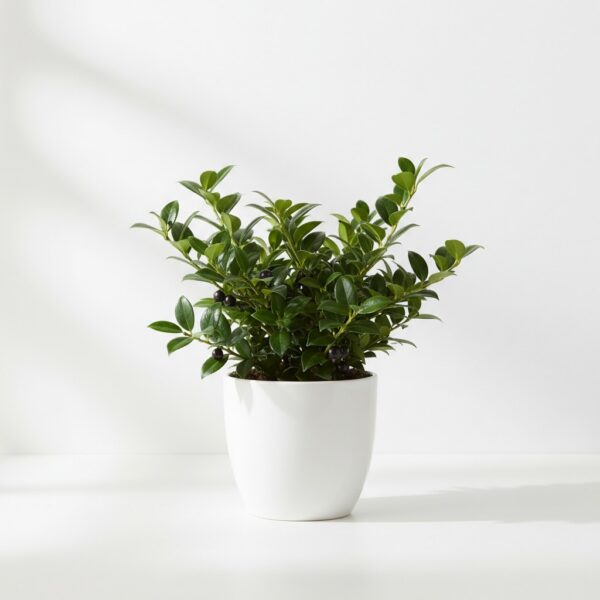
Inkberry is an evergreen shrub typically found in moist, acidic soils of coastal plains and sandy woodlands. It features a dense, rounded habit and can reach heights of 6-10 feet in its native environment. The plant is characterized by its dark green, leathery leaves and small, black, berry-like drupes (fruits) that persist through the winter, giving it the name 'Inkberry'. It is primarily an outdoor plant, valued for its year-round foliage, wildlife value (berries provide food for birds), and use in naturalized landscapes and hedges. While it can be grown in containers, it requires specific conditions and is not ideally suited for indoor environments.
Quick Plant Comparison
| Feature | Aspidistra | Inkberry |
|---|---|---|
| Light | Low to moderate indirect light. Avoid direct sunlight. | Full sun to partial shade. Requires at least 6 hours of direct sunlight for optimal growth and berry production. |
| Watering | Every 2-4 weeks, depending on environmental conditions | Every 7-10 days during the growing season, less frequently in winter. |
| Humidity | 30-50% | 30-50% |
| Temperature | 16-24°C | 10-27°C |
| Care Level | Easy | Expert |
| Growth Rate | Slow | Moderate |
| Max Height | 60-90 cm | Difficult to maintain at more than 1-2 meters indoors in a container. |
| Pet Safety | ✅ Safe | ❌ Toxic To Pets |
| Soil | Well-draining potting mix | Well-drained, acidic soil (pH 4.5-6.5). A mix of peat moss, sand, and compost works well. |
| Beginner Friendly | ✅ Yes | ❌ No |
| Weekly Maintenance | 5 minutes weekly | 15 minutes weekly outdoors, much more if attempting indoors. |
🔬 Botanical Information — Comparing These Plants
Aspidistra
| Scientific Name | Aspidistra elatior |
|---|---|
| Family | Asparagaceae |
| Native To | Japan, Taiwan |
| Also Known As | Cast Iron Plant, Bar Room Plant |
| Leaves | The leaves are lance-shaped, dark green, and glossy, typically 30-60 cm long and 5-10 cm wide. They have a smooth texture and a slightly arching habit. Some cultivars have variegated leaves with white or yellow stripes. |
| Flowers | It rarely flowers indoors. When it does, the flowers are small, purplish-brown, and located near the base of the plant, often hidden beneath the soil. |
Inkberry
| Scientific Name | Ilex glabra |
|---|---|
| Family | Aquifoliaceae |
| Native To | Eastern North America |
| Also Known As | Inkberry, Gallberry, Appalachian Tea |
| Leaves | The leaves are alternate, simple, and evergreen, typically 1-2 inches long. They are elliptic or oblong in shape with a smooth, leathery texture and a glossy, dark green color. The margins are usually entire or slightly toothed near the tip. |
| Flowers | Inkberry produces small, inconspicuous white flowers in the spring. It is dioecious, meaning that male and female flowers are on separate plants. Female plants produce the black, berry-like drupes (fruits) after pollination. |
📏 Size & Growth — Plant Comparison
Aspidistra
Inkberry
🌱 Propagation — Comparing Plant Growth
Aspidistra
Methods: Division
Difficulty: Moderate
Tips: Divide the rhizomes in spring. Ensure each division has several leaves and healthy roots. Plant in well-draining soil.
Inkberry
Methods: Stem cuttings, Seed
Difficulty: Moderate
Tips: Take semi-hardwood cuttings in late summer. Dip in rooting hormone and plant in a well-draining medium. Keep moist and provide bottom heat for best results. Seed propagation is possible but slow.
✨ Benefits & Features — Comparing Plant Value
Aspidistra
The Cast Iron Plant is known for its exceptional tolerance of neglect, making it one of the easiest houseplants to care for. It can survive in low light, infrequent watering, and a wide range of temperatures. Its resilience makes it a popular choice for beginners and those with busy lifestyles.
- ✓ Low maintenance makes it ideal for busy individuals.
- ✓ Tolerates low light conditions, perfect for apartments or offices.
- ✓ Non-toxic to pets, providing peace of mind.
- ✓ Adds a touch of greenery to any space.
- ✓ Long lifespan, offering lasting beauty.
- 🌬️ NASA-verified air purifier
- 🐾 Pet Safe
Inkberry
Inkberry is a native evergreen shrub that provides year-round interest and supports wildlife. Its black berries are a distinctive feature, and it is more tolerant of wet soils than many other evergreen shrubs. It is also dioecious, meaning that male and female flowers are on separate plants.
- ✓ Provides year-round greenery.
- ✓ Attracts birds and other wildlife.
- ✓ Relatively low-maintenance once established.
- ✓ Can be used for hedging or screening.
- ✓ Tolerates wet soils.
- ⚠️ Toxic to pets
📅 Maintenance Schedule — Plant Care Comparison
Aspidistra
Inkberry
🌞 Light Requirements
Aspidistra
Low to moderate indirect light. Avoid direct sunlight.
Low light tolerant: ✅ Yes
Inkberry
Full sun to partial shade. Requires at least 6 hours of direct sunlight for optimal growth and berry production.
Low light tolerant: ❌ No
💧 Watering Needs
Aspidistra
Water thoroughly when the top inch of soil is dry. Allow the soil to dry out between waterings. Overwatering can lead to root rot. Underwatering will cause leaf tips to brown.
Inkberry
Water deeply when the top inch of soil feels dry. Avoid overwatering, which can lead to root rot. Established plants are relatively drought-tolerant. Signs of underwatering include wilting leaves and dry soil. Overwatering symptoms include yellowing leaves and soggy soil.
🌡️ Temperature & Humidity
Aspidistra
Temperature: 16-24°C
Humidity: 30-50%
Inkberry
Temperature: 10-27°C
Humidity: 30-50%
🤔 Which Plant Is Right For You?
Aspidistra
Aspidistra elatiorBeginners or anyone seeking a low-maintenance plant for dimly lit spaces.
✅ Choose This Plant If...
- You want a plant that can tolerate neglect.
- You have a dimly lit space.
- You are a beginner gardener.
- You want a plant that is non-toxic to pets.
- You want a plant that requires minimal maintenance.
❌ Skip This Plant If...
- You want a fast-growing plant.
- You want a plant that flowers frequently.
- You tend to overwater your plants.
Inkberry
Ilex glabraGardeners with outdoor space looking for an evergreen shrub for hedges, borders, or naturalized areas.
✅ Choose This Plant If...
- You have an outdoor garden and want an evergreen shrub for year-round interest.
- You want to attract birds to your garden.
- You need a plant that tolerates wet soils.
- You want a low-maintenance shrub once established.
- You have acidic soil in your garden.
❌ Skip This Plant If...
- You are looking for an easy-to-grow houseplant.
- You have limited outdoor space.
- You have pets that may ingest the plant.
🎯 Quick Verdict
⚡ Key Differences Between These Plants
Aspidistra is rated Easy care level, while Inkberry is Expert.
Aspidistra has slow growth, while Inkberry grows moderate.
💡 Pro Tips For Comparing These Plants
Aspidistra Care Tips
The Cast Iron Plant is incredibly easy to care for, tolerating low light, infrequent watering, and a wide range of temperatures. Its main challenge is avoiding overwatering. It is a slow grower and does not require frequent repotting or fertilization.
- Allow the soil to dry out completely between waterings to prevent root rot.
- Wipe the leaves occasionally to remove dust and improve light absorption.
- Avoid placing the plant in direct sunlight, which can scorch the leaves.
- Fertilize sparingly, only once or twice a year.
- Repot only when necessary, as the plant prefers to be slightly root-bound.
Inkberry Care Tips
Inkberry is primarily an outdoor shrub and is challenging to grow indoors. It requires very bright light, acidic soil, and careful watering to thrive. Maintaining proper humidity and preventing pests can also be difficult indoors. It is not recommended as a houseplant unless you have a greenhouse or sunroom.
- Ensure acidic soil by amending with peat moss or sulfur.
- Water deeply but infrequently, allowing the soil to dry slightly between waterings.
- Fertilize in spring with an acid-loving plant fertilizer.
- Prune in late winter or early spring to maintain shape and remove dead wood.
- Monitor for pests and diseases and treat promptly.
⚠️ Common Problems & Solutions — Plant Care Comparison
Aspidistra
Inkberry
❓ Frequently Asked Questions — Comparing These Plants
Aspidistra
What are the light requirements for Aspidistra?
Aspidistra thrives in low to moderate indirect light. Direct sunlight can scorch its leaves, so avoid placing it near south-facing windows without filtering the light. An east- or north-facing window is ideal. The plant can also tolerate very low light conditions, although growth may be slower.
How do I care for Aspidistra?
Aspidistra thrives in low to moderate indirect light. Avoid direct sunlight, which can scorch the leaves. Water thoroughly when the top inch of soil feels dry, allowing excess water to drain away. Overwatering can lead to root rot, so ensure the pot has drainage holes. Maintain average room humidity; Aspidistra is tolerant of lower humidity levels.
How do I propagate Aspidistra?
Aspidistra can be propagated through division. Carefully remove the plant from its pot and gently separate the rhizomes, ensuring each division has roots and leaves. Plant each division in its own pot with well-draining soil. Keep the soil consistently moist until new growth appears.
Inkberry
What are the light requirements for Inkberry?
Inkberry thrives in bright, indirect light. Direct sunlight can scorch the leaves, so avoid placing it near south-facing windows without some form of shading, such as a sheer curtain. East- or west-facing windows are generally ideal, providing ample light without the harsh intensity. If the plant is not receiving enough light, it may exhibit leggy growth or reduced foliage density. Rotate the plant regularly to ensure even light exposure on all sides. Insufficient light can also affect berry production in female plants. Supplement with artificial grow lights if natural light is limited, especially during winter months.
How do I care for Inkberry?
Inkberry prefers bright, indirect light. Avoid direct sunlight, which can scorch the leaves. Water thoroughly when the top inch of soil feels dry to the touch, ensuring good drainage to prevent root rot. Maintain moderate humidity levels, especially during dry winter months. Use a well-draining, slightly acidic potting mix. Fertilize sparingly during the growing season (spring and summer) with a balanced liquid fertilizer diluted to half strength. Prune regularly to maintain shape and remove any dead or yellowing foliage. Repot every 2-3 years as needed, increasing the pot size only slightly. Aim for stable conditions, avoiding drastic changes in temperature or humidity. Ensure adequate air circulation to prevent fungal diseases. Monitor regularly for pests and address promptly. Provide consistent care for optimal growth.
How do I propagate Inkberry?
Inkberry can be propagated through stem cuttings or air layering. For stem cuttings, take 4-6 inch cuttings from new growth in spring or summer. Remove the lower leaves and dip the cut end in rooting hormone. Plant the cutting in a well-draining potting mix and keep it moist. Cover with a plastic bag to increase humidity. Roots should develop in a few weeks. For air layering, make a small cut on a stem and wrap it with moist sphagnum moss. Cover the moss with plastic wrap and secure it in place. Once roots develop, cut the stem below the moss and plant it in a pot. Ensure to maintain stable humidity and temperature.
Last updated: May 6, 2026 — Plant care data reviewed and verified by our editorial team.