Why You'll Love It
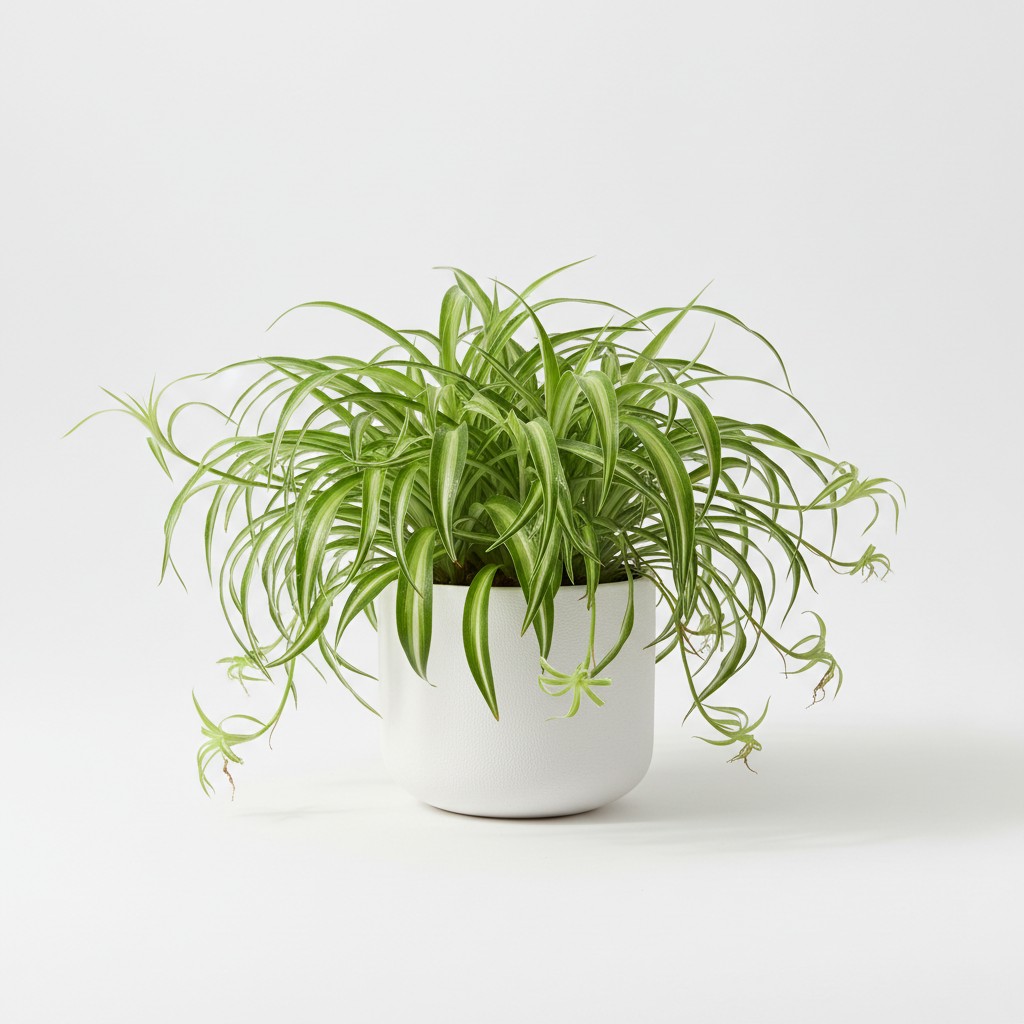
Spider Plants are beloved for their ease of care and air-purifying qualities, making them a perfect choice for beginner plant parents. Their arching foliage, often striped with white or cream, adds a touch of elegance to any space. The "spiderettes," or baby plants, dangling from long stems create a whimsical, cascading effect that's visually captivating. They are incredibly adaptable to various indoor environments. The ability to propagate new plants from the spiderettes makes them a gift that keeps on giving. Spider Plants are also known for their resilience, tolerating neglect better than many other houseplants. Their non-toxic nature makes them safe for households with pets and children.
The Story
The Spider Plant, scientifically known as Chlorophytum comosum, originates from South Africa. Its natural habitat includes tropical and subtropical regions, where it thrives in humid environments and under the shade of trees. It was introduced to Europe in the 19th century and quickly gained popularity as a houseplant due to its adaptability and ease of propagation. Spider Plants have become a staple in homes worldwide, appreciated for their air-purifying properties and attractive appearance. They hold no significant cultural or religious meaning. Their popularity is purely based on their ornamental value and functional benefits. In some cultures, they are considered symbols of good luck and are often given as gifts.
Complete Care Guide
Spider Plants thrive in bright, indirect light. Direct sunlight can scorch their leaves. Water thoroughly when the top inch of soil feels dry, allowing excess water to drain away. Avoid overwatering, which can lead to root rot. Maintain moderate humidity levels, especially during dry winter months. A temperature range of 65-80°F (18-27°C) is ideal. Fertilize monthly during the growing season (spring and summer) with a balanced liquid fertilizer diluted to half strength. Repot annually or biannually into a slightly larger pot with well-draining potting mix. Trim away any brown or yellow leaves to maintain a tidy appearance. Monitor for pests such as spider mites and aphids, and treat promptly if detected.
Light Requirements
Spider Plants prefer bright, indirect light. Too much direct sunlight can cause the leaves to burn, while too little light can result in leggy growth and a loss of variegation. An east-facing window is often ideal, providing gentle morning light. A north-facing window can also work, but the plant may need supplemental light, especially during the darker months. If placing the plant near a south- or west-facing window, be sure to filter the light with a sheer curtain. Rotate the plant regularly to ensure even growth on all sides. Insufficient light can also reduce the production of spiderettes.
Seasonal Care
Spring
Spring is the start of the growing season. Increase watering and begin fertilizing monthly. Repot if needed. Provide plenty of bright, indirect light. Check for pests and diseases.
Summer
Maintain consistent watering and fertilization throughout the summer. Monitor for pests and diseases, especially in hot, humid conditions. Provide adequate ventilation to prevent fungal problems.
Fall
Reduce watering and fertilization as the plant's growth slows down. Prepare for cooler temperatures and lower light levels. Clean the leaves to remove dust and debris.
Winter
Water sparingly during the winter months. Avoid fertilizing. Provide adequate light, especially in northern climates. Maintain humidity by misting or using a humidifier. Protect from drafts.
The Life of Your Spider Plant
Seedling / Juvenile
Young Spider Plants require consistently moist soil, but not soggy. Provide bright, indirect light. Protect them from drafts and extreme temperature fluctuations. Ensure good air circulation to prevent fungal diseases.
Adolescent
As Spider Plants mature, maintain regular watering and fertilization during the growing season. Provide ample space for the roots to develop. Monitor for pests and diseases, and treat promptly if necessary.
Mature
Mature Spider Plants will produce spiderettes. Allow the spiderettes to develop roots before propagating. Prune any dead or damaged leaves to maintain the plant's appearance and health.
Established
Established Spider Plants are relatively low-maintenance. Repot every 1-2 years as needed. Continue to monitor for pests and diseases. Adjust watering and fertilization based on the plant's growth rate.
Propagation Guide
Spider Plants are easily propagated from spiderettes. Once the spiderettes have developed small roots, you can detach them from the mother plant. Plant the spiderettes in small pots filled with well-draining potting mix. Keep the soil consistently moist until the new plants are established. Alternatively, you can propagate by stem cuttings. Take a cutting from a healthy stem and place it in water until roots develop, then plant in soil. Division is another option. When repotting, carefully divide the root ball into separate plants and pot them individually. Air layering is possible but less common.
Expert Knowledge
Spider Plants are sensitive to fluoride and chlorine in tap water, which can cause brown tips. Use filtered water or allow tap water to sit out for 24 hours before using it to water your plant. Spider Plants can also benefit from occasional pruning to remove dead or damaged leaves and to maintain a tidy appearance. Regularly inspect your plant for pests, such as spider mites, which can be difficult to detect. Increasing humidity and providing good air circulation can help prevent pest infestations. Spider plants benefit from being slightly root-bound.
Troubleshooting
Yellow leaves
Yellow leaves can indicate overwatering, underwatering, or nutrient deficiencies. Check the soil moisture level and adjust watering accordingly. Fertilize during the growing season to provide essential nutrients.
Brown leaf edges
Brown edges are often caused by dry air, fluoride or chlorine in tap water, or over-fertilization. Increase humidity by misting the plant or using a humidifier. Use filtered water and reduce fertilizer application.
Drooping leaves
Drooping can be a sign of underwatering or root rot. Check the soil moisture and drainage. If the soil is too dry, water thoroughly. If the soil is soggy, check for root rot and repot if necessary.
Root rot
Root rot is caused by overwatering and poor drainage. Remove the plant from the pot and trim away any rotted roots. Repot in fresh, well-draining potting mix. Reduce watering frequency.
Pests
Leggy growth is caused by insufficient light. Move the plant to a brighter location or supplement with a grow light. Prune the leggy stems to encourage bushier growth.
Frequently Asked Questions
What are the ideal light conditions?
Spider Plants prefer bright, indirect light. Avoid direct sunlight, which can scorch the leaves.
How often should I water?
Water thoroughly when the top inch of soil feels dry. Allow excess water to drain away. Avoid overwatering.
When should I repot?
Repot annually or biannually in spring into a slightly larger pot with well-draining potting mix.
Is it toxic to pets?
Spider Plants are considered non-toxic to pets and children, making them a safe choice for households with furry friends.
How big will it grow?
Indoors, Spider Plants can grow up to 1-2 feet tall and wide, with trailing stems reaching 2-3 feet long.
Can I propagate at home?
Yes, Spider Plants are easily propagated from spiderettes, stem cuttings, or division.