
Why You'll Love It
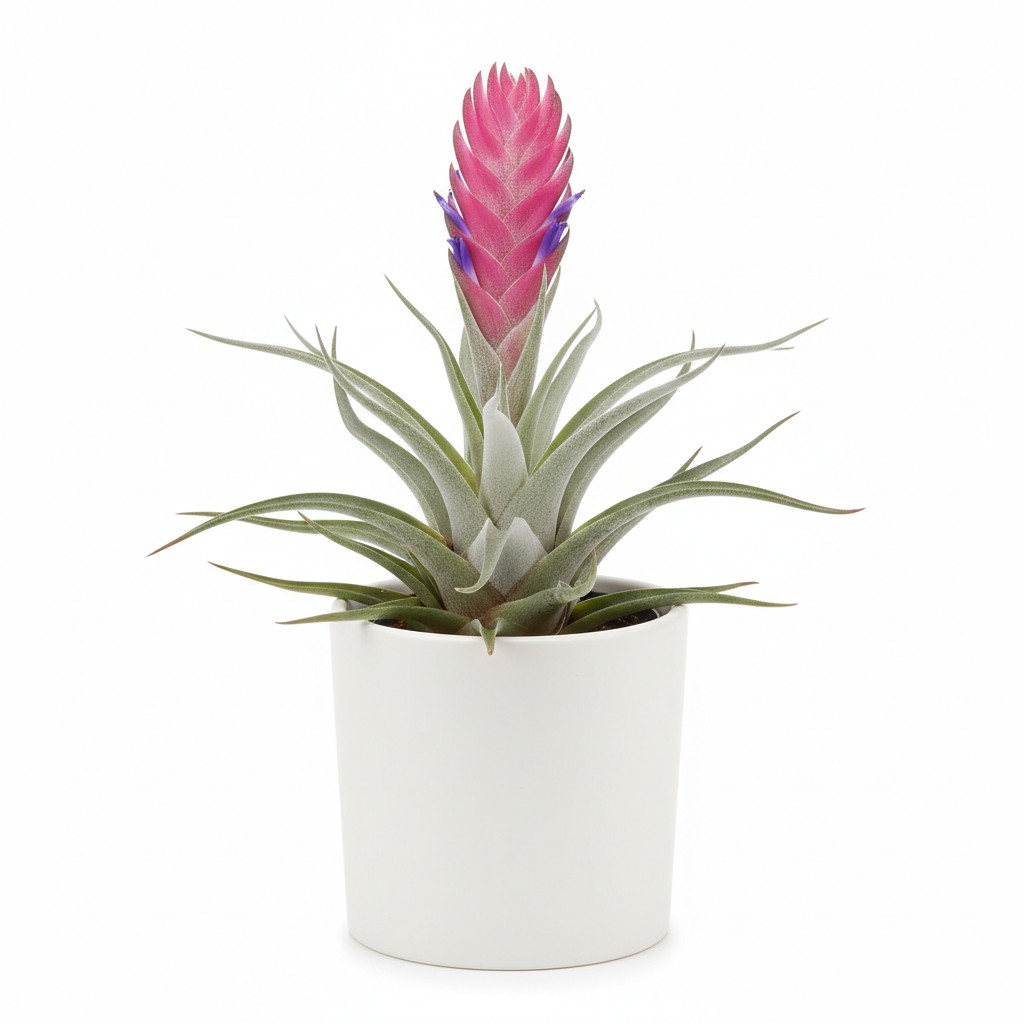
The Pink Quill, scientifically known as Tillandsia cyanea, is a captivating bromeliad that enchants plant enthusiasts with its unique and vibrant appearance. Its most striking feature is the paddle-shaped, bright pink flower bract, from which delicate, violet-blue flowers emerge intermittently. This contrast in colors creates a stunning visual display that adds a touch of exotic beauty to any indoor space.
Plant lovers adore Pink Quill for its relatively easy care requirements and long-lasting blooms. It's also an air plant, meaning it doesn't require soil, further simplifying its maintenance. Pink Quill is a perfect choice for those seeking a low-maintenance yet visually rewarding plant that brings a splash of color and a touch of the tropics into their homes.
Its unusual form and vibrant hues make it a conversation starter and a focal point in any plant collection.
The Story
The Pink Quill, Tillandsia cyanea, originates from the humid forests of Ecuador. It is an epiphytic bromeliad, meaning it naturally grows on other plants, typically trees, using them for support rather than deriving nutrients. In its native habitat, the Pink Quill thrives in the dappled sunlight and high humidity of the rainforest canopy.
The plant was first described and classified by botanists in the 19th century, quickly gaining popularity among plant collectors for its unique appearance and relatively easy cultivation. It is not particularly culturally significant, as it is primarily appreciated for its ornamental value. However, its association with tropical rainforests evokes a sense of exotic beauty and natural wonder.
Today, Pink Quill is widely cultivated as an indoor plant, bringing a touch of the Ecuadorian rainforest to homes and gardens around the world.
Complete Care Guide
Pink Quill is an easy-care plant that thrives in bright, indirect light. Avoid direct sunlight, which can scorch the leaves. Water thoroughly when the potting mix feels dry, ensuring the water drains freely. Use rainwater, distilled water, or filtered tap water to avoid mineral buildup. Mist the plant regularly to maintain humidity, especially during dry periods.
Fertilize sparingly during the growing season (spring and summer) with a diluted bromeliad fertilizer. Do not over-fertilize, as this can damage the plant. Provide good air circulation to prevent fungal diseases. Remove any dead or dying leaves to maintain the plant's health and appearance.
Repotting is rarely necessary, as Pink Quill prefers to be slightly root-bound. If repotting is needed, use a well-draining bromeliad mix. With proper care, Pink Quill will reward you with its stunning pink bract and delicate blue flowers.
Light Requirements
Pink Quill thrives in bright, indirect light. Direct sunlight can scorch the leaves, causing unsightly brown spots. An east-facing window is ideal, providing gentle morning sun. A north- or west-facing window can also work, as long as the plant receives enough light. If you don't have access to a bright window, you can supplement with a grow light.
Place the Pink Quill a few feet away from a south-facing window to avoid intense sunlight. Rotate the plant regularly to ensure even growth on all sides. Insufficient light can result in weak growth and a lack of blooms. Monitor the plant's leaves for signs of too much or too little light.
Seasonal Care
Spring
In spring, increase watering and fertilization as the plant begins its active growing season. Provide bright, indirect light and maintain high humidity. Repot if necessary.
Summer
During summer, continue to water and fertilize regularly. Protect the plant from intense direct sunlight. Mist the plant frequently to maintain humidity.
Fall
As fall approaches, reduce watering and fertilization. Prepare the plant for its dormant period. Maintain bright, indirect light.
Winter
In winter, water sparingly and avoid fertilization. Maintain bright, indirect light and protect the plant from cold drafts. Increase humidity if necessary.
The Life of Your Pink Quill
Seedling / Juvenile
In the seedling stage, focus on providing consistently high humidity. Use a humidity dome or place the seedling in a terrarium. Maintain bright, indirect light and avoid direct sunlight to prevent scorching. Water sparingly, keeping the growing medium lightly moist but not soggy.
Adolescent
As the Pink Quill matures, gradually acclimate it to slightly less humid conditions. Continue to provide bright, indirect light and water when the growing medium feels dry to the touch. Begin fertilizing with a diluted bromeliad fertilizer every few weeks during the growing season.
Mature
During the active blooming period, maintain consistent watering and fertilization. Ensure the plant receives adequate bright, indirect light to support the bract's vibrant color. Avoid overwatering, as this can lead to root rot. Gently mist the plant regularly to maintain humidity.
Established
After the bloom fades, reduce watering and fertilization. Allow the plant to rest and recover. Continue to provide bright, indirect light. The plant may produce offsets (pups) at the base, which can be propagated to create new plants. Gradually resume regular care as new growth appears.
Propagation Guide
Pink Quill can be propagated through division, stem cuttings, or keiki (offsets).
For division, carefully separate the offsets from the mother plant when they are about one-third the size of the parent. Plant the offsets in separate pots with well-draining bromeliad mix.
Stem cuttings are less common, but can be taken from healthy stems. Allow the cut end to callous over for a few days before planting in a moist potting mix.
Keiki are small plantlets that grow on the flower stalk. Once they develop roots, they can be carefully removed and planted in their own pots. Provide high humidity and bright, indirect light to encourage successful propagation.
Ensure the propagation environment is warm and humid to encourage root growth.
Expert Knowledge
Pink Quill is sensitive to tap water due to the chemicals added. Using rainwater, distilled water, or filtered water helps prevent mineral buildup that can damage the plant. To encourage blooming, provide a slightly cooler and drier period during the winter months. Ethylene gas can also stimulate blooming; placing the plant near ripening fruit for a short period may encourage flower production.
Keep humidity levels high, especially during the blooming period, to prolong the life of the flowers. Avoid placing the plant in areas with strong drafts or temperature fluctuations.
Troubleshooting
Yellow leaves
Yellow leaves can indicate overwatering or underwatering. Check the potting mix and adjust watering accordingly. Ensure proper drainage. Yellowing can also signal nutrient deficiency; fertilize with a diluted bromeliad fertilizer.
Brown leaf edges
Brown edges are often caused by low humidity or dry air. Increase humidity by misting the plant regularly or placing it on a pebble tray filled with water. Avoid placing the plant near drafts or heating vents.
Drooping leaves
Drooping leaves can indicate underwatering or root rot. Check the potting mix and adjust watering accordingly. If root rot is suspected, repot the plant with fresh, well-draining potting mix.
Root rot
Root rot is caused by overwatering and poor drainage. Ensure the plant is potted in a well-draining mix and allow the soil to dry slightly between waterings. Repot the plant if necessary, removing any affected roots.
Pests
Pests are not common on Pink Quill, but mealybugs or scale can sometimes occur. Treat infestations with insecticidal soap or neem oil. Isolate the affected plant to prevent the spread of pests.
Frequently Asked Questions
What are the ideal light conditions?
Pink Quill prefers bright, indirect light. Avoid direct sunlight to prevent leaf scorch.
How often should I water?
Water thoroughly when the potting mix feels dry. Ensure proper drainage to prevent root rot.
When should I repot?
Repotting is rarely needed. If necessary, repot in spring with well-draining bromeliad mix.
Is it toxic to pets?
Pink Quill is generally considered non-toxic to pets and children.
How big will it grow?
Pink Quill typically grows to about 12-18 inches tall indoors.
Can I propagate at home?
Yes, Pink Quill can be propagated at home through division, stem cuttings, or keiki.


