
Why You'll Love It
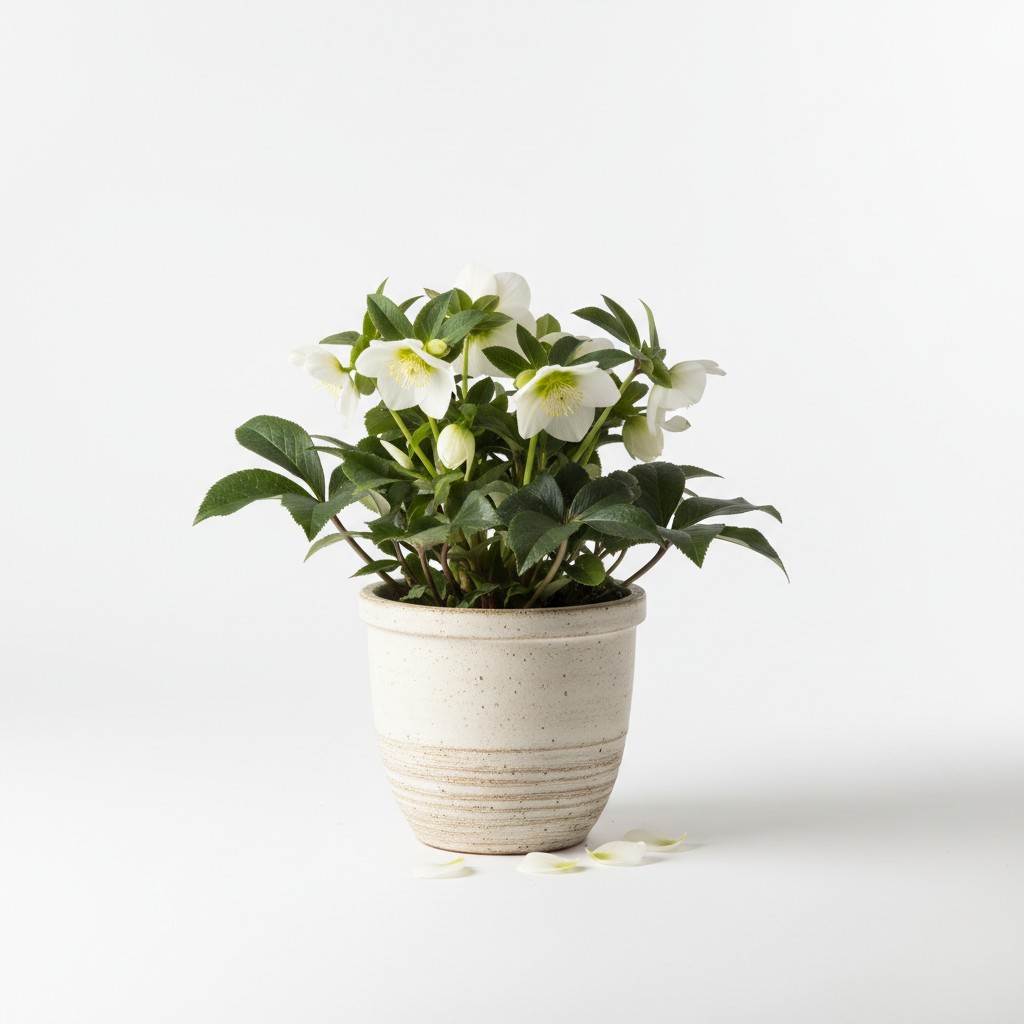
The Christmas Rose, or Helleborus niger, is cherished for its exquisite, pure white (sometimes tinged with pink or green) flowers that bravely bloom in the heart of winter, often around the Christmas season. This timing makes it a highly symbolic and welcome sight in the garden or as a potted plant indoors. Plant lovers adore its resilience and the promise of spring it represents. Its evergreen foliage provides year-round interest, and the flowers, while delicate in appearance, are surprisingly hardy. The nodding blooms add a touch of elegance to any space. Its relatively low maintenance nature, once established, is another reason for its popularity. The Christmas Rose is a unique and beautiful addition to any plant collection. It also attracts early pollinators.
The Story
The Christmas Rose, Helleborus niger, originates from the mountainous regions of Central and Southern Europe, particularly the Alps and the Apennines. Its natural habitat consists of woodlands and subalpine meadows, where it thrives in well-drained, alkaline soils. Historically, the Christmas Rose has been associated with various legends. One popular tale recounts how a young shepherdess, Madelon, had no gift to offer the baby Jesus, and her tears falling on the snow miraculously produced the first Christmas Rose. This story cemented its place in Christian symbolism, representing hope and beauty in the darkest of times. It has also been used medicinally throughout history. The plant has been cultivated for centuries and remains a popular choice for winter gardens and indoor displays.
Complete Care Guide
The Christmas Rose thrives in partial shade to full shade, especially during the warmer months. Ensure well-draining soil that is rich in organic matter. Water deeply when the top inch of soil feels dry, but avoid overwatering, which can lead to root rot. Fertilize sparingly in early spring and fall with a balanced, slow-release fertilizer. Prune away any dead or damaged foliage to encourage new growth and airflow. Provide good air circulation to prevent fungal diseases. Repot only when necessary, typically every 2-3 years, into a slightly larger pot. Maintain moderate humidity levels, especially indoors. Monitor for pests like aphids and slugs. Avoid transplanting established plants if possible, as they prefer to remain undisturbed. Provide winter protection in colder climates.
Light Requirements
Christmas Rose prefers partial to full shade, especially during the heat of the summer. Direct sunlight can scorch the leaves. Indoors, place it near a north-facing or east-facing window, where it will receive bright, indirect light. If you notice the leaves becoming pale or yellowing, it may be receiving too much light. Conversely, if the plant is not blooming well, it may not be getting enough light. Supplement with artificial light if necessary, especially during the shorter days of winter. Rotate the plant regularly to ensure even light exposure. Avoid placing it in direct sunlight during the hottest part of the day.
Seasonal Care
Spring
In spring, remove any remaining dead or damaged foliage. Fertilize with a balanced, slow-release fertilizer. Divide the plant if necessary. Monitor for pests and diseases.
Summer
Provide shade during the hottest part of the day. Water regularly, especially during dry spells. Mulch around the plant to retain moisture and suppress weeds.
Fall
Clean up any fallen leaves around the plant. Apply a layer of mulch for winter protection. Fertilize with a low-nitrogen fertilizer to promote root growth.
Winter
Protect the plant from frost and heavy snow. Water sparingly, only when the soil is dry. Enjoy the beautiful blooms that appear during this season.
The Life of Your Christmas Rose
Seedling / Juvenile
Provide young Christmas Rose plants with consistent moisture and protection from harsh sunlight. Use a well-draining potting mix rich in organic matter. Fertilize sparingly with a diluted liquid fertilizer. Monitor for pests and diseases.
Adolescent
As the plant matures, gradually increase light exposure. Continue to water regularly and fertilize as needed. Provide support if the plant becomes leggy. Prune away any dead or damaged foliage.
Mature
During the blooming period, ensure adequate watering and fertilization. Remove spent flowers to encourage further blooming. Protect the plant from frost and heavy snow.
Established
After blooming, reduce watering slightly and continue to fertilize as needed. Prune away any dead or damaged foliage. Divide the plant if it becomes overcrowded.
Propagation Guide
The Christmas Rose is best propagated by division in early spring or fall. Carefully dig up the plant and gently separate the root ball into smaller clumps, ensuring each clump has healthy roots and foliage. Replant the divisions in well-draining soil amended with organic matter. Keep the soil consistently moist until the plants are established. Seed propagation is also possible but can be slow and inconsistent. Stem cuttings are generally not successful. Keiki propagation is not applicable to Christmas Rose. Division is the most reliable method for propagating Christmas Rose, ensuring that the new plants retain the characteristics of the parent plant. Water thoroughly after dividing and planting.
Expert Knowledge
Christmas Roses are known for their long lifespan and can thrive for many years with proper care. They prefer alkaline soil, so amending the soil with lime can be beneficial. Avoid transplanting established plants unless absolutely necessary, as they prefer to remain undisturbed. Deer and rabbit resistant, making them a good choice for gardens with wildlife. The flowers can last for several weeks, providing a long-lasting display of winter beauty. Deadheading the flowers after they fade can encourage more blooms. The plant's sap can cause skin irritation, so wear gloves when handling it.
Troubleshooting
Yellow leaves
Overwatering, poor drainage, or nutrient deficiencies can cause yellow leaves. Adjust watering practices, improve drainage, and fertilize with a balanced fertilizer.
Brown leaf edges
Dry air, underwatering, or fertilizer burn can cause brown edges on the leaves. Increase humidity, water more frequently, and reduce fertilizer application.
Drooping leaves
Underwatering, overwatering, or root rot can cause drooping. Adjust watering practices and improve drainage. Check for root rot and treat accordingly.
Root rot
Root rot is caused by overwatering and poor drainage. Improve drainage by repotting into well-draining soil. Remove any affected roots and treat with a fungicide.
Pests
Aphids, slugs, and snails can infest Christmas Rose. Use insecticidal soap, diatomaceous earth, or handpick pests off the plant.
Frequently Asked Questions
What are the ideal light conditions?
Christmas Rose thrives in partial to full shade, especially during summer. Indoors, bright, indirect light is ideal.
How often should I water?
Water deeply when the top inch of soil feels dry. Avoid overwatering, which can lead to root rot.
When should I repot?
Repot every 2-3 years, or when the plant becomes root-bound, using well-draining soil.
Is it toxic to pets?
Yes, Christmas Rose is toxic to pets and children. Keep it out of reach and wash hands after handling.
How big will it grow?
Indoors, Christmas Rose typically grows to be 12-18 inches tall and wide.
Can I propagate at home?
Yes, Christmas Rose can be propagated by division in early spring or fall.


